


























Carlos Burgo Warns of Omissions and Risks in the Proposed 2027 State Budget
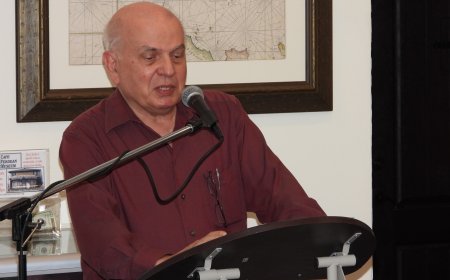
Nova Sintra, November 26, 2026 (Bravanews) - Carlos Burgo, former Minister of Finance and former Governor of the Bank of Cape Verde, presents a critical analysis of the 2027 State Budget Proposal (POE2027), emphasizing the need for public finance management grounded in a medium-term vision, transparency, fiscal responsibility, and public debt sustainability. In his analysis, the well-known economist argues that the evaluation of the budget should not be limited to annual revenue and expenditure forecasts but should also take into account the government’s future financial commitments.

Carlos Burgo begins by acknowledging that, in a context marked by numerous economic uncertainties, it becomes extremely difficult, if not impossible, to accurately predict the long-term evolution of public revenues and expenditures. Therefore, he believes that public finance management should focus, among other things, on assessing the sustainability of public debt and pensions, the latter being considered an implicit contingent liability of the state.
In his view, the traditional model of annual budget management has limitations, especially when government policies produce effects that extend beyond a one-year period. The planning of government activities is typically carried out from a medium-term perspective, in line with the political term and economic developments, which requires a more comprehensive and structured approach to public finances.
The former governor argues, therefore, that budget management should be viewed from a medium-term perspective, without downplaying the importance of the annual nature of the budget, which continues to ensure the authorization of expenditures and the forecasting of revenues for each fiscal year. In his view, this involves reconciling the need for annual oversight with a strategic vision capable of anticipating the impacts of policy decisions in subsequent years.
Carlos Burgo notes that this approach was incorporated into the new Framework Budget Law, which established medium-term financial planning and mandated the updating of the medium-term public finance framework during the initial phase of budget planning, specifically upon the National Assembly’s approval of the Budget Guidelines.
It is precisely within this legal framework that the analyst identifies one of the main weaknesses of the 2027 State Budget Proposal: the absence of medium-term financial planning instruments, namely the Medium-Term Expenditure Framework (QDMP), with a three-year horizon, and the Medium-Term Budget Framework (QOMP), with a four-year horizon.
For Carlos Burgo, this absence is not merely a technical shortcoming but also a matter of compliance with current legislation. According to his analysis, the lack of these instruments makes it difficult to assess the current government’s commitment to the sustainability of public finances, since it does not provide a clear picture of the financial targets that should guide fiscal policy in the coming years.
The economist believes that, in economic governance, the sustainability of public finances is just as important as defining the economic growth model itself. In a country like Cape Verde, whose economy is based on a fixed exchange rate with the euro, discipline in the management of public finances is particularly important, contributing to the preservation of macroeconomic stability and the confidence of economic agents.
In his analysis, Carlos Burgo also expresses concern about the current government’s fiscal responsibility, particularly because, as he states, the cost of the main planned policy measures is unknown, and the strategy of financing new initiatives through savings on expenditures considered less of a priority appears to have been abandoned. In his view, such a strategy would require concrete reforms, which have not yet been announced with sufficient clarity.
The former minister believes, however, that the government may still be able to allay these concerns by presenting a medium-term financial framework that clarifies how the planned measures will be financed, without compromising the structure of public spending or jeopardizing the trajectory of the national debt.
Carlos Burgo’s analysis thus places the importance of transparent, predictable, and responsible financial governance at the center of the debate on the 2027 State Budget. Rather than merely presenting annual projections or generic statements of commitment to stability, the economist argues for the need for concrete targets, planning tools, and mechanisms to monitor the evolution of public accounts over the coming years.
In a context where Cape Verde seeks to consolidate economic growth, boost investment, and address the social needs of the population, Carlos Burgo’s analysis raises a fundamental question: to what extent does the proposed 2027 budget offer sufficient guarantees of financial sustainability for the commitments made by the government? The answer, from the analyst’s perspective, lies in presenting a medium-term financial plan capable of demonstrating that the growth in public spending is aligned with a responsible debt trajectory and the country’s economic stability.
Analysis of the text published on his social media Carlos Deburgo