
















Brava and Cape Verde: Challenges to Development
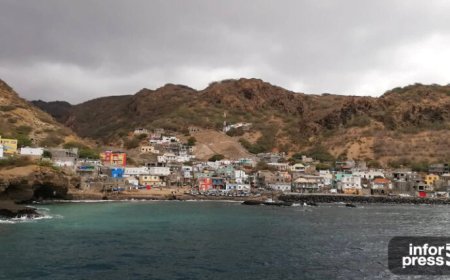
The people of Brava often look back on the island’s development with a sense of nostalgia. We tend to think that the past was better than the present, and we wonder what the future will be like. This reflection is legitimate and necessary, especially when the island’s economic reality seems to lag behind that of the other islands in the archipelago.

(...) Concerns about the future are not unfounded. Brava’s economy has not grown at the same pace as other islands; it has not created jobs as it should have, and it has not fostered hope among its residents. Hope, in a democratic context, is fundamental. The democratic choice is also the choice of a path toward collective progress, grounded in the rule of law.
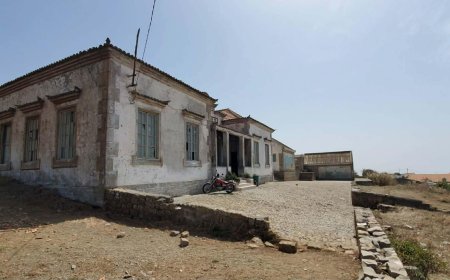
Brava’s contribution to the national Gross Domestic Product (GDP) has ranged between 0.8% and 1%. Given its small size and low population density, one would expect per capita GDP to be higher compared to other islands. However, the reality shows exactly the opposite: we remain at the bottom of the list. Data from INE show that, in 1940, the island’s population was estimated at about 8,528 inhabitants, decreasing to 6,985 in 1980 and, in 2010, the resident population was recorded at approximately 5,995, confirming the downward trend in our population.
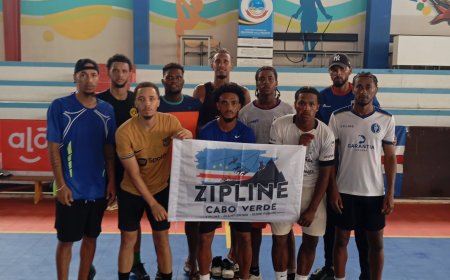
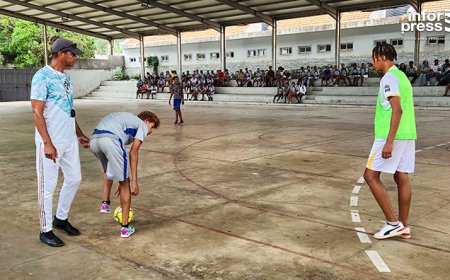
On Brava, the situation is truly concerning, with schools closing in recent years due to a lack of students. A few years ago, the regional soccer championship was not held due to inadequate local facilities, which is indicative of the island’s decline, especially in sectors related to youth.
This raises a crucial question:
What are the reasons behind these figures?
Brava’s economy is still largely based on the primary sector, particularly agriculture and fishing. These sectors, however, have remained stagnant, with little adoption of new technologies. The much-needed modernization has not yet arrived. It is often assumed that our small size is an obstacle, but that is not true: it is not size that hinders innovation. We can and must seek new forms of production, more efficient methods, and more competitive models.
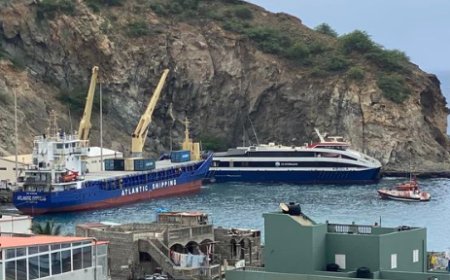
One of the major challenges we face is the ongoing brain drain of our skilled workforce. An island that wants to develop cannot afford to lose its workforce. It is urgent to implement policies that support young people, creating incentives for them to stay. This effort involves several key areas: improving health care, water and electricity supply, and, above all, connectivity with the other islands. The lack of solutions in these areas has fueled a cycle of economic stagnation.
When it comes to the island’s development, it is inseparable from its history and culture. Brava boasts a rich and vibrant history, featuring notable figures such as Eugénio Tavares, Guilherme Dantas, Luís Loff de Vasconcelos, Raúl de Pina, and many others.
Brava’s affirmation of its culture and unique identity on the national stage must be a priority for the island, linking history to necessary innovation and transforming Brava into a high-quality tourist destination, both for visitors and for the vast diaspora.
But it’s not all obstacles. Brava has untapped potential, particularly in the diaspora market. We need a visionary domestic policy that encourages and promotes a dynamic, wealth-generating economy.
We know, however, that we cannot overcome our problems on our own. When we look at the national landscape, the high level of regional disparities is striking. This economic imbalance among the islands has various causes and profoundly affects citizens’ perceptions of the future. Despite various government initiatives over the years, national balance is still far from ideal.
It is essential that the so-called “peripheral islands” (which should not exist in an archipelagic country) have an active voice in shaping the national public agenda. The debate on regional disparities must be national, broad, and participatory. All islands, including the smallest and least populated ones, must be heard, as development must be shared.
In this context, I have always advocated for regionalization because I believe in the principle of subsidiarity, according to which decisions and actions should be taken at the level closest possible to the citizen or the sphere directly affected, and that by reconciling solidarity with the deepening of decentralization and the deconcentration of power, a harmonious Cape Verde could be built. In this regard, the late Onésimo Silveira, one of this land’s great thinkers, reminded us: “We think of national unity as a sum of individuals rather than as a sum of realities and diversities—namely, the islands and those who live on them.”
Our excessive dependence on tourism is glaringly evident on the national scene. As I have argued on other occasions, our excessive dependence on tourism is a mistake, above all because it makes us vulnerable to external shocks. We need to build capacity and adopt an economic model that sets us on the path to diversification. We need a production model that harnesses the skills of young people and creates wealth.
The islands of Cape Verde, especially those with similar economic profiles, must engage in dialogue with one another. Brava, in my view, should take a leading role in this dialogue, promoting reflection and action regarding the common constraints on the development of outlying islands.
Our small size should not be an obstacle, but rather a source of strength that brings us to the center of the national debate.
The country is unequal and has varying potentials—each island with its own—and, therefore, public policies are needed that harness the islands’ potential and mitigate the inequality among them. We need better public policies.
As Eugénio Tavares wrote: “I don’t know, I don’t know if tomorrow will bring pain or happiness, if a storm will descend from the sky or a merciful and wholesome calm,” but I view our future with optimism. The responsibility for building a better country lies with all of us.
Cape Verde will be a better country if all the islands have the conditions necessary for development. The belief that progress can reach every corner of the country mobilizes people’s will, strengthens democracy, and propels the nation toward higher levels of social justice, equity, and well-being.
Jonathan Vieira