

























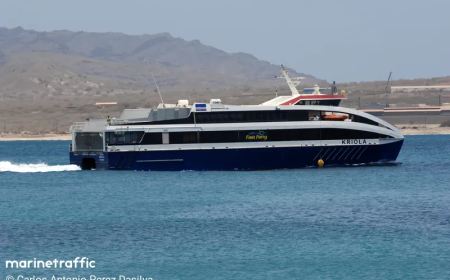




CV Interilhas offers an exclusive deal and warns the Government that it will request compensation if newly acquired ships are delivered to other operators.
The concessionaire argues that the ships acquired by the State, the Djabraba and the Eugenio Tavares, should be primarily integrated into the existing concession contract and warns that handing them over to other private operators could violate contractual rights and generate liability for damages for the State.
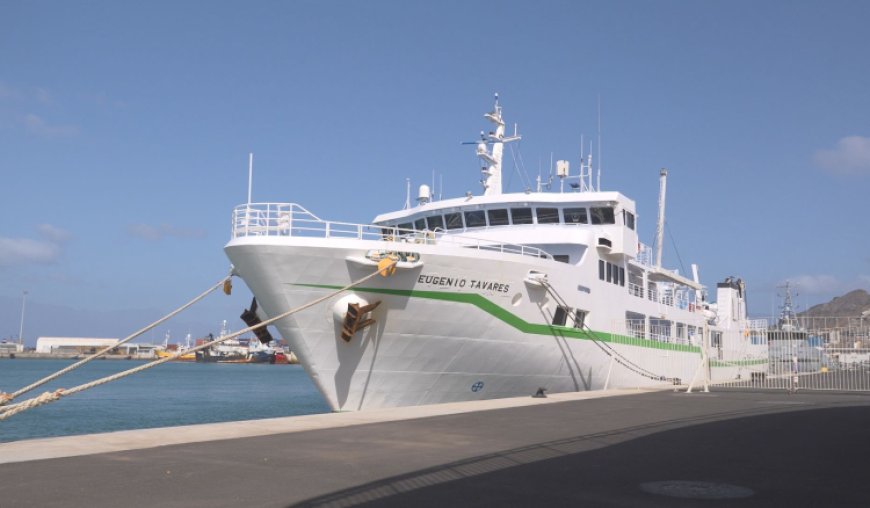
CV Interilhas came out publicly today, the 26th, to defend that the allocation and operation of the new ships acquired by the State of Cape Verde must respect the concession contract for the public service of inter-island maritime passenger and cargo transport, as well as the legislation that regulates public procurement and administrative contracts.
In a letter sent to the Minister of Transport and the Sea, João do Carmo, the concessionaire presents its position on the operating model for the new vessels, arguing that their eventual availability to private operators cannot be done outside the existing legal and contractual framework. In other words, the company acknowledges the importance of the investment made by the State, but maintains that the introduction of new ships into the inter-island maritime transport system is already foreseen in the concession contract, specifically through clause 8, paragraph 1, of the respective addendum, approved by Resolution No. 32/2023, of April 19.
According to CV Interilhas, this provision expressly foresees the entry of new vessels into the concession, whether initiated by the State or by the concessionaire itself. It also establishes that this integration implies adjustments to the operational, economic, and financial models, as well as to the reference parameters for calculating compensation.
Based on this provision, the company argues that the integration of the new ships into the concessioned public service should be given priority consideration by the Government.
Warning about potential breach of contract.
One of the central points of CV Interilhas' position concerns the exclusivity regime enshrined in the concession contract. The company considers that this mechanism protects the activity of legally established operators in the market and constitutes an essential component of the operating model defined by the State itself.
In this context, it warns that the eventual allocation of the new ships to other private operators for the operation of services covered by the concession, without adequate legal and contractual basis, could represent a violation of its rights as concessionaire.
The company also warns that the selective allocation of public vessels to certain operators, without observing the legally required procedures, could distort competitive conditions and contravene the principles of equality, transparency, impartiality, and the defense of the public interest.
From the concessionaire's perspective, a decision of this nature could compromise the stability of the contractual relationship established with the State and substantially alter the conditions that formed the basis of the concession, opening the way for potential contractual and compensation liabilities for the State.
CV Interilhas requests legal and economic evaluation.
The company argues that any decision regarding the operating model for the new ships should be preceded by a legal, economic, and operational assessment, accompanied by the necessary coordination with the concessionaire.
CV Interilhas emphasizes that its position does not represent opposition to public investment in the renewal and reinforcement of the national maritime fleet. What it intends, it states, is to ensure that the allocation of vessels respects legality, legal certainty, the stability of administrative contracts, and the rules of public procurement.
In the end, the concessionaire expressed its willingness to collaborate with the Government in defining the operating model for the new ships, but made it clear that it considers it essential to respect the contractual framework currently in force.
CVI had also expressed interest in purchasing the ships D. Tututa and Chiquinho BL, which, interestingly, belong to the same business group as the concessionaire.
Text taken from Santiago Magazine