











Cachaço Road, on Brava Island, awaiting a tragedy long foretold
The Cachaço road on Brava Island seems to be heading toward a tragedy waiting to happen. The condition of the roadway and the lack of guardrails at various points along the route pose a constant danger to drivers, passengers, and, above all, to the students who use the school bus every day. This is not a concern that has just been raised today, nor is it an isolated warning. It is a reality that is plain for all to see and that demands an urgent response before it is too late.
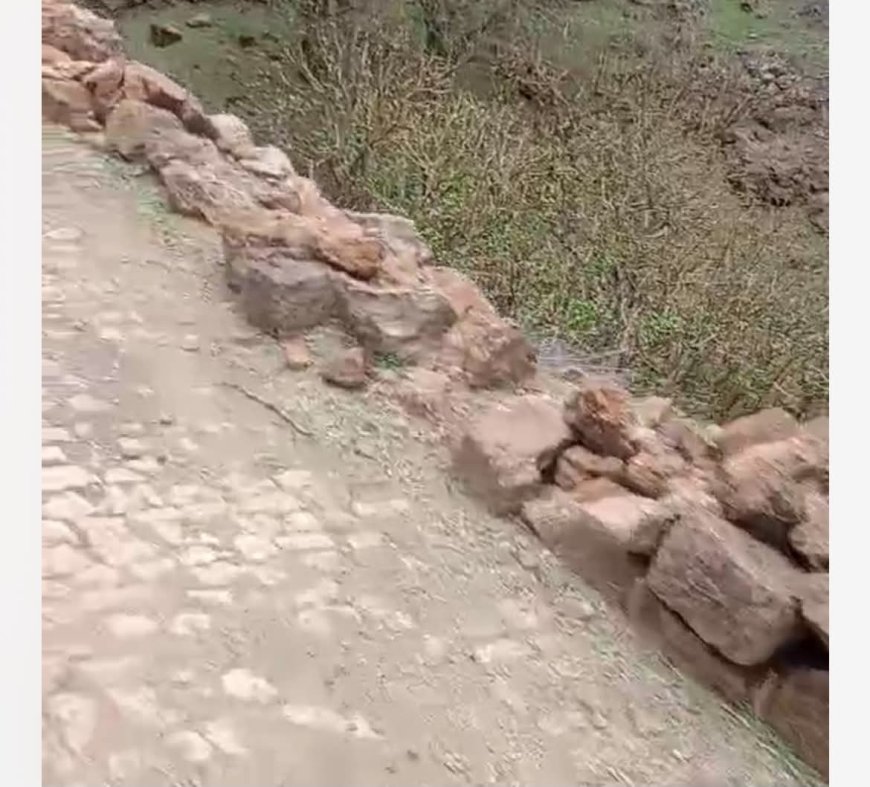
(...) Anyone familiar with that road knows that all it takes is a driving error, a momentary distraction, a mechanical failure, or even a maneuver to avoid another vehicle for the consequences to be irreversible. When a road is in poor condition and, at the same time, lacks adequate roadside protection at the highest-risk points, the margin for correcting a potential error becomes practically nonexistent. Simply veering off the roadway can result in a fall, a serious collision, or a situation with fatal consequences.
What is most concerning is that we are talking about a road used daily by the public. It is not an abandoned road, with no traffic or no importance to the community. On the contrary: it is a road used by workers, families, students, school buses, and other road users. The daily traffic should be reason enough for the responsible authorities to take the problem seriously and implement measures capable of ensuring minimum safety conditions.
The lack of roadside protection is particularly concerning. On roads with uneven surfaces, ravines, slopes, or drop-offs, guardrails are neither a luxury nor a decorative feature. They are essential mechanisms for mitigating the consequences of a vehicle leaving the road. When such protection is absent where it is needed, every trip carries a risk that should not be tolerated in public infrastructure.
And don’t say tomorrow that no one warned you. The warnings are there. Drivers are aware of the danger. Parents and guardians are concerned. The community observes the road conditions daily and knows that something needs to be done. Therefore, if a serious accident were to occur on that stretch of road one day, it would be impossible to hide the fact that there were clear signs the situation called for intervention.
It is precisely this sense that authorities are waiting for an accident to happen before taking action that outrages the public. When it comes to road safety, the logic should be exactly the opposite: first, identify the danger; then, take action to prevent the accident from happening. We shouldn’t have to wait for deaths, injuries, or shattered families to acknowledge what is already evident.
The situation becomes even more delicate when considering the presence of students on school buses. Children and young people cannot be treated as mere numbers in the daily flow of traffic. When a vehicle is transporting students, the responsibility for safety must be even greater. Parents and guardians have the right to demand that the routes their children take meet standards commensurate with the importance of this mission.
Imagine, for a moment, the anguish of a father or mother who puts their child on a school bus knowing that there are dangerous stretches along the route. Trust in the transportation system depends, among other things, on the certainty that the authorities are doing everything in their power to prevent accidents. That trust begins to fade when warnings pile up and no meaningful action is taken.
We are not arguing that all roads must be transformed overnight. We know that public works require resources, projects, planning, and administrative procedures. But there is a huge difference between acknowledging these difficulties and simply allowing a risky situation to drag on indefinitely. When people’s safety is at stake, it is the duty of the competent authorities to set priorities.
The road from Cachaço to Nossa Senhora therefore requires a serious and urgent technical assessment. It is necessary to identify the most dangerous spots, assess the condition of the pavement, check drainage conditions, analyze unevenness, and install roadside guardrails where necessary. A superficial fix that merely temporarily hides the problems is not enough. What the public needs is a well-planned renovation designed to ensure safety and durability.
It is also essential that the authorities clearly communicate to the public what they intend to do. Institutional silence in the face of a concern of this magnitude helps no one. If there is a project, it should be explained. If an intervention is planned, it should be publicized. If there are financial or technical difficulties, they should be presented. The public has the right to know why a risky situation remains unresolved.
A responsible public administration should not only appear after a tragedy. It must be present before it occurs. It must monitor, prevent, correct, and invest. It is precisely this ability to anticipate that distinguishes a public policy truly committed to people’s lives from one that reacts only when social pressure becomes unsustainable.
The question that remains is simple: how much is the safety of those who use that road daily worth? How much is the peace of mind of a parent sending their child to school worth? How much is the life of a driver who needs that road to get to work worth? These are not unimportant rhetorical questions. They are issues that should be at the heart of any decision regarding the improvement of that road.
We cannot normalize danger. A dangerous road does not become safe simply because people have learned to drive more carefully. Drivers can and should be cautious, but we cannot shift all responsibility for substandard infrastructure onto them. Road safety is a shared responsibility among users, authorities, and those responsible for the construction, maintenance, and oversight of roads.
Nor can we wait for accidents to happen and then look for someone to blame. Responsibility must be assumed beforehand. If there are concrete and identifiable warnings about road conditions, these warnings must be treated as preventive signals. Ignoring them means accepting that the risk continues to exist when it could be reduced.
Brava deserves safe roads. The people of Brava deserve to be able to travel without the feeling that every trip could end in an emergency. And the families of students who use school transportation deserve the assurance that their children’s safety is not being put on the back burner. This is not an unreasonable demand. It is the least one can expect from a society that places human life above bureaucracy and inertia.
Therefore, this is yet another warning, but it should not be just another warning. We must turn concern into action. The responsible authorities must visit the site, assess the situation, and present concrete measures for the road from Cachaço to Nossa Senhora. If improvements are necessary, let them move forward with them. If there are temporary safety measures that can be implemented immediately, they should be taken until a permanent solution is in place.
The public cannot continue to be forced to wait indefinitely for a solution while the risk remains on the ground. Every day that passes without a response is another day in which drivers, passengers, and students are exposed to dangers that could be mitigated through responsible action. Prevention costs money, it’s true. But a tragedy costs incomparably more—in lives, in suffering, and in consequences that no subsequent action can erase.
And when the time comes to be held accountable, no one should be able to claim they didn’t know. Drivers have warned. Parents have warned. Guardians have warned. The community is drawing attention to the problem. The signs are plain to see. All that’s left is for those with the authority to act to take responsibility and do what is expected of those who manage public infrastructure.
We don’t want to wait for a tragedy to happen before we see machinery and officials arrive on the scene. We don’t want to hear condolences after a family has lost a loved one. We don’t want injuries and deaths to be the price we must pay for the urgency of a road that is already showing signs of danger to finally be recognized. The purpose of this warning is precisely to prevent that from happening.
The Cachaço road doesn’t need more silence; it needs action. It doesn’t need excuses after an accident; it needs prevention now. It doesn’t need vague promises; it needs a plan, deadlines, and concrete action. Because when people’s safety is at stake, waiting for a tragedy to happen is not a strategy—it’s irresponsible. There’s still time to act. Let no one say tomorrow that there were no warnings.
Bravanews
Moises Santiago