











Brava deserves more than just to participate
Representing Brava Island in a national competition—whether in futsal or any other sport—should be viewed as a huge responsibility. It’s not just about traveling, stepping onto the field, playing a few games, and coming back. When a team wears the colors of Brava, it carries with it the name, history, identity, and pride of an entire island.
That is why we need to start seriously discussing how our teams and national squads are prepared to compete in national competitions. We cannot continue to expect different results when the preparation process remains practically nonexistent or insufficient. In sports, there are no miracles: without organization, without planning, without training, and without adequate preparation, it is unlikely there will be results capable of making those we represent proud.
And let me make this very clear: this reflection is not directed against the players. It is not directed against the coach. It is not directed against the coaching staff. Much less does it intend to diminish the efforts of those who have agreed to wear the Brava jersey and travel to represent our island. On the contrary, all those who volunteer to defend Brava’s name deserve our respect and recognition.
Our concern lies elsewhere. It concerns the way we are preparing our teams to compete in national tournaments. How can we expect players to perform at their best when they are called up with virtually no preparation, without enough time to train together, without warm-up matches, and, often, without a properly structured training plan?
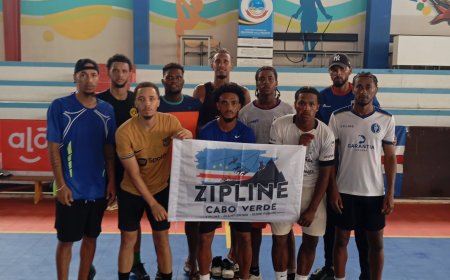
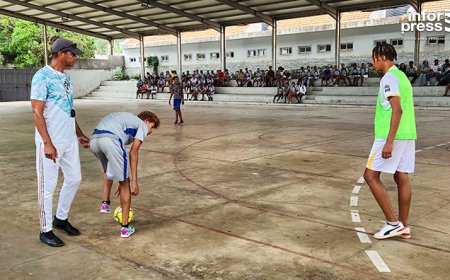
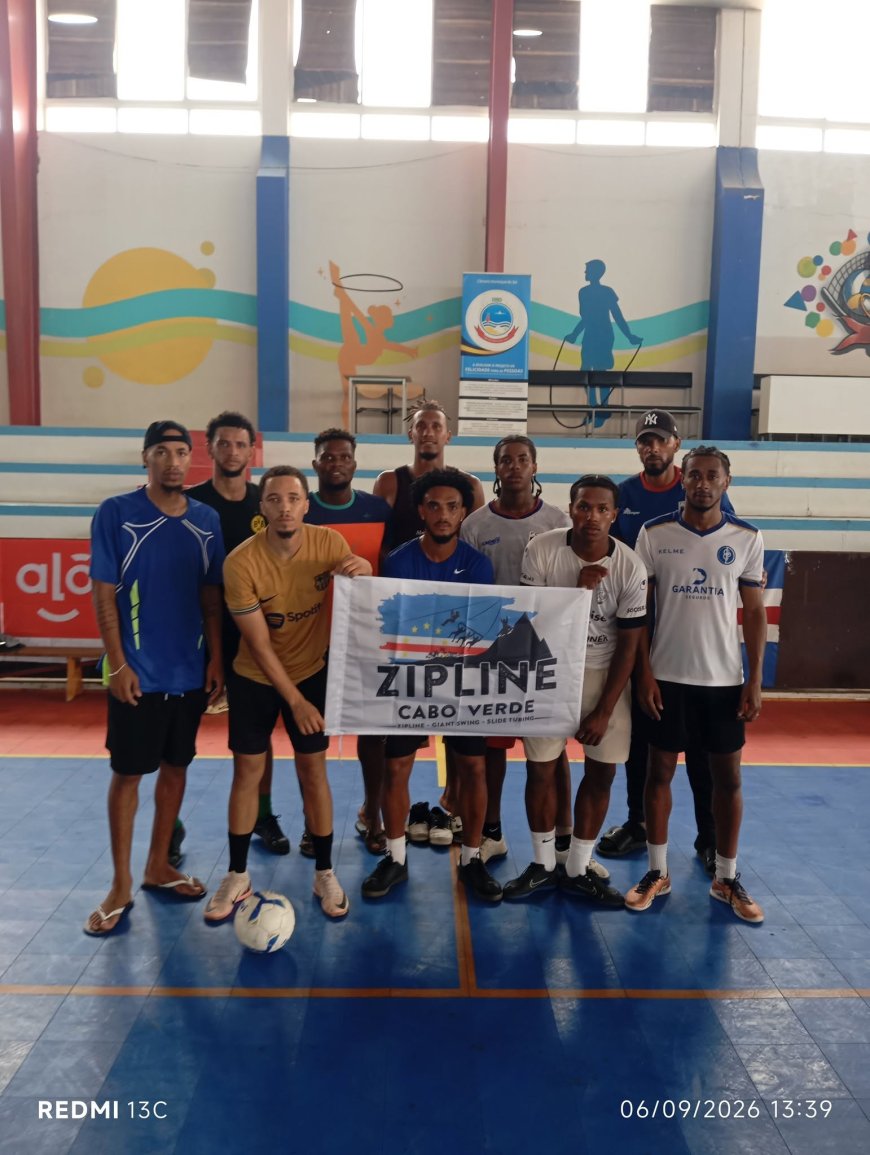
The case of the futsal team currently on Sal Island to represent Brava in the national futsal championships is, in this sense, paradigmatic. Not because the athletes lack quality, nor because the coach or the technical staff aren’t doing their best, but because a team isn’t built overnight. A national team needs time to develop strategies, chemistry, tactical discipline, and confidence.
In futsal, in particular, it’s not enough to simply bring together good players and expect them to automatically function as a team. Training is essential. Game systems must be worked on. You have to prepare the defense, the offense, transitions, set pieces, and situations of numerical superiority or inferiority. You have to establish routines and understand the characteristics of each opponent. All of this requires time, dedication, and organization.
When a team arrives at a national tournament without adequate preparation, it puts its own players in an extremely difficult situation. They take the field knowing they are facing opponents who, in many cases, train regularly, compete in structured local tournaments, and arrive at national competitions with months of collective work behind them. We cannot expect a team that hasn’t had the same conditions to automatically produce the same results.
And then the losses come—sometimes crushing—and the criticism of the players or the coach begins. That’s the easy part. It’s much harder to look back and ask what was done before the competition. How many training sessions were held? How many preseason games were played? When did preparation begin? What criteria were used to select the athletes? Was there a plan? Was there follow-up? Was there a strategy?
If we don’t ask these questions, we’ll just be treating the symptoms and not the problem. A loss can happen in sports and is part of competition. A blowout can happen, too. The problem arises when negative results are no longer viewed as an opportunity to learn but are instead seen as inevitable simply because we are a small island.
Being a small island cannot be an excuse for a lack of organization. We may have financial limitations, transportation difficulties, few available athletes, and other constraints inherent to our reality. But none of that prevents us from planning. In fact, the fewer our resources, the greater our ability to organize, set priorities, and make the best use of every available resource should be.
We also need to discuss the issue of resources spent on national competitions. If there are resources to send a team, cover travel, lodging, meals, equipment, and other expenses, it is legitimate to ask whether we are getting the best possible return on that investment. This is not to say that we should not participate. It is to argue that, when we invest in a national competition, we must also invest in the preparation that can lead to a more competitive performance.
It makes no sense to spend resources just to meet a schedule. A national team’s participation must have clear objectives. There must be preparation before the trip, monitoring during the competition, and evaluation after returning home. We must know what we aim to achieve, what the challenges are, which athletes can be included, and what needs to be improved for the next competition.
Another point worthy of attention is the selection of athletes. A national team should consist of the best available athletes, based on clear and predefined criteria. This does not mean that everyone has to agree with every selection. In soccer and futsal, there will always be differing opinions. What is essential is transparency and a rigorous process of observation and selection.
It is essential to monitor the athletes throughout the year, not just when a national competition comes around. Those in charge need to know who is playing, who is in top form, which positions have the greatest needs, and which young players are emerging. A national team should not be put together hastily just because a national call-up is coming.
Similarly, it is necessary to involve the island’s clubs, coaches, and other sports organizations. Knowledge about the athletes cannot be concentrated solely at a single moment or in a single person. The more organized the structure is, the greater the chance of finding the best talent and creating a truly representative national team.
And this brings us to a broader issue: this isn’t just a problem for futsal. The same consideration must be given to other sports in which Brava participates in national competitions. If we want the island to achieve better results in sports, we need to move away from an approach based solely on participation and begin to develop a genuine sports policy.
We need to think in the medium and long term. We need to invest in youth development. We need to identify talent early on. We need to create regular competitions. We need to support the clubs. We need to train coaches. We need to improve training conditions. We need to establish schedules and prepare the teams in advance. And we need to evaluate the results of each competition.
We cannot expect athletes to perform miracles to compensate for organizational failures. Players should be supported, not held responsible for problems that go beyond what happens on the court. Anyone who wears the Brava jersey deserves to take the field knowing that there was a support structure behind them that did everything in its power to prepare that team.
Coaches, too, need the right conditions to work. A coach may have knowledge, experience, and determination, but none of these qualities can replace training time. You cannot demand an organized team from a coach who received players at the last minute and had few opportunities to work with them. If we want to hold coaches accountable for results, we must first ensure they have the conditions to work.
We also need leaders with vision. Managing sports cannot mean merely handling registrations, organizing trips, and ensuring participation in a competition. Sports management requires planning, leadership, foresight, and commitment. We need to think today about what we want Brava to be in two, three, or five years.
Representing Brava cannot simply mean going to a competition just to make an appearance. When you put on the national team jersey, you also represent the name of our island. And that name must be upheld with dignity. We’re not saying that a team is obligated to win every competition. That would be unrealistic. We’re saying that we must ensure it has the minimum conditions needed to compete.
It’s perfectly possible to lose a game and still hold your head high. It’s possible to face a stronger team, lose, and still demonstrate organization, attitude, and competitive spirit. What we cannot accept as normal is sending a team to a national competition without sufficient preparation and then acting as if there’s nothing to learn from what happened.
We need to change this mindset. We need to stop thinking that just participating is already a victory. Participating is important, but representing an island demands more. It demands preparation, commitment, and responsibility. Our athletes deserve that. Our coaches deserve that. Our clubs deserve it. And the people of Brava deserve it, too.
Let’s not turn our backs on futsal now, nor remain silent when we realize something is wrong. On the contrary, supporting futsal also means demanding that it be taken seriously. Loving our island’s sport doesn’t mean applauding everything indiscriminately. It means having the courage to acknowledge problems and advocate for change when it’s necessary.
We don’t want to point fingers. We want solutions. We don’t want to attack players. We want better conditions for them. We don’t want to attack coaches. We want them to have the time and resources to do their jobs. We don’t want to belittle those who traveled to represent Brava. We want those who represent our island to have a structure capable of providing them with the conditions to compete with dignity.
Brava has talented athletes, young people with potential, and people passionate about sports. What we need is to transform that potential into organized and sustained effort. We need a vision that looks beyond a single competition and considers the future of sports on the island. We need to lay the groundwork so that, when the next national competition comes around, we aren’t starting from scratch again.
Therefore, this is not a criticism directed at any specific team. It is a warning about how we are treating our sports teams. It is a call for leaders, clubs, coaches, athletes, institutions, and all those responsible for the development of sports on Brava to sit down, discuss the problems, and find solutions.
BRAVA’S FUTSAL DESERVES BETTER.
THE ISLAND OF BRAVA DESERVES BETTER.
We want organization. We want preparation. We want clear criteria. We want planning. We want commitment. We want training. We want investment put to good use. We want leaders with vision. We want athletes who are valued and well-prepared. We want coaches who have the resources they need to work. And, above all, we want Brava to be represented with dignity.
This isn’t about attacking.
It’s about demanding respect for our futsal.
It’s not about being against the players.
It’s about advocating for better conditions for them.
It’s not about being against the coach or the coaching staff.
It’s about demanding a structure that allows them to do their job.
It’s not about being against participating in national competitions.
It’s about ensuring that, when Brava participates, it does so with preparation, organization, ambition, and dignity.
Because wearing the ILHA BRAVA jersey should be an honor.
And ensuring that this jersey is properly represented should be a responsibility for all of us.
BRAVANEWS