




































Cape Verde may have to raise retirement age
This is one of the proposals of the International Monetary Fund, which points to new challenges for INPS due to the new demographic dynamics of the archipelago. The resident population fell between 2010 and 2021, the decline being due to both the fall in the birth rate and emigration. It is this different pattern of decline between 2010 and 2021 among the younger generations and increase among the older generations that represents a challenge for the sustainability of the INPS.
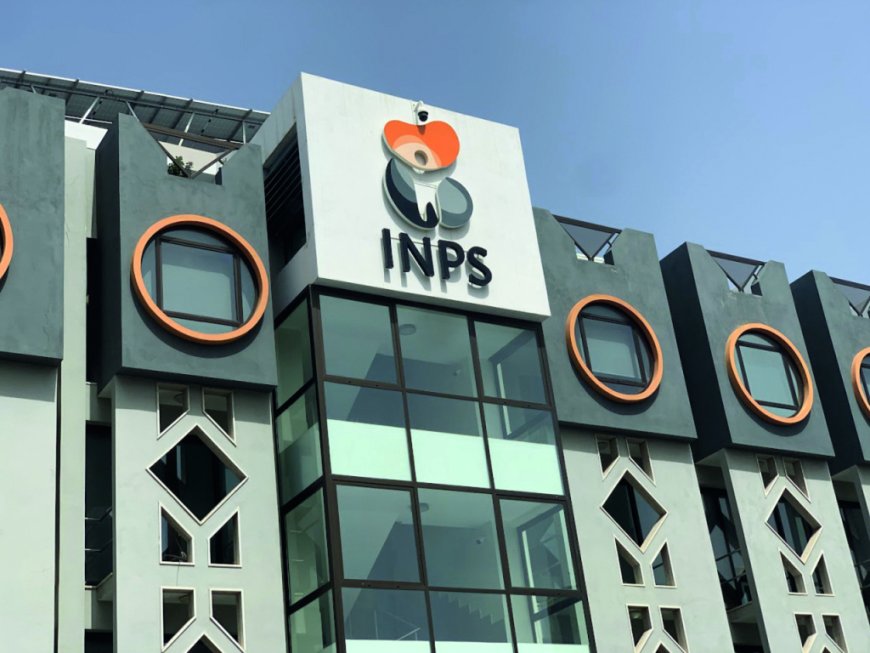
Although Cape Verde has historically been a country of emigrants, natural population growth had been sufficient to offset the negative contribution of net migration, except in the period between 1940 and 1950. However, Cape Verde's population decline over the last decade and a half - driven by falling fertility and emigration - "poses a significant challenge to the sustainability of the defined benefit pension scheme" of the National Social Security Institute (INPS), says the IMF.
Data presented by the IMF show that the resident population would be just over 491,000 in 2021 - compared to 504,000 in 2010. As the International Monetary Fund points out, citing the 2021 Census, almost 18,000 people emigrated in the previous five years, of which around 62% had Portugal as their destination country and "the ageing population in Portugal will continue to be a strong pull factor for emigration".
In Portugal, according to the Resident Population Projections drawn up by the National Statistics Institute (INE) for 2018-2080, the number of residents over the age of 65 could reach 3 million by 2080, with the ageing index almost doubling from 159 to 300 elderly people for every 100 young people, as a result of the decrease in the young population and the increase in the elderly population. INE also predicts that the working-age population (15-64) will fall from 6.6 to 4.2 million people.
In essence, the demography of the Portuguese population reflects the trends in the evolution of the European population and the world population at different rates. The global trend, which is referred to as demographic convergence, is reflected in the reduction in fertility, with an impact on birth rates and growth, the acceleration of migratory movements, and the reduction and stabilization of the propensity to die. In the last decade, between the last two censuses, the population decreased, a trend that had only been seen in the 1960s.
Expenditure control
With almost 45% of its assets in the form of deposits, the INPS has excess liquidity in relation to its expenses. This contributes to excess liquidity in the banking system and weakens the monetary transmission mechanism, says the IMF, meaning that the rates of return on most of the INPS's assets are low.
The INPS has an excess of liquidity in relation to its expenses.
The INPS needs to gradually reallocate its assets, reducing its dependence on low-yielding bank deposits. "Even successful auctions will not significantly increase yields," stresses the International Monetary Fund.
The INPS needs to gradually reallocate its assets, reducing its reliance on low-yielding bank deposits.
On the other hand, recommends the IMF, the INPS needs to control spending, whose current annual growth rate means that it could double in nominal terms in less than six years. Figures presented by the Fund show that in 2023 total expenditure was 7,568,244 escudos, rising to 8,460,319 escudos in 2024, an increase of 11.8% (Sickness and maternity took the largest shares of expenditure in both years, followed by Deferred Benefits - Pensions).
The IMF considers that "the solvency of the INPS defined benefit social security scheme is more precarious than previously assessed", since the institute's latest figures are based on overly optimistic population growth projections - the IMF even notes that "all institutions, national and international, have not fully included emigration in their most recent population projections, and some have not even taken the 2021 Census into account".
Expresso das Ilhas tried to hear from INPS, but received no reply.
_____________________________________________________
IMF policy recommendations
- The growth in real GDP per capita depends mainly on productivity growth, given that there is little or no increase in capital per worker
- Policy recommendation 1: Reforms to increase productivity are essential for continued growth
- The financial soundness of the INPS, which is a pay-as-you-go system [meaning that the current contributions of active workers directly fund the pensions of current retirees] or defined benefit [employer-sponsored pension fund that guarantees a fixed monthly pension amount after retirement], is more precarious than currently assessed .
- Policy recommendation 2: Update the actuarial study based on realistic population projections to assess the current solvency of the system
- The INPS already has a very high contribution rate (a combined contribution of 24.5% from workers and employers)
- Policy recommendation 3a: The financial situation of the INPS should not be improved by increasing the rate, as this would undermine the objectives of reducing unemployment and promoting formalization
- Policy recommendation 3b: Do not create new benefits (e.g. Back-to-School Allowance)
- Policy recommendation 3c: Develop a cost containment strategy
- Policy recommendation 3d: Gradually reduce INPS's large share of bank deposits and, in close coordination with Banco de Cabo Verde, invest abroad to increase real returns, diversify the investment portfolio and reduce risk
- Policy recommendation 3e: Consider a parametric reform that gradually raises the retirement age in line with increases in life expectancy
- Text originally published in the print edition of Expresso das Ilhas no. 1266 of March 4, 2026.