

























Government Agenda Prioritizes Government Reform, Transportation, Education, and Health Care as the Focus of the New Legislative Session
The Government Program, a document that outlines the government’s strategy for governance beginning in 2026, centers on the so-called “Cape Verde for All” Agenda, which combines state reform, strengthening the justice and security systems, a new economic agenda, and a package of social policies with an emphasis on education and health. Among the announced priorities are also concrete measures for air and maritime transportation, identified as essential for territorial cohesion in an archipelagic country.
According to the program, the government’s vision is based on “structural transformation geared toward sustainable, inclusive, and resilient development,” in an international context marked by rapid economic, climatic, technological, and geopolitical changes. The document lists priorities centered on foreign relations and the diaspora, macroeconomic stability, state reform, investments in infrastructure such as energy, water, transportation, and digital connectivity, the modernization of agriculture and the so-called Blue Economy, defense and security, justice, and, in the area of human development, education, higher education, science, health, and housing. Youth are presented as “the driving force of the nation,” with sports valued as a tool for inclusion and health.
A more agile and less burdensome government
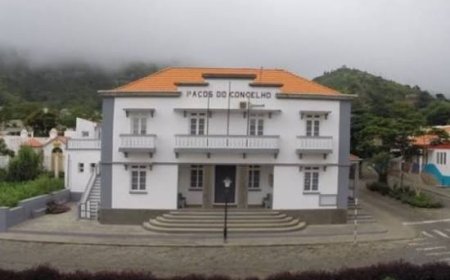
The program devotes a chapter to what it calls “the government that Cape Verde needs,” advocating for a profound reform focused on efficiency, proximity to citizens, and democratic decentralization. Among the measures announced are the promotion of a national debate on the institutionalization of administrative regions, the reduction of the number of deputies in the National Assembly (which requires a revision of the Constitution of the Republic of Cape Verde), the streamlining of public agencies and institutes, and the transfer of powers from the central government to the regions and municipalities. The text emphasizes that the burden and cost of governance have “increased disproportionately” in recent years, limiting investment in areas such as health, education, and infrastructure.
On the issue of transparency, the PAICV promises a “serious, systematic, and uncompromising” fight against corruption and illicit enrichment, by expanding the group of individuals required to declare their income and assets, the creation of a national electronic platform for these declarations, and the possibility of precautionary seizure of assets of illicit origin in investigations into serious crimes. The promotion of digital governance and the decentralization of services to the Administrative Regions and Municipalities, in accordance with the principle of subsidiarity, round out this section.
Justice, Security, Defense, and Diplomacy
In the area of justice, the program acknowledges structural problems such as procedural delays and difficulties in ensuring equitable access to the courts, proposing a Multi-Year Investment Program focused on technological modernization and the digitization of services, strengthening legal aid, and setting maximum deadlines for decisions in cases involving fundamental rights.
In the field of security, the document outlines a reform based on two pillars, macro and micro, with the creation of municipal police forces, the territorial organization of security subsystems, an Integrated Criminal Statistics System, and a National Cybersecurity Policy, including a National Cyber Incident Response Center with round-the-clock monitoring. The program also devotes attention to National Defense, diplomacy oriented toward the “supreme interests of the country” and the recognition of the diaspora, and ensuring the independence of public and private media.
Cross-cutting issues: youth, environment, and climate
One chapter is dedicated to so-called cross-cutting issues, which the government believes should permeate all public policies. Youth is addressed first, with a National Youth Employment Strategy, efforts to combat job insecurity, a Startup Guarantee Fund, incubators on all islands, and the launch of a First Digital Job Program, alongside free higher education at the Public University of Cape Verde. The document also addresses gender equality, biodiversity conservation, land-use planning, climate action, the energy transition, and the sustainable management of water and waste, including the modernization of the electrical grid and the expansion of desalination using renewable energy.
Air and maritime transport as a strategic priority
It is in the chapter on the New Economic Agenda that transportation takes center stage, presented as a “prerequisite for territorial cohesion and a factor in national sovereignty” for a scattered archipelago. The government promises to treat air, maritime, and land transportation as a strategic priority, ensuring regularity, safety, efficiency, and accessibility.
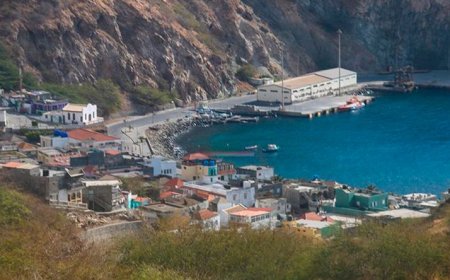
Regarding maritime transport, described in the program as the “highway of the islands,” the government commits to thoroughly reviewing the concession model, establishing a maximum cap of 500 escudos on ferry fares for residents—subsidized by the state— and to proceed with the gradual acquisition of its own vessels, including a coastal shipping fleet with roll-on/roll-off ships for refrigerated cargo. The document also announces the rehabilitation and expansion of strategic ports (Porto Grande, Porto Novo, Palmeira, and Praia), the modernization of their respective digital management systems, and the resumption of the International Ship Registry, in conjunction with the promotion of maritime training.
As for air transport, dubbed “Open Skies, Connected People” in the program, the government promises to regulate the domestic market by opening it to new operators and ensuring public service obligations on less profitable routes, in addition to guaranteeing “stable and sovereign air operations” through the acquisition of its own aircraft. Here, too, a maximum cap of 5,000 escudos per ticket is set for residents, subsidized by the state. The document prioritizes the construction and operation of Santo Antão Airport and Fogo International Airport, along with the modernization of facilities, runways, and operational systems at existing airports.
The chapter on mobility also extends to ground transportation, with the strengthening of the Electric Mobility Program, which provides for total tax exemption for electric vehicles in public transportation, a National Road Accessibility Plan, and the creation of a National Mobility Authority to coordinate and oversee urban transportation. In the chapter on connectivity, the program explicitly links maritime and air transport to inter-island connectivity, promising “regular, safe, and accessible mobility” through the reform of both systems, alongside digital connectivity goals such as 5G coverage for 95% of the population by 2030.
Education as an “absolute priority”
The “Education for All” chapter designates the sector as an “absolute priority” of the administration, with the goal of transforming Cape Verde into an inclusive, modern, and digital knowledge society. The program advocates for universal access, equity, and excellence at all levels of education—from preschool through higher education and lifelong learning—describing education as “the most powerful tool for addressing social inequalities.”
In preschool, elementary, and secondary education, the announced measures include making preschool universally accessible in partnership with local governments, updating curricula with a focus on digital skills and critical thinking, strengthening support for students with special educational needs, a revision of the Student Statute, and the introduction of foreign language instruction starting in the first cycle. The program also calls for an Educational Technology Plan, the renovation of school facilities, and a zero-tolerance policy toward bullying, with enhanced mental health support in schools.
A specific chapter is dedicated to valuing the teaching profession, with a commitment to gradually increase the salaries of elementary and secondary school teachers to a base salary of 108,000 escudos per month, along with the automatic reclassification of teachers who obtain new academic qualifications (bachelor’s, master’s, or doctoral degrees) and a revision of the competitive selection and evaluation model for school principals. The document also extends its proposals to technical and vocational education, higher education, and the fields of science, innovation, and technology.
Health: “a right, not a luxury”
The chapter “Health for All” is based on the principle that “health is a right, not a luxury,” advocating for universal, free health care as a “strategic commitment to human dignity, social equity, and national progress.” The program acknowledges progress made since Independence but admits that demographic and epidemiological shifts, climate change, pandemic threats, and management weaknesses have undermined some of these gains, fueling citizens’ dissatisfaction with the public health system.
The government is committed to consolidating a universal, efficient, equitable, and sustainable health care system, in line with the Sustainable Development Goal dedicated to health and well-being, with equitable coverage across all islands, free access to essential medicines, and a reduction in regional health inequalities. Among the measures announced are the strengthening of international cooperation for hospital infrastructure and equipment, the revision of pharmaceutical policy, structured coordination between the National Health Service and the private sector, a review of human resources planning, including the recruitment of specialized professionals from the diaspora, the improvement of diagnostic capabilities and hospital response, an effective patient evacuation system, and the development of public-private partnerships. The program also calls for investment in the construction, rehabilitation, and modernization of health infrastructure, with a focus on rural areas and the most isolated communities, and for the mobilization of domestic, foreign, and diaspora investment in health tourism and the pharmaceutical industry.
The document also includes chapters on affordable housing and “truly inclusive governance,” rounding out a program that the government presents as the roadmap for the legislative term.
Text originally published in the print edition of Expresso das Ilhas No. 1284 on July 8, 2026.
Expressodasilhas