











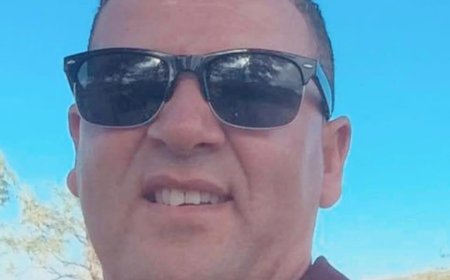


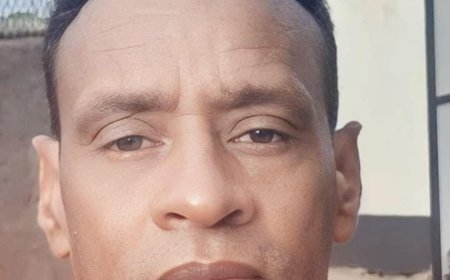



Olly Demacedo, from Brava Island to Massachusetts — a story of sacrifice, perseverance, gratitude, and love for America
The story of a Cape Verdean man from Brava who turned the hardships of his childhood into life lessons and found in the history of the United States a mission he strives to fulfill every year through the Thanksgiving celebrations in Plymouth, Massachusetts.

“I love telling stories. Even when I talk to people, I like to hear their stories, because everyone has a story to tell. Every person comes from somewhere and has their own reasons for doing what they do.”
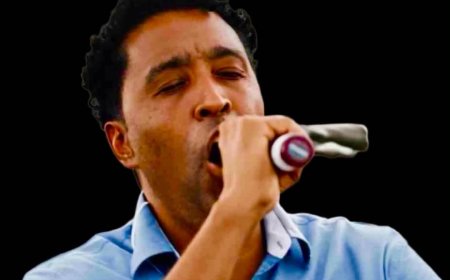
This is how Olly Demacedo, a Cape Verdean native of the island of Brava, begins to explain, in a documentary about Thanksgiving celebrations, one of his greatest passions: telling stories, listening to others’ experiences, and understanding the events that shape each person’s life.
For Olly, no one should be defined solely by what they do in the present. Behind every person lies a past, a family, a set of challenges, dreams, sacrifices, and opportunities that help explain the path they’ve taken.
Today, Olly participates in the annual Thanksgiving celebrations in Plymouth, Massachusetts, where he contributes to an initiative that seeks to tell the history of the United States through parades, reenactments, and floats. What began as a small parade has grown year after year, gaining prominence and touching the hearts of people from diverse backgrounds.
But the story of this Cape Verdean man does not begin in Plymouth, nor in the parades, nor in his participation in American celebrations.
It begins much earlier—with a family that crossed the Atlantic, a grandmother who faced a devastating tragedy, a mother who made enormous sacrifices for her children, and a boy who learned from an early age that life does not always offer equal opportunities to everyone.
It is a story that connects the island of Brava to America and shows how the experiences of one generation can pave the way for future generations.
To understand Olly Demacedo’s journey, we must go back to around 1948, the year in which, according to his family’s recollection, his grandmother left Cape Verde to emigrate to the United States.
At that time, crossing the Atlantic was an adventure marked by uncertainty. There were none of the transportation and communication conveniences we have today. Leaving meant leaving behind one’s homeland, family, and the familiar landmarks of a lifetime, without knowing exactly what one would find on the other side of the ocean.
Olly’s grandmother boarded a ship, while her husband set sail on another vessel. Both were headed for the United States, hoping to build a better future.
However, fate had a tragedy in store.
When she arrived in New Bedford, Massachusetts, Olly’s grandmother was met by a family friend. It was then that she received the news that would change her life forever: her husband had died at sea during the voyage to the United States.
The woman who had set out in search of a better life now found herself alone in a foreign country, facing the loss of her husband and the responsibility of deciding what to do from that point on.
Years later, Olly met in person the woman who had taken in his grandmother during that time of suffering. It was she who told him one of the most memorable episodes in their family history.
The woman recalled that Olly’s grandmother had slept in her bed and that, for over a month, she herself had stopped sleeping with her husband to give the newcomer a place where she could rest.
Every night, Olly’s grandmother wept, devastated by grief.
That woman had not only lost her husband. She had also lost the life she had imagined building with him. She was far from home, far from her children, and unsure of what the future held.
Still, she had to make a decision.
Olly’s grandmother had left Cape Verde behind, including her eldest daughter—Olly’s mother—who was already married and had two children. Olly’s mother also helped care for the brothers and sisters who remained on the island.
After her husband’s death, his grandmother faced two difficult choices: return to Cape Verde and face a life she knew could be very complicated, or remain in the United States, alone, trying to find an opportunity to rebuild her future.
She chose to stay in America.
It was a painful decision, made at a time of great vulnerability. There were no guarantees of success, nor any certainty that the sacrifice would pay off.
There was only the hope that staying in that country might open up possibilities that would be harder to achieve if she returned.
That choice had consequences that extended beyond the grandmother’s own life. Her sacrifice became part of the history of subsequent generations.
When Olly recalls this episode, she recognizes that her own existence and her family’s journey are linked to that decision.
His grandmother could not have imagined all the opportunities her descendants would eventually encounter. But her decision to carry on, despite the pain, helped create the conditions for the family’s story to continue on the other side of the Atlantic.
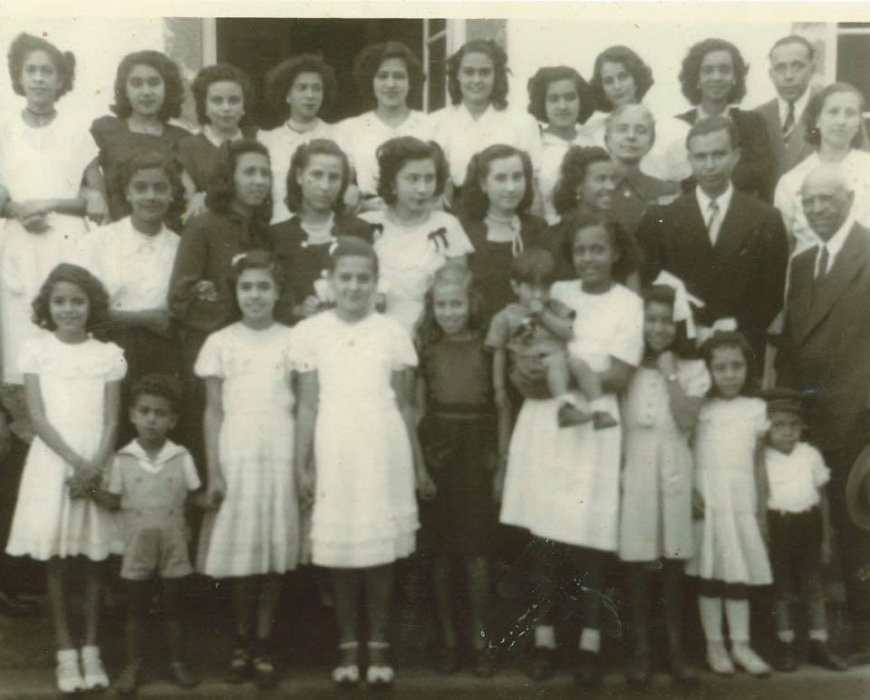
The next generation inherited the memory of these sacrifices and added a new goal: to ensure that their children had access to education.
Olly’s mother believed deeply in the opportunities the United States could offer. For her, being in America meant much more than simply living in another country. It meant allowing her children to study, gain knowledge, and have the opportunities she wanted to provide for them.
Her dream was clear: to reach the United States so that her children could get an education.
The family had seven children. Raising such a large family required a capacity for sacrifice that, often, only parents themselves can understand.
Olly’s mother used to tell her children that they would only truly understand the depth of their parents’ love once they had children of their own.
She explained to them that a mother or father might go without food to ensure their children had enough to eat.
It was a lesson that couldn’t be learned through words alone. The family’s very way of life demonstrated the meaning of that message.
To pay for the tickets, they sold everything they owned.
The decision to leave required material sacrifices, but it was driven by a greater hope: to provide their children with a better future.
For that mother, material possessions could be replaced. The opportunity to ensure an education for her children was too important to be wasted.
And so the family prepared to begin a new chapter in their lives.
The family settled on Cedar Street in Dorchester, Massachusetts, in a house divided into three apartments.
Fourteen people lived on the second floor: Olly’s grandmother, two uncles, an aunt, the wife of one of the uncles, and the nine members of Olly’s immediate family.
It was a crowded house, with many people sharing the same space, each with different routines and needs. Privacy was limited, and daily life required adaptation, understanding, and a sense of family.
For those who look only at the present, it can be difficult to imagine the conditions under which so many immigrant families began to build their lives in the United States.
Arriving in America did not mean that all problems disappeared. On the contrary, it was often the beginning of a new set of difficulties.
They had to find stability, adapt to a different society, and ensure that their children could attend school and take advantage of the opportunities that had motivated the journey.
The family remained in Dorchester for about five years.
These were difficult years, but they were important in shaping Olly. It was in that environment that he began to understand, through experience, that opportunities do not always come with comfort and that, at times, one must face very harsh conditions to build something better.
One of Olly’s greatest challenges was the language barrier.
When he arrived in the United States, he didn’t speak English. At school, he found himself surrounded by children who communicated in a language he didn’t yet understand.
According to his account, his classmates teased him daily because he didn’t understand what they were saying.
At that time, there was no bilingual program that would allow him to learn gradually, with support in his native language. Learning took place through immersion: he had to listen to English, live with the language, and quickly learn to use it.
For a child, this experience could be particularly painful.
Olly wasn’t just facing the challenge of learning a new language. He also had to deal with the feeling of being different, the difficulty of understanding others, and the embarrassment of not being able to respond in the same way as his classmates.
Looking back on that time, he acknowledges that it’s not easy to explain the pain he felt.
However, with the passage of time, he began to view that experience differently.
That difficulty forced him to develop inner strength and determination that would later prove essential for facing other challenges.
His childhood taught him that life can put a person in situations for which they are unprepared, but also that it is possible to learn, adapt, and move forward.
That lesson would stay with Olly throughout his journey.
While the language barrier played a significant role in Olly’s childhood, basketball also held a special place in his life. Olly loved basketball. It was an activity he deeply enjoyed and in which he strove to give his best.
Back then, he used to buy his sneakers at a small department store called Riches and Panos, which no longer exists. A pair cost just two dollars.
Today, two or three coins might seem like a negligible amount. But for a family struggling financially, even such a small sum could represent an expense they simply couldn’t afford at the time. Olly recalls that his sneakers got so worn out that they started to tear. The heel area split open completely, and he tried to patch them up on the inside with tape, hoping to keep wearing them.
The problem got worse when he reached the final stage of the basketball tournament. His sneakers fell apart just as he was about to play in the championship game.
For a child who loved to play and wanted to help his team, that was a particularly difficult moment. It wasn’t just about not having the right shoes. It was also the fear of having to admit to his teammates that his family couldn’t afford to buy another pair.
Olly felt so ashamed that he couldn’t even bring himself to ask a friend to lend him a pair of sneakers.
So he decided to talk to his mother.
Her response stuck in his memory:
“Look, tomorrow we have to pay the mortgage. We can’t buy those sneakers. They only cost $2.99.
But the issue wasn’t the isolated cost of the product. It was the family’s financial reality and the need to choose which expenses could be paid first.
The mortgage payment took priority. The family couldn’t risk losing the stability they’d worked so hard to achieve because of an expense they simply couldn’t afford at that moment.
For those who have never experienced financial hardship, it can be difficult to understand how such a small amount can have such a big impact.
For Olly, however, that situation became one of the most memorable moments of his childhood.
Saturday arrived—the day of the championship final. Olly wanted to play in the game, but he didn’t have sneakers in good enough condition to play. He was so ashamed to explain his situation that he found a way to hide the real reason he couldn’t take the field.
On the 76ers’ team, there was a clear rule: if a player forgot his team jersey, he couldn’t play.
Olly knew that rule. So he decided not to bring his jersey.
It was easier to say he’d forgotten his gear than to explain he didn’t have shoes to play in. The first situation could happen to any player; the second revealed a financial hardship he didn’t want his teammates to know about.
So, he showed up for the final without his jersey and ended up not playing.
The team lost by just one point.
Olly recalls that, at the time, he was a reasonably good player, scored a lot of points, and usually contributed to the team’s performance.
To imagine what he felt that day is to understand a dimension of poverty that doesn’t always show up in the statistics: the silent shame of a child who wants to participate, who has the ability to do so, but who feels he lacks what he needs.
He didn’t want to leave the team. He didn’t want to give up basketball. He just wanted to keep others from finding out about his family’s situation.
That episode remained a painful memory, but it also became an important reference point in how he came to view the opportunities that arose later on.
The sneakers he couldn’t afford for $2.99 became, in his memory, a symbol of everything his family had to face.
Despite financial difficulties, Olly didn’t give up on his dream of continuing his education and playing basketball. His parents couldn’t afford to pay for college. For a family that needed to carefully manage household expenses and provide for so many children, covering the costs of a college education was extremely difficult.
But an opportunity arose that changed the course of his life. Olly received a full scholarship, valid for four years, to play basketball at a second-division university.
The scholarship allowed him to continue his studies and keep playing the sport he loved so much, without relying on his parents’ financial resources to cover college costs.
It was an extraordinary opportunity for someone who, just a few years earlier, had been forced to sit out a final because he didn’t have the right sneakers to play in.
And it was precisely at the beginning of this new chapter that he had an experience he would never forget.
The university began distributing sports equipment to the players. Among the items received were high-top Adidas sneakers made of leather, which at that time were something truly special.
The players were told that those sneakers would be theirs. Later, they would receive one pair specifically for practice and another for official games.
Olly was incredulous.
He asked:
— You mean we’re going to get three pairs of sneakers?
For someone who had gone through the experience of not being able to buy a single pair for $2.99, the idea of receiving three pairs was almost impossible to believe.
That moment held a significance that went far beyond sports gear.
It represented the distance between the child who hid his lack of sneakers out of shame and the young man who now received, through an educational and athletic opportunity, everything he needed to train and compete.
Olly recalls telling his father the news. He felt that God had taken care of him and that he was experiencing something extraordinary. The experience left a deep impression on him.
It didn’t erase the pain of the past, but it showed him that circumstances can change and that an opportunity, when it arises, can open doors that once seemed impossible to reach.
The experience with the sneakers and the college scholarship helped shape the way Olly views life.
He himself acknowledges that he strives to be a deeply grateful person.
He doesn’t view everything he’s received as something he necessarily deserved or was entitled to. On the contrary, he feels he’s had the opportunity to achieve things he never would have imagined when he was facing the hardships of childhood.
His gratitude doesn’t stem from forgetting those hardships. It stems precisely from the memory of those hardships.
Those who have never experienced certain hardships may consider it normal to receive equipment, attend college, or find a career opportunity. For those who have known what it’s like to be unable to afford a pair of sneakers, those same experiences can take on a completely different meaning.
Olly learned to recognize the value of opportunities because he knew what it was like not to have them.
This awareness has become one of the foundations of his way of thinking.
And it was also one of the reasons why he came to place so much importance on the history of the United States and the people who helped build the country where he lives.
From his perspective, he has received so much throughout his life that he feels a moral responsibility to tell the story of the nation that has provided him with opportunities.
For him, this is a way to express gratitude and to help others understand the value of what they have.
Olly speaks of the United States with pride, but he also acknowledges that the country is far from perfect.
He does not seek to portray America as a society without problems, injustices, or mistakes. On the contrary, he admits that where there are people, there are difficulties.
Problems are part of families, workplaces, institutions, and communities. No society is free from them.
The difference, in his view, lies in the possibility of seeking to correct what is wrong and working to build a better reality.
That is what, for Olly, makes the United States special.
America does not represent the promise that everyone will become rich, nor the guarantee that life will always be easy. Above all, it represents the hope that people from different backgrounds and social conditions can find opportunities to build a better future.
His own family’s history helps explain this conviction.
His grandmother faced a tragedy and remained in the country. His mother sacrificed her possessions to provide her children with an education. Olly struggled in school, found an opportunity in basketball, and earned a college scholarship.
His journey does not mean that everyone has the same opportunities or that all problems are solved. It means that, in his experience, the country offered him possibilities that his family would hardly have imagined under the same circumstances.
That is why he considers America to be much more than an institution or a commission.
For him, it is a collective project, built by people who worked hard and made sacrifices in the hope that future generations could live better lives.
One of the strongest ideas Olly associates with America is the ability to acknowledge mistakes, seek to correct them, and move forward.
Throughout its history, the United States has faced conflicts, contradictions, injustices, and difficult times. Olly does not deny this reality.
However, he believes that a society should also be judged by its ability to learn from the past, acknowledge its mistakes, and strive to do better.
In his view, there is fundamental value in the possibility of starting over.
People make mistakes. Families face conflicts. Institutions fail. Communities go through difficult times. But none of this necessarily means that the story has to end in failure.
For Olly, forgiveness and redemption represent the possibility of moving past mistakes and forging a different path.
America, as he understands it, is not a fantasy of perfection. It is a society still under construction that must strive to come closer to its ideals.
It is in this context that he values the idea of building an ever more perfect union.
The goal is not to claim that perfection has already been achieved, but to recognize that there is work to be done.
This distinction is important: taking pride in a country does not mean ignoring its flaws. It can mean, precisely, believing that it is worth working to correct them.
Olly is proud to be American and is saddened when he sees the country’s history reduced exclusively to its mistakes.
Not because he denies the existence of those mistakes, but because he believes that a fair understanding of history must include both the failures and the efforts, sacrifices, and achievements that helped transform society.
Olly considers himself a student of history and takes the relationship between the past and the future very seriously.
He believes that civilizations, no matter how powerful they may be, are not destined to exist forever. History shows that societies and empires can grow, attain great influence, and later disappear or undergo profound transformation.
For this reason, he argues that Americans should not take everything they have for granted.
Prosperity, freedom, and opportunities should not be viewed as realities that will automatically exist, regardless of the choices made by each generation.
It is necessary to work, participate, serve, and preserve the principles we hold dear.
From Olly’s perspective, knowing history is essential to avoid repeating mistakes and to understand the sacrifices that made the present possible.
The past should not serve merely to fuel nostalgia. It should help guide future decisions.
New generations need to understand the hardships faced by their ancestors—not to remain trapped by them, but to realize that today’s opportunities stem, in part, from the efforts of those who came before.
It is precisely this connection between memory and responsibility that Olly seeks to promote through his work on the Plymouth celebrations.
His goal is not merely to commemorate events. It is to help people understand why these events continue to hold significance.
It is in this context that Olly Demacedo’s participation in the annual Thanksgiving celebrations in Plymouth, Massachusetts, takes place.
For him, telling the story of America is a way to bring the past to life and help the public understand the experiences that helped shape the nation.
He recalls that, in the first year, they organized a small parade. The initiative grew year after year, expanding in scale and developing new ways to portray American history.
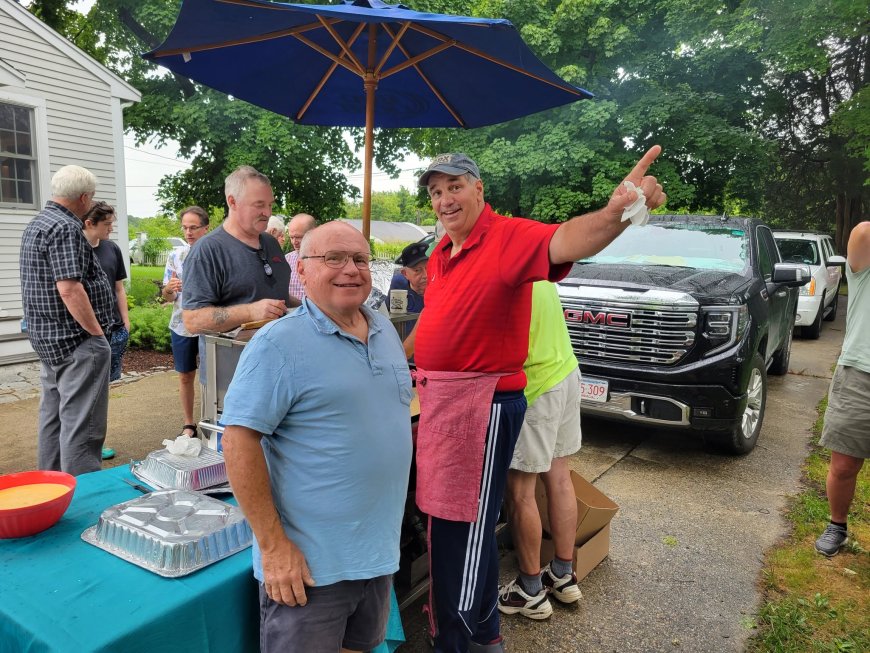
The floats play an important role in this effort. Through images, scenes, and performances, they seek to present episodes and values that are part of the collective memory.
Olly describes this activity as a way to personify the qualities he associates with America.
It is difficult to fully explain the effect that a historical reenactment can have on the audience. Sometimes, what people see stirs emotions that they themselves cannot immediately identify.
Olly says he has received phone calls from people who were crying after watching certain performances.
These people couldn’t explain exactly what had moved them. They just knew that something about that performance had touched them deeply.
For Olly, these moments demonstrate that history is not just a collection of dates, documents, and distant events.
History is also made up of human experiences, feelings, and memories that can continue to influence people long after the events have ended.
When a parade float evokes a deep emotion, the performance achieves something that goes beyond mere spectacle: it establishes a connection between the past and the present.
And it is this connection that Olly seeks to preserve.
There is a particularly interesting aspect to Olly’s journey: his own family history contains many of the elements he seeks to convey when he participates in American celebrations.
The America he presents to the public is onebuilt by people who made sacrifices so that future generations could live better lives.
His family lived precisely that reality.
His grandmother crossed the ocean, lost her husband, and had to decide whether to return to her homeland or remain in a foreign country.
His mother believed that her children’s education justified extraordinary material sacrifices.
The family faced financial difficulties, lived in a space shared by 14 people, and sought to build a better life through work, school, and perseverance.
Olly, for his part, faced the language barrier, the shame of poverty, and the obstacles of a difficult childhood, until he found opportunities in basketball and education that transformed his path.
That is why, when he speaks of America as a land of opportunity, he is not merely speaking from an abstract idea. He is also speaking from the experiences of his own family.
His story is both Cape Verdean and American.
His roots are tied to Cape Verde and the island of Brava, but his life has been deeply shaped by the opportunities, challenges, and experiences he has had in the United States.
This dual connection shows that integrating into a society does not necessarily require abandoning one’s origins. On the contrary, memories of one’s homeland can help a person better understand the value of the opportunities found in another country.
Olly carries with him a story that began long before he participated in a parade in Plymouth.
And it is precisely this depth that makes his journey worth sharing.
When Olly talks about the future, his concern extends beyond his own life and the generation to which he belongs.
He wants people to understand history, appreciate the sacrifices of the past, and have the opportunity to build a better future.
He also thinks of those who have not yet been born, the children who will one day grow up, and those in different parts of the world who may find in the United States an opportunity to rebuild their lives.
He hopes that these people can have experiences similar to those that shaped his own journey: finding opportunities, developing skills, overcoming difficulties, and building a future they might not have been able to imagine given the circumstances into which they were born.
He does not intend to offer a promise of wealth or guaranteed success. His message runs deeper.
It is about preserving hope and the possibility of moving forward, regardless of one’s place of origin or social status.
To that end, he considers it essential to keep historical memory alive.
The younger generations need to know that the present did not come about by chance. It was built through the decisions, sacrifices, mistakes, and achievements of millions of people.
Preserving this memory is a way of honoring those who came before us and of taking responsibility for those who will come after us.
It is also the reason why Olly places such importance on his work with the Thanksgiving celebrations in Plymouth.
Every parade, every reenactment, and every story told can help someone better understand the past and reflect on the future.
Conclusion: From Brava to the World, a Story of Gratitude and Hope
Olly Demacedo’s journey is a story spanning several generations.
It begins with a grandmother who left Cape Verde and faced tragedy in the middle of the Atlantic. It continues with a mother who made her children’s education her top priority. It traces the childhood of a boy who didn’t speak English, who suffered from his classmates’ lack of understanding and even hid the fact that he didn’t have sneakers so as not to reveal his family’s financial struggles.
Then, the story takes a turn: the same young man who didn’t have $2.99 to buy a pair of sneakers wins a four-year college scholarship to play basketball and receives sports equipment he never imagined he could have.
The experience teaches him the value of opportunities and transforms gratitude into a philosophy of life.
Later, that gratitude finds expression in his interest in history and his participation in Thanksgiving celebrations in Plymouth, where he seeks to help tell the story of the United States through parades and reenactments that move the audience.
Olly acknowledges that America has problems and that its history includes mistakes. But he believes that a society should not be defined solely by its flaws, just as a person should not be reduced to the most difficult moments of their life.
For him, what matters is the ability to learn, correct mistakes, start over, and strive to build something better.
It is this vision that he seeks to convey to people: the need to look to the past without forgetting the future, to recognize the sacrifices that made the present possible, and to work so that future generations may also find opportunities.
Olly’s story is, thus, a bridge between Cape Verde and the United States, between the island of Brava and Plymouth, between the memory of an immigrant family and the history of a nation.
It is also a testament to the power of perseverance and the importance of never forgetting where we came from.
Because behind every opportunity, there may lie the silent sacrifice of someone who came before us.
Behind every achievement, there may lie a hardship that no one knew about.
And behind every person telling a story today, there may be a long journey that deserves to be heard.
Olly Demacedo has a story to tell. A story that begins with the sacrifices of his Cape Verdean ancestors, winds through the hardships of childhood, and arrives in Plymouth, where he seeks to preserve the memory of the America he has come to love.
His message is simple yet powerful: we must not forget the past, we must not take opportunities for granted, and we must never lose hope of building a better future.
After all, as Olly himself reminds us, everyone has a story to tell. And sometimes, learning about one person’s story means discovering the story of a family, a people, and a country.