








Voices from Djabraba: The challenge of realism against party polarization in the eighth parliamentary term now beginning
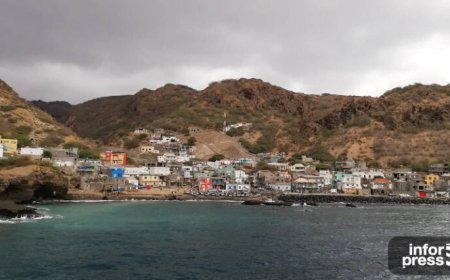
Cidade de Nova Sintra, May 25, 2026 (Bravanews) - The start of a new term in the Cape Verdean Parliament brings with it a renewed and under the circumstances urgent expectation for all the islands of the archipelago, but few feel this need as acutely and viscerally as the island of Brava.
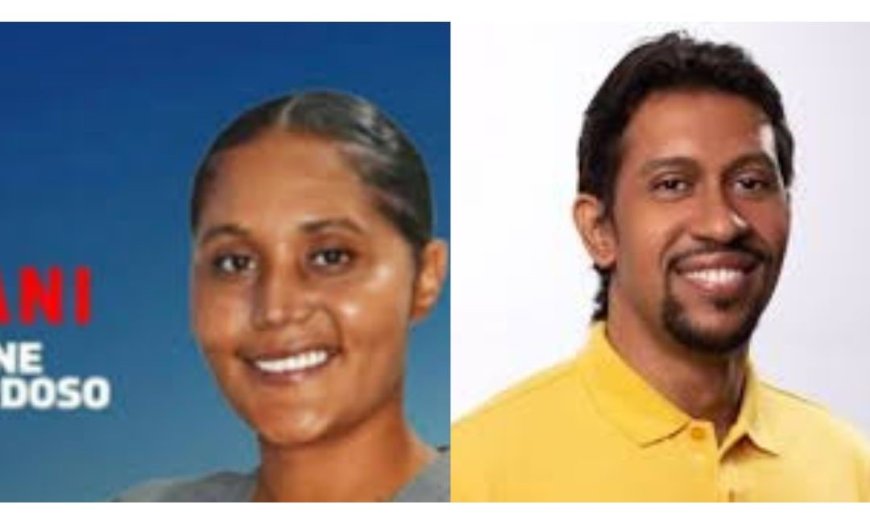
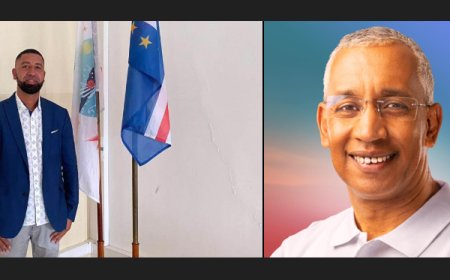
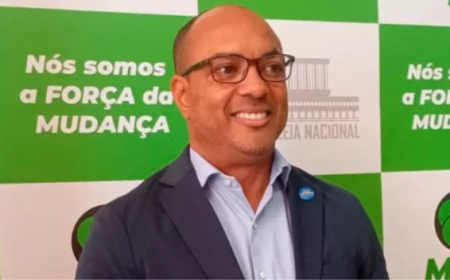
With the start of parliamentary work scheduled for a month and a half from now, the eyes of all Bravenses, both those living on the island and the vast and influential diaspora, have turned with particular attention to their two Brava representatives elected to the National Assembly. Clóvis Silva, representing the African Party for the Independence of Cape Verde, and Ivone Cardoso, elected on the Movement for Democracy lists, will be the two legitimate voices that will have the heavy responsibility of translating the yearnings, pains and hopes of the island of Djabraba into the national political debate.
The central question that legitimately and understandably arises in this preview period lies in the political stance and democratic maturity that both MPs will adopt over the next few years. The great dilemma on the horizon is whether we will see the traditional and often exhausting mirror game of traditional party politics, or whether, on the contrary, there will be room for a paradigm shift.
In the first hypothesis, the scenario is already well known to the electorate: We would have a Clovis Silva taking up a discourse aligned with the government's playbook, arguing that the executive is doing very well, that investments are happening and that everything is being done to improve living conditions on the island; on the other hand, we would see an Ivone Cardoso painting a diametrically opposite scenario, focused on the perspective that everything is going wrong, that the island is at an impasse and that Brava urgently needs a completely new direction.
The second hypothesis, much more ambitious and patriotic, presupposes that both elected representatives are able to take off their party shirts, whenever necessary, in order to take on, in unison and in a clear manner, the naked reality of the island of Brava, taking to the Várzea Palace the chronic problems that stifle its development.
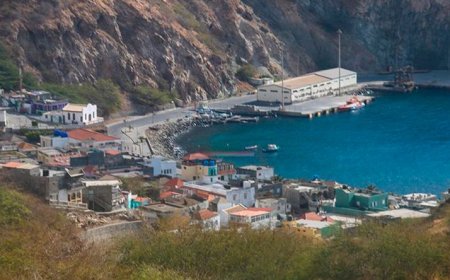
The first and most dramatic of these problems, which serves as a barometer for the island's isolation, is the chronic crisis of inter-island maritime transport. The precariousness and irregularity of connections with neighboring islands, especially Fogo and Santiago, have reached unsustainable levels, generating a general feeling of abandonment. This asphyxiation of connectivity prevents any economic planning, destroys the local tourist potential and scares away the Bravense diaspora itself, which gives up on visiting its land due to the total uncertainty in meeting boat schedules. The successive cancellations and the inadequacy of the ships assigned to this line not only hinder people's mobility, but also repeatedly cause local businesses to run out of supplies, leaving the island's mini-markets and stores without essential goods and basic necessities.
Inextricably linked to the transport crisis is the extreme vulnerability of the local health system. Brava struggles daily with a lack of specialized medical care and a glaring shortage of diagnostic equipment. The lack of an aerodrome or rapid alternative air transportation turns urgent medical evacuations into a veritable legal and humanitarian Russian roulette, where patients' lives depend on sea conditions and the uncertain availability of a ship. The demand for lasting solutions, such as the permanent presence of a suitable Coast Guard vessel, a passenger boat staying overnight on the island or an emergency helicopter based in the health region, is an urgent demand that no longer allows for palliatives or postponed promises.
Alongside health and mobility, the scarcity and precarious quality of the water supply system continue to condition the daily lives of the population and block the productive sectors. Brava needs robust investment in desalination, effective basic sanitation and the modernization of the distribution network in order to curb the scarcity that affects both domestic consumption and the development of local agriculture and livestock. Without regular water and adequate sanitation, it becomes utopian to talk about attracting private investment or settling the young population, which continues to leave the island for Praia, Mindelo or abroad, given the lack of prospects for qualified employment and the lack of incentives for local entrepreneurship.
In strictly mechanical and institutional terms, the way Parliament works tends to push MPs into predefined roles from which it is difficult to escape. As the PAICV is the party that supports the government, the party's expectation of Clovis Silva is to defend the government and echo the investments made, highlighting the drought mitigation programs or the urban requalification plans. However, for a member of parliament elected from such a small constituency and battered by these crises, the challenge of political survival lies in not camouflaging reality. If her speech is limited to a purely optimistic narrative that contradicts what ordinary citizens feel when they see empty shelves or despair in the port of Furna, an insurmountable credibility gap is created. On the other hand, Ivone Cardoso, as an opposition MP, has a constitutional duty to monitor and put her finger on open wounds. However, in order for her voice to be truly effective and not just dismissed as electioneering noise, her stance will have to go far beyond denunciation, forcing her to present concerted legislative proposals and viable financial solutions in the specialty of the State Budget.
What contemporary Cape Verdean society and, in particular, the Bravense electorate yearn for is a stance of profound realism that places these structural constraints above the party conveniences of the capital. The most productive path for regional development would be to create a united front between the two MPs on these fundamental pillars. If Clóvis Silva and Ivone Cardoso manage to converge on a common and uncompromising diagnosis on transport, health and water, Brava will have a political weight in the National Assembly far greater than its demographic scale, forcing the government to see the island not as a geographical burden, but as a part of the national territory with equal rights.
In a month and a half, when the bell rings and the first plenary session of this new legislature begins, the real test of leadership for these two representatives of the people will begin. The judgment of local history will depend entirely on the choice they make from that moment on. If they opt for a debate focused on tangible reality, recognizing progress where it exists, but openly and courageously demanding urgent solutions for isolation and health, they will dignify the mandate they received at the ballot box and make a historic contribution to their homeland. If, unfortunately, they fall into the trap of sterile polarization, where one pretends that everything is going well and the other criticizes only out of obligation to the bench, Brava will continue to see its future conditioned by distance and neglect, postponing once again the urgent responses that Nova Sintra and all the localities on the island of Djabraba have been demanding for decades.
Moises Santiago