










José Maria Neves challenges the new government to follow the example of the Blue Sharks and calls for national unity.
The Head of State used Cape Verde's historic qualification for the World Cup as an inspiring example to challenge the new leaders to reach new levels of economic and social development.
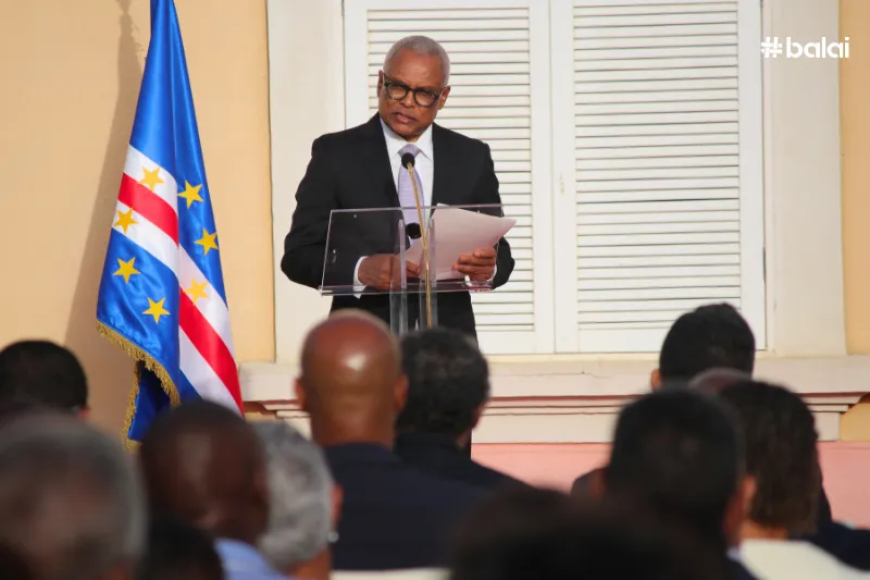
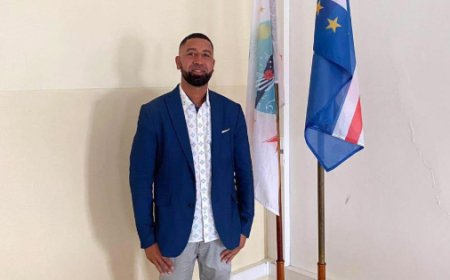
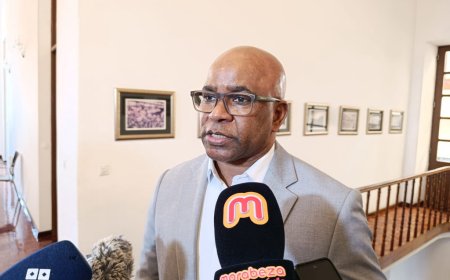
The President of the Republic, José Maria Neves, argued this Friday, the 19th, that Cape Verde's historic qualification for the World Cup should serve as inspiration for the country to reach new levels of economic and social development. The Head of State was speaking during the inauguration ceremony of the XI Government of the Republic led by Francisco Carvalho.
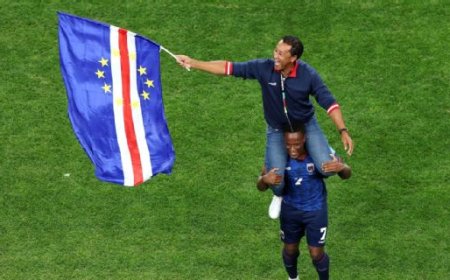
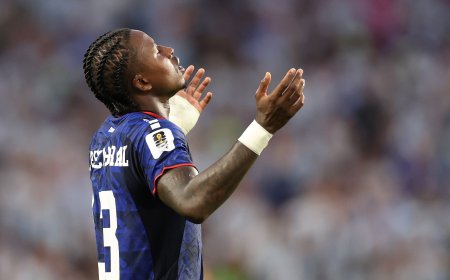
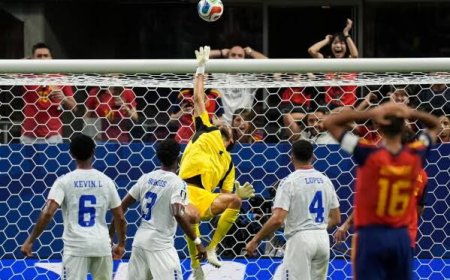
In his inaugural speech, José Maria Neves considered that the performance of the Blue Sharks in their debut at the 2026 World Cup goes beyond the sporting dimension and represents the affirmation of Cape Verde among the best in the world.
“ There are moments when a nation redefines itself. The qualification of the National Football Team for the World Cup is, without a doubt, one of those moments. For many, at the time of independence, this country was an unlikely nation. Fifty years later, we are among the best in the world ,” he stated.
As José Maria Neves argued, he saw reflected in the players and coaching staff "the values that shape the Cape Verdean people, such as resilience in the face of adversity, courage in the face of challenges, the determination to never give up, and the serenity and wisdom to do well what needs to be done at each moment."
The Head of State argued that the country should seize this moment to transform international prestige and "extraordinary symbolic capital into concrete gains for national development."
The challenge now is to transform this extraordinary symbolic capital into concrete gains for national development” and “to convert prestige into development, recognition into opportunities, and talent into prosperity,” he declared.
“If we were able to reach this level in world football, why not aspire to excellence in education, science, technology, the blue economy, culture, public administration, innovation and entrepreneurship?” challenged the President, and also appealed for the mobilization of the entire Cape Verdean society, including the diaspora, to face the country's challenges.
“The future of Cape Verde increasingly depends on our ability to unite talents, create opportunities, and mobilize all the nation's forces around common goals. This is a time for unity,” he stated, advocating for this same union of efforts among citizens, businesses, public institutions, and emigrant communities.
In this regard, the President of the Republic also warned of the need to reduce political polarization and strengthen dialogue between different national actors.
“The pluralism inherent in representative democracy should be a source of understanding and consensus, not a channel for fragmentation and polarization,” he emphasized, adding that “the hyper-politicization of the public sphere should give way to dialogue, negotiation, and the joint search for solutions to people's problems, with human dignity always in mind.”
José Maria also emphasized that "the leaders the country needs at this moment must be calm, confident, mobilizing and unifying, as well as capable of transforming differences into convergences, challenges into opportunities and hopes into concrete achievements."
“In a world marked by profound uncertainties, geopolitical tensions, armed conflicts, economic slowdown, climate change, migratory pressures and rapid technological transformations, Cape Verde faces particularly demanding challenges,” the President acknowledged, but recalled that “there have never been so many opportunities within our reach.”
Referring to the legislative elections, José Maria Neves congratulated Francisco Carvalho on his electoral victory, but expressed concern about the high abstention rate recorded in the vote.
“ We cannot ignore the high abstention rate recorded in these elections. This is a sign that deserves deep reflection from all political and institutional actors,” he warned, and argued that it is necessary “to understand the reasons for this disengagement of a significant part of the electorate and to find ways to strengthen the civic and political participation of citizens.”
Regarding the new executive, the President hinted at the main challenges to be faced in the coming years, including improving connectivity between the islands, reducing poverty and social and regional inequalities, creating jobs, strengthening security, the energy transition, access to water, as well as strengthening education, health and public administration, consolidating justice and security, reinforcing press freedom and modernizing public administration to make it more efficient, closer to citizens and more results-oriented.
"From the opposition's side, a responsible, vigilant, and constructive attitude is equally expected, in accordance with the will expressed by the voters," José Maria reminded, and recommended that " the necessary consensus be quickly found for the renewal and installation of bodies external to the National Assembly, which have long awaited a solution." and regarding the great national designs”, with “the full availability of the President of the Republic to collaborate and provide institutional support”.
In concluding his speech, José Maria Neves stated that Cape Verdeans expect results from the new government and left a message of confidence for the future.
" The people of Cape Verde expect results. They expect integrity. They expect vision. And above all, they expect politics to continue to be an instrument at the service of the people and the common good." (…) Just as our Blue Sharks took to the field without fear of the predictions, Cape Verde must also face the future with confidence in its abilities (…)”, he concluded.
The President of the Republic swore in the 18 members of the new executive this Friday, the 19th, in a ceremony that took place in the Garden of the Presidential Palace.
Balai News