



















A Brava beyond electoral promises: the portrait of a country at nine speeds - Animal husbandry sector
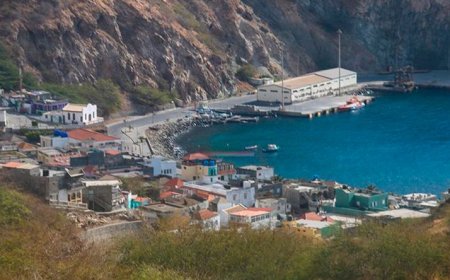
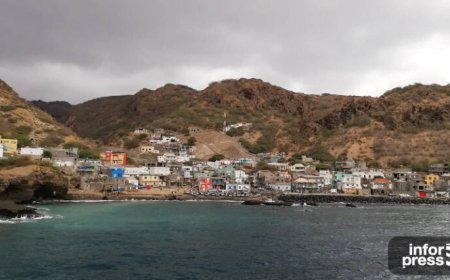
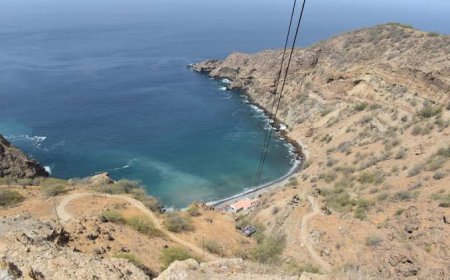
Cidade de Nova Sintra, April 10, 2026 (Bravanews) - On an island where time seems to slow down, but challenges accumulate rapidly, animal husbandry on the Brava has become a faithful mirror of the structural inequalities that mark Cape Verde. Beyond the electoral promises repeated every cycle, there is a silent reality, lived daily by breeders who resist more out of necessity than effective support.
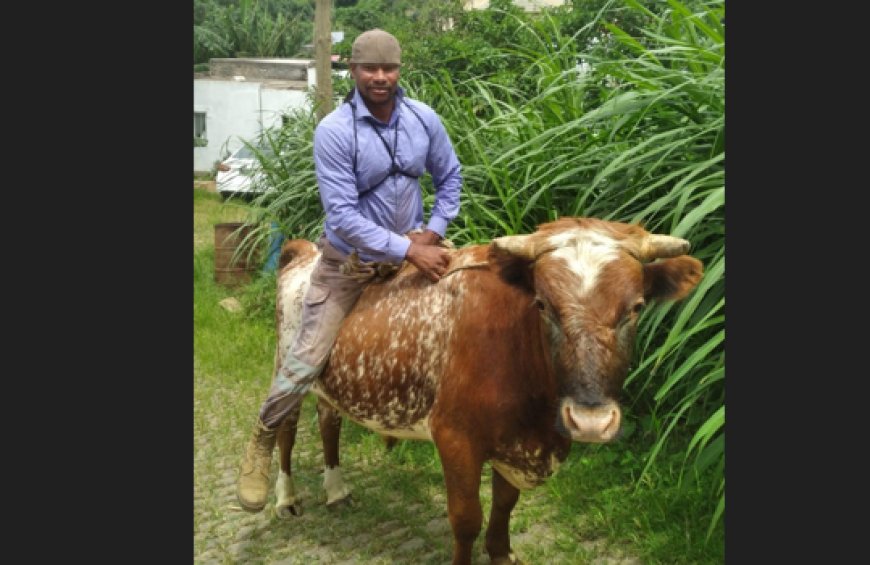
To talk about Brava is to talk about resilience. But this resilience has been romanticized over the years to hide deep flaws in public policies. In the animal husbandry sector - goats, cattle, pigs and poultry - the problems are long-standing, well-known and yet persistently ignored.
The first major barrier is inevitably the lack of water. Without water, there is no pasture; without pasture, there is no sustainable farming. Farmers are dependent on irregular rainfall, insufficient cisterns and improvised solutions. In many cases, animal feed depends on expensive imported rations, which drastically reduces the profit margin and makes the activity almost subsistence.
This is compounded by the lack of specialized technical assistance. While on other islands or regions of the country we are beginning to see progress in terms of agricultural and livestock modernization, on the Brava breeders are still practically left to their own empirical experience. There is a lack of regular veterinary monitoring, genetic improvement programs and ongoing training. The consequence is inefficient production and vulnerability to disease.
Another structural problem is market access. Producing is difficult enough; selling is even more so. Insularity, aggravated by the irregularity of maritime transport, limits the ability to sell products. Farmers are often forced to sell locally at low prices or, worse still, to lose production due to a lack of distribution channels. The lack of cold chains and adequate infrastructure makes the situation even worse.
No less important is the issue of financing. Access to credit is limited, bureaucratic and, in practice, inaccessible for many small farmers. Without formal guarantees, stable incomes and consistent institutional support, investing in improving breeding conditions becomes a high risk.
This set of difficulties reveals a country that is not advancing at the same pace in all its regions - a true "nine-speed country", where some islands are taking steps towards modernization while others remain stuck with basic challenges. Brava, in this context, emerges as a clear example of how territorial inequality undermines national development.
Election promises, often centered on grandiose projects or short-term solutions, rarely touch on the essentials: structuring policies, continuity of investment and adaptation to local specificities. There is talk of rural development, but little on the ground. There is talk of support for farmers and breeders, but this support is neither consistent nor effective.
It is urgent to reverse this cycle. The animal husbandry sector on the Brava doesn't just need promises; it needs serious planning, continuous investment and institutional proximity. It needs concrete solutions for water, technicians on the ground, easier access to credit and a clear strategy for market integration.
More than that, it needs to be seen as an integral part of the country's development - not as a footnote in political speeches.
Because, at the end of the day, what is at stake is not just the survival of one sector, but the dignity of an entire island that continues to wait for development to stop being a promise and become a reality.
MS