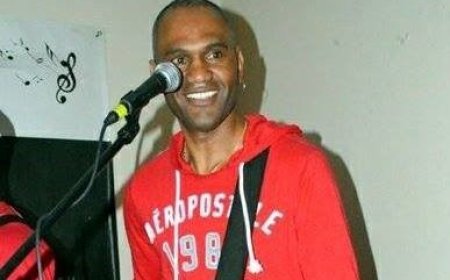
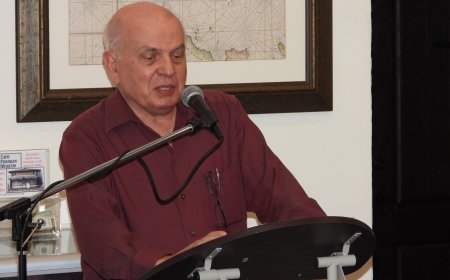







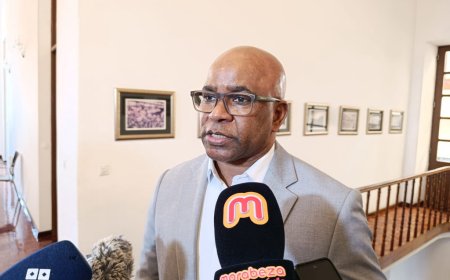



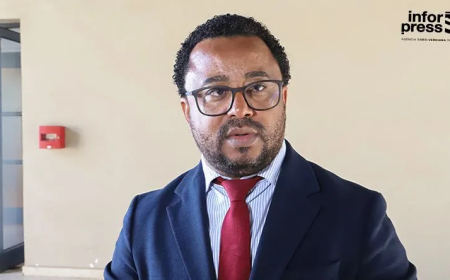
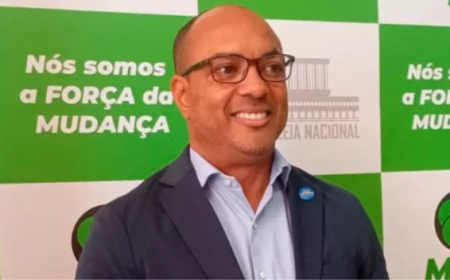





David Leite: If Francisco Carvalho keeps everything he's promised, he's a hero
For David Leite, a journalist and diplomat, the PAICV's victory is based as much on political communication as on the erosion of power and opens a new political cycle marked by tension between ambitious promises and the limits of the country's resources.
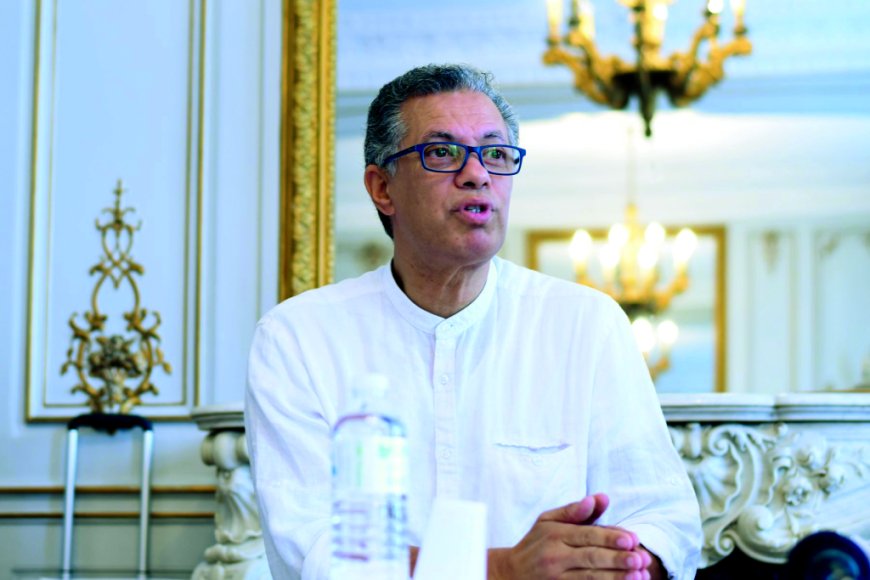
The 2026 legislative elections left Cape Verde with a new government, a reconfigured opposition and many unanswered questions. The PAICV returned to power with an absolute majority and the MPD was defeated after ten years in power. More than half of the voters did not go to the polls. João de Deus Carvalho, António Ludgero Correia and David Leite comment on the electoral process, the speeches on the night of victory and defeat and anticipate what is to come in this new political cycle that is now beginning. Read here the interview with David Leite.
What has remained of this campaign and also of the pre-campaign?
What remains of the campaign, in short, are the results, which need no comment. There are also matters to reflect on, and the first, for me, is abstention. Around 53% of registered voters is a lot of people turning their backs on the system. Everything has been said about abstention, but I'd like to add: the people who go abroad and don't have the reflex to transfer their vote to their places of residence. I'm talking about young people who have left the country to work, for circumstantial reasons, but this also applies to our emigrants, who leave and don't come back. I also believe that the democratic game would be different if there were more balance in the campaign resources of the different parties. If the small parties had the same resources as the two giants, I believe the results could be different. Note that the mayors of all the municipal councils campaigned for their respective parties - the MpD and the PAICV. But there's an even more serious issue: the alleged vote-buying that so many people talk about - I say "alleged" because I've never seen it. Conscience-buying is a shameful practice. It penalizes not only the direct opponent - because the purchase is made between the two giants - but above all the small parties, which will never have the same resources to deal with electoral corruption. It is deplorable to see our democracy gangrened by this cancer. It's sad to see politicians abusing the poverty and ignorance of a large section of our electorate.
Do you think this has much influence on the results? The vote is secret and those who accept it may not vote for those who paid for it.
Right. But it is the practice that is condemned, not the result. Just the intention to buy a person's conscience and vote is a disgrace in a democracy that wants to be exemplary and is seen as such. Buying consciences overshadows and distorts the electoral act, which is the highest expression of our democracy. It's not just a disgrace: it's a crime under electoral law. I would say a crime against democracy. But the real issue isn't even the election itself. It's the silence of justice in the face of so many accusations of electoral fraud. I think it's because the two parties that have so far taken turns in government are to blame.
And in relation to the electoral platforms. Was it clear to the electorate what each party was proposing?
It's never clear, really. What is clear is the face of the candidate. I'm not even talking about candidates in the plural, because in legislative elections they vote in lists, but what people see most is the party leader, a potential candidate for future prime minister. If you ask people on the street if they've understood the electoral platforms, you'll hardly find anyone who says: "Yes, I've read and understood them." In the end, the campaigns are more about spectacle, entertainment and attacks from one camp to the other, rather than a pedagogical game of guessing the new government.
The MPD was betting on continuity and economic statistics; the PAICV was betting on rupture. Were the statistics not convincing, or was it simply the fatigue of ten years of governance?
Both are valid. There was a weariness of ten years of government, a usury of power. What's more, the MpD shot itself in the foot several times. One thing that also made a difference to the results was communication. The PAICV communicated better. It put its finger in several wounds, said what the people wanted to hear, emphasized the debacle of economic statistics - macroeconomic factors, economic growth, etc. - which do not reflect the real country. This is a truth that was highlighted and exploited very well. The MpD communicated badly; it is very bad at propaganda. It didn't know how to take advantage of its assets. Its candidacy only hovered over the most important gains, without holding back. For example: the increase in the minimum wage and the exponential increase in the salaries of various professional categories. He spoke little of renewable energies, of the photovoltaic panels installed throughout the country, which nevertheless exist. He kept most of his campaign promises. If I were candidate Ulisses, I would have highlighted everything I've done that wasn't in my program. I wouldn't have been content to say that we managed COVID-19 well - I would have said: "We paid 70% of the lay-off salaries". That wasn't in the program. A governance program is like a budget: it can change during implementation. Note that there are already some flights for five thousand escudos. It's already a reality, but if the new government announces it tomorrow, someone will say it's their doing. In other words, the PAICV is very strong at communicating, and the MpD is very weak. Storm Erin exposed this well. There was a lack of transparency in the management of the crisis. There was a lot of opacity, especially in the management of the money received. And while the Mayor of São Vicente shouts to the four winds that everything has been resolved, the population knows it hasn't. Where are the water retention works? Where are the water retention works? We end up between a truth and a demagogy that don't match up. And we have other situations that contributed to the loss of the MpD and the victory of the PAICV. The Amadeu Oliveira case, for example, which has never been seen as a mere case of justice. It is seen as a case of the judiciary interfering in justice. The deplorable state of our justice system was absent from the debate, with magistrates scaring people, an Attorney General on the payroll, and Amadeu Oliveira in jail while we have thugs on the streets. Public security needs to be reviewed. What's more, there was a lot of arrogance on the part of the MpD. It's hard to defend a system that dismisses from his post a competent doctor who is held in high esteem by the population of São Vicente, for purely administrative reasons, but allegedly political in the eyes of the government. It wouldn't occur to the devil to sign such a resignation four days before the elections.
What about the smaller parties? UCID lost two MPs, PTS doubled its number of votes. How do you see these results?
I begin by regretting that the smaller parties didn't achieve better results and that there wasn't a third force capable of tipping the scales. It was expected to be UCID, but it didn't happen. I would suggest that, in the next elections, the smaller parties unite into a single force, to see if we can have a buffer between the two main political forces in Parliament. It can be argued that absolute majorities bring greater stability to governance. I don't deny that, but it's not good for a country to be constantly taking turns between two political forces making the same mistakes, each accusing the other of having stolen more and the other of having stolen less. That's not good for democracy.
However, the head of the winning party's list is involved in several controversies and has even been charged. Why do you think that didn't weigh on the vote?
It's very strange, but it's not by chance. The MpD made a very serious mistake: it turned against the candidate Francisco Carvalho - first for Praia City Council, then as a candidate for the premiership. And here I'm talking about justice working at two speeds. There were cases that had been pending for a long time that didn't have the same speed as Francisco Carvalho's cases. I'm not saying whether he's right or wrong - he's been charged and will have to answer to the courts. In a country like France, where I've lived, it would be impossible for a person found guilty to stand for election. The judicial aspect surrounding the future Prime Minister is, for me, a matter of great concern. It remains to be seen under what circumstances he was made a defendant and what crimes he committed. I never imagined that we would experience a political situation of this nature.
Turning to the speeches of defeat and victory, how do you view the two interventions?
The victory speech was very different from the defeat speech. The defeat speech was a dignified communication, in which Ulisses Correia e Silva acknowledged the victory of his opponent comme celà se fait in democracy, with politesse, with a lot of class and serenity. The winning candidate's speech surprised us with its somewhat bellicose tone, throwing barbs at the outgoing government and denouncing the alleged vote-buying. He also launched barbs against the poor functioning of the justice system, of which he claims to be a victim. Now, whatever his reasons - and he certainly has them - I don't think this was the time. It was the moment for concord, a moment for "djunta mon", to speak to all Cape Verdeans. He could have saved his feelings and reasons for another occasion. The Prime Minister lacked diplomacy there, and that's a bad omen. In politics, we should be less emotional, less impulsive, because politics, above all, is diplomacy.
In the victory speech it was already clear that several promises require a two-thirds majority and that the MpD will be an obstacle. How does this speech anticipate governance and the realization of promises?
In the victory speech it was already clear that several promises require a two-thirds majority and that the MpD will be an obstacle.
Any politician talking to voters should open up: "we have these measures, but they can only be implemented with parliamentary consensus and we can't guarantee that there will be consensus." Francisco Carvalho should have told voters this during the campaign. I fear that many other measures will also be called into question due to various difficulties. I don't distrust the new Prime Minister's good intentions, but from intention to reality is a long way off. I've already talked about why I wouldn't vote for him, and it's not because I don't like his program. I'm a supporter of his program, but I'm also critical, because he can't explain where he's going to get the resources to carry out everything he's promised. There is a contradiction, which has not yet been clarified. If Francisco Carvalho fulfills everything he has promised, I consider him a hero. I'll be here to recognize and applaud him. And if he fails, I'll be here to demand it.
We have an absolute majority at the limit, 37 seats. The margin is not large. What do you think this government will be like?
An absolute majority, 50% plus one, is always comfortable. But we must never forget the 49% who didn't vote for Francisco Carvalho's program. I hope we have a Parliament of consensus and not of obstacles. I hope that the parties put the sovereign interests of the country above their own. Otherwise, we run the risk of having a tense Parliament and, by extension, a politically tense society, as we are already having at the moment. There has been too much tension in this campaign. We have to wait for time to do its work. I also hope that there will be a leaner, less plethoric government. The MpD has failed to abuse state resources. It's not normal for the Cape Verdean government to have 28 ministers. And then there's the promiscuity of state tourism disguised as service missions. The airplane syndrome has also reached the Plateau Palace and other spheres of government, including intermediate ones. The whole world is traveling on service missions, often of little value. We need to be coherent and lose the pride and vanity that have taken root in the court of those who command the most. On the social networks, there has been a promiscuity between politics and show business, with a former minister at the center of the fun. These things have not gone unnoticed. Those who govern must listen to the voices of civil society. The MPD failed in this regard - and before it, so did the PAICV. The two parties have different ways of thinking, but they are the same in the way they operate.
In conclusion, what do you foresee for the next five years?
I want to see everything that the elected Prime Minister has promised, with the help of his government and the whole of society. Everyone must contribute to a climate of work and not welfare. But I foresee with some concern the realization of many of the promises made. I don't think they are in line with the resources available to the country. Before we make promises, we have to create wealth and increase resources. I want someone to tell me where we are going to get the resources to implement a welfare state policy that doesn't even exist in countries with consolidated social democracy, such as Norway, Sweden or the Netherlands. I'd like to see a social democracy in Cape Verde that thinks of everyone and works for everyone - but you can't make omelettes with eggs you don't have.
Text originally published in the print edition of Expresso das Ilhas nº 1277 of May 20, 2026.