





The global Bravense diaspora, a fragmented force between potential and inertia
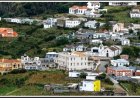
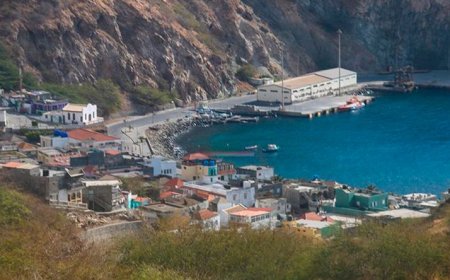
Pawtucket City, May 29, 2026 (Bravanews) - The island of Brava, historically shaped by the inescapable fate of emigration, has generated over the centuries one of the most vibrant, resilient and geographically dispersed diasporas in the entire history of Cape Verde. From the historic and iconic neighborhood of Sacramento, California, to the fishing and working-class communities in the north of Portugal; from the distant "bottom of Benguela", in Angola, which welcomed Bravenses in colonial and post-colonial dynamics, to the most remote confines of eastern Australia, the identity of this small island stretches across practically every time zone on the planet.
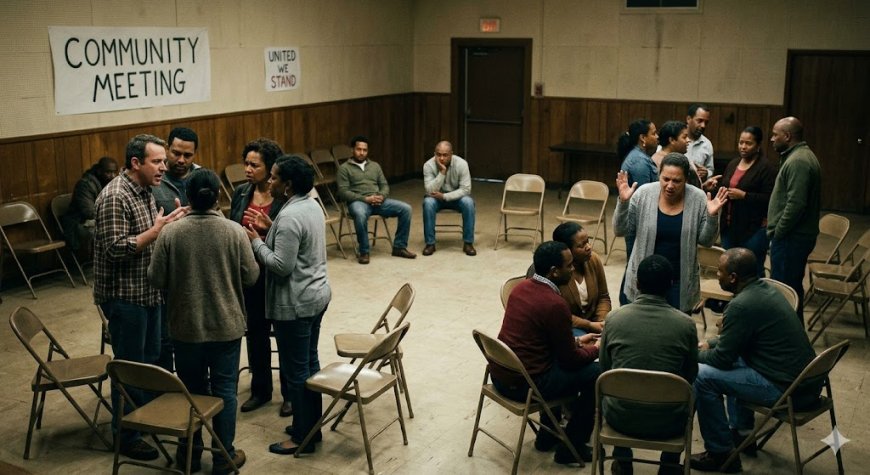
(...) However, when analyzing in detail the geopolitics, economy and sociology of this vast transnational network, a latent and painful contradiction emerges that challenges the island's future: the union of Bravenses around the world is a severely under-exploited force and, paradoxically, it is configured as a union that does not actually unite. There is a deep, genuine and unshakeable emotional connection to the affectionately nicknamed "Island of Flowers", expressed in a sublime way in music, literature, nostalgia and pride in identity. However, this powerful emotional connection systematically fails to translate into a coordinated, professional and strategic platform for socio-economic development. It is a global web of affections that, due to a glaring lack of interconnected structures, integrating leadership and a long-term vision of the future, fails to convert into effective social, economic and political capital, leaving the native island hostage to isolation and stagnation.
To understand in depth the reasons for this fragmentation in Brava, it is imperative to turn to philosophy and political sociology, areas that for centuries have debated the complex tensions between the individual, the community and the true power of collective action. French sociologist Émile Durkheim, when theorizing about the forces that hold a society together, distinguished between mechanical solidarity and organic solidarity. Even today, the Brava diaspora predominantly lives the model of mechanical solidarity, that is, a union strongly based on the similarity of origins, shared strict traditions, the sharing of the same specific Creole and a deep collective nostalgia fueled by the morna, the fog that descends from Fontainhas, the tasty grouper on Faja D'Agua beach and the traditional São João festivities. The great challenge facing contemporary Brava lies in the fact that mechanical solidarity is no longer enough to guarantee development in a globalized world. The diaspora urgently needs to migrate towards an organic solidarity, where the different parts scattered around the globe, such as successful entrepreneurs in the United States, intellectuals and academics in Europe, technicians in Africa and investors in Oceania, function as interdependent organs of the same body, driven by practical objectives, measurable economic goals and clear social contracts. Today, the Bravenses are united by mutual emotion, but tragically disperse at the moment of concrete action.
This organizational inertia is also echoed in economist Mancur Olson's famous theory on the logic of collective action. Olson clearly explains that large groups with shared common interests rarely act for their own benefit in a spontaneous or purely altruistic way, unless there are very clear individual incentives or highly credible institutional coordination mechanisms. In the absence of such mechanisms, many members of the Bravense community in the diaspora end up unconsciously taking the stance of what economics calls the "free rider". They are immensely proud of the success of their fellow countrymen and suffer from the island's problems, but passively wait for other agents, be they local authorities, the central government or a handful of time-worn solidarity associations, to take the initiative and assume all the financial, bureaucratic and operational costs of development. Without the creation of transparent incentives, independent audits and channels for direct participation, the so-called Bravense union remains merely theoretical and discursive.
Complementing this perspective, political scientist Robert Putnam introduces the concept of social capital, dividing it between the close ties that bind the members of a specific group and the external bridges that connect that same group to other institutional and economic networks outside. The global Bravense community demonstrates extraordinary competence in the first aspect, supporting each other on a strictly family level, promoting galas, balls and local tributes in Rhode Island, Massachusetts, Rio de Janeiro, Luxembourg or Rotterdam. However, it chronically fails to build institutional bridges. There is a historical inability to create a formal, professionalized platform that connects the nuclei in Sacramento, Pawtucket, Brockton, Boston, Lisbon, Paris, Amsterdam, Luanda and Sydney, a network that would have the capacity to directly influence public policies in Cape Verde, negotiate with large international organizations or found transnational financial consortia with real impact.
The direct consequence of this lack of broad unity is a massive, silent and continuous waste of precious resources that would have the potential to completely transform Brava into a self-sustaining, modern and prosperous island. This waste manifests itself blatantly on three absolutely critical fronts, starting with human resources. The invisible brain drain is a glaring reality. The Bravense diaspora is currently home to doctors of enormous prestige in North American hospitals, top civil engineers in Lisbon and Paris, ship captains in Cape Cod and Miami, pilots and flight attendants in Boston and New York, professors in Brockton and Washington D.C., business managers and administrators in Angola, internationally renowned academics and energy transition specialists scattered throughout the world's main metropolises. However, all this vast technical and scientific knowledge is largely underused and ignored. For lack of a census or a unified, professionally managed database and a global mentoring platform, the island of Brava continues to struggle on a daily basis with a chronic lack of qualified technical staff on the ground. The accumulated knowledge of a Bravense in Australia, on the streets of Harvard or in Silicon Valley in California dies in the diaspora itself, when they could be designing basic sanitation master plans, designing renewable energy systems to green the island or outlining luxury eco-tourism strategies for their homeland.
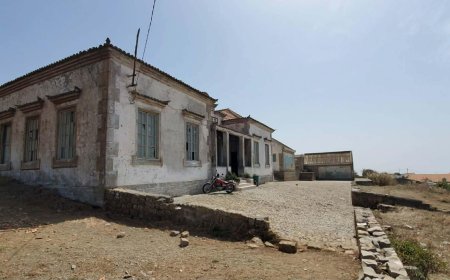
With regard to material resources, waste is visible in the island's urban landscape. Over successive decades, the strong material investment of the diaspora has been concentrated almost exclusively in the prestigious real estate sector, resulting in the proliferation of the well-known "emigrant houses". Many of these imposing villas, proudly erected in Nova Sintra, Nossa Senhora do Monte or Furna, remain hermetically sealed for eleven months of the year, only coming to life in the golden period of the June festivities. This is an astronomical amount of completely immobilized material capital, which doesn't generate sustainable jobs, doesn't attract regular tourist flows and also entails ongoing maintenance and degradation costs.
If there had been a truly unified and cooperative vision, a significant percentage of this capital could have been channeled into setting up modern agricultural cooperatives, industrial fishing fleets equipped with modern technology, cold logistics infrastructures for preserving fish or modern support structures for senior citizens, responding to an urgent social need on an island that is demographically aging due to the exodus of its young people.
The third vector of waste is strictly financial. Bravenses around the world send millions of dollars and euros every year to their families on the island. However, these financial flows of remittances remain predominantly consumptive, welfare and immediate emergency in nature, and are mostly absorbed by the purchase of food, urgent medical expenses and small household repairs. The historical error of this dynamic lies in the absolute absence of a Bravense Diaspora Sovereign Investment Fund.
In a realistic simulation, if there were a global and totally transparent financial structure, where every citizen of Bravense origin, from the bottom of Benguela to the north of Portugal, from forgotten Alaska to vibrant Singapore, could invest a symbolic monthly quota, the amount accumulated annually would have unprecedented financial power. This diaspora-generated fund would have the autonomous economic capacity to co-finance the definitive resolution of the island's maritime connections, the eternal and paralyzing Achilles heel of Brava's development, as well as being able to create subsidized credit lines for young local entrepreneurs, farmers and fishermen or invest in boutique hotels. In the absence of this common financial architecture, money gets sprayed around in family micro-aid schemes that alleviate immediate poverty but fail to break the vicious cycle of structural economic dependency.
Various fragmenting factors explain why this idealized union stubbornly fails to unite the community. The first is parochialism and the self-imposed geographical isolation of the different nuclei. The groups of Bravenses living in Pawtucket or New Bedford, Boston or Brockton operate in circuits that are almost completely isolated from the Bravenses who have rebuilt their lives in Lisbon or Rotterdam. Each community creates its own regional micro-identity, focuses on its internal associative dynamics and rarely communicates at an institutional level or shares best practices with the others.
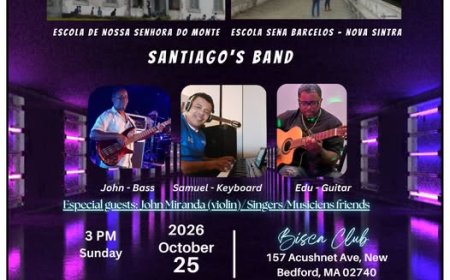
This is compounded by the destructive phenomenon of partisanship and political bipolarization. Like Cape Verde's national political scene, the Bravense diaspora often replicates and amplifies the political-partisan divisions on the islands. This sterile polarization acts as an absolute brake on any project of common interest, since community initiatives are often judged, boycotted or applauded on the basis of the political color of those proposing them, rather than their real value and direct impact on the lives of Brava residents. Finally, there is a glaring lack of transnational leadership. Today, there is not a single consensus figure, federative institution or global council that has the legitimacy and mandate to speak formally on behalf of the Brava diaspora. The current association remains atomized, excessively focused on organizing one-off fundraising events, gala dinners or nostalgic tributes, and lacks a professional executive structure with a business mentality, capable of sitting at the table and negotiating as equals with the Cape Verdean government, banking bodies and major international development partners.
The future therefore requires a profound conceptual break and the urgent transition to what can be called Diaspora 2.0. The human and economic potential of Bravenses around the world is absolutely undeniable, but their real impact on transforming the island is currently a mere fraction of what it could achieve if there were organization and method. If the word união is to stop being just a poetic slogan or a nostalgic refrain sung from afar and become the island's real engine for development, Bravense intelligence and capital need to be institutionally structured. The way forward requires the urgent creation of a Global Brava Network, which functions both as a center for strategic reflection and a transparent investment fund, capable of mapping and mobilizing the vast resources available from Sacramento to Australia. This profound transition from a community purely based on nostalgia to one focused on strategic development and co-responsibility is the only viable mechanism for ensuring that the island of Brava does not remain just an idyllic starting point in the memory and hearts of those who have left, but that it is sustainably transformed into a viable, economically dynamic and attractive territory for the new generations who decide to settle their lives on the island of flowers.
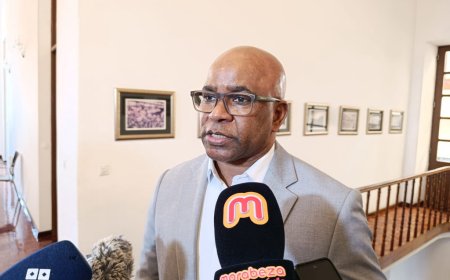
A practical example of this analysis is the penultimate and last visit to the USA by the Mayor of Brava, Amandio Brito. The strategy adopted by the Mayor of Brava on his last two trips to the United States has raised a wave of debate in the diaspora, but it also highlights a deep structural reality: the glaring lack of unity in the community itself, which ultimately forced the mayor into this course of action.
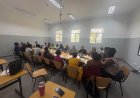
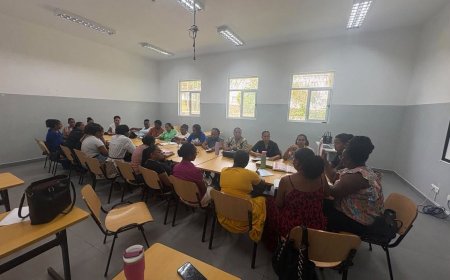
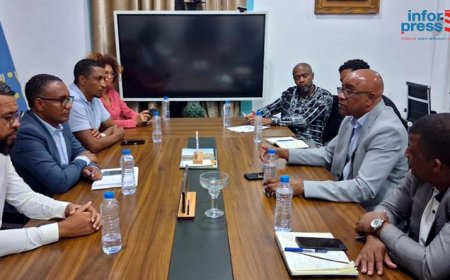
Instead of being received in a large unified forum, the mayor is forced to spread his agenda over a marathon of meetings with small groups and micro-associations. This fragmentation of the community prevents the holding of a large centralized plenary session, forcing the head of the municipal executive to waste his time and repeat the same speech over and over again, successively encountering the echo of the same problems and the same complaints in each room he visits.
Listening to the same outbursts dozens of times, in reduced formats, is the direct result of a diaspora that operates in isolation and without a common leadership. As long as the lack of unity dictates the rules, official visits will remain hostage to this repetitive cycle, where energy is spent agreeing positions with small committees instead of moving forward with a global and robust strategy for the development of the island of Brava.
Moises Santiago
City of Pawtucket, May 29, 2026