














A new school year is beginning. And the problems, unfortunately, continue
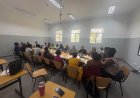
City of Nova Sintra, September 21, 2026 (Bravanews) - Today, on the island of Brava, another school year begins. For many families, this should be a day of hope, reunion, and renewal. A new school year brings new goals, new challenges, and the hope that our children will find in schools a dignified, safe environment capable of providing them with the necessary conditions to learn and grow.
But behind the apparent normalcy of the first day of school lies a reality that cannot be ignored.
Brava is entering yet another school year burdened by long-standing problems, some of which have dragged on for far too long. And when issues related to salaries, transportation, roads, safety, and the physical condition of schools remain without a satisfactory resolution, it is legitimate to ask: what priority is actually being given to education and the children of Brava?
Teachers begin the year with varying levels of motivation. It would be unfair to lump everyone together, because each professional faces their own reality and struggles. There are committed teachers who continue to do their work with dedication, despite existing limitations. But it is also impossible to ignore that an educational system does not function solely on the individual goodwill of its professionals.
Conditions must be created.
And that is precisely where some of the greatest concerns arise.
Teaching assistants, for example, are starting this school year deeply dissatisfied. There are salary issues that remain unresolved, and this situation cannot be treated as a secondary matter. Those who work with children every day deserve to be paid fairly, regularly, and on time.
You cannot demand dedication, responsibility, and professionalism from workers who feel that their own rights and working conditions are not being properly respected.
When a camp counselor looks after a child, she isn’t simply filling a spot in the room. She is taking on an enormous responsibility for the safety and well-being of our children.
Therefore, the salary issues facing the monitors are not merely a labor issue. They are also a social issue and, indirectly, an educational issue.
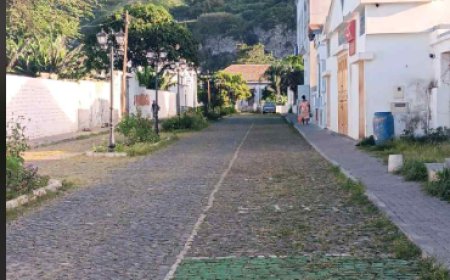
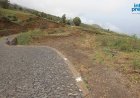
Another issue that requires urgent attention is the condition of the roads, particularly on the route to Cachaço and on the roads used to transport students to Nossa Senhora do Monte.
This is not merely a matter of comfort. It is a matter of safety.
Every day, children and young people are transported on roads with serious problems. These are kilometers traveled by vehicles carrying a community’s most precious asset: its children.
It is precisely in these situations that prevention must take precedence.
We must not wait for an accident to occur before recognizing that a road had problems. We must not wait for a tragedy to happen before we start asking who knew, who was informed, and who was responsible for taking action.
Children’s safety must take precedence over any bureaucracy, administrative hurdles, or disputes over responsibility.
If a road regularly used for school transportation presents conditions that endanger students and workers, then it is necessary to assess the situation, intervene, and find solutions. And this intervention must take place before, not after, a potential incident.
A small community like Brava cannot accept that the safety of its children be treated as a minor issue.
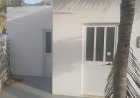
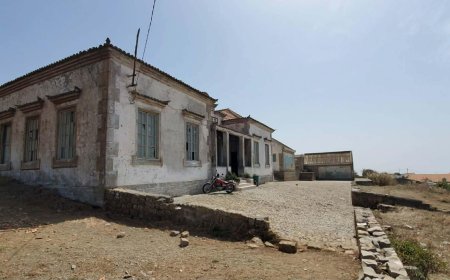
There is yet another reality that deserves to be clearly denounced: the state of disrepair of some school buildings.
Schools should be places where children feel protected, respected, and motivated. They should convey care, organization, and confidence in the future.
However, there are school buildings in Brava that are in an alarming state of disrepair.
The situations in Lem and Nossa Senhora do Monte deserve particular attention.
We are not simply talking about walls that need painting or minor cosmetic repairs. When the deterioration of a school building becomes evident, we must ask whether the facilities continue to provide the conditions that a 21st-century school should offer its students and staff.
A child does not choose the school where they study. They do not choose the condition of the building. They do not choose the route by which they will be transported. They do not decide whether the salary of the person who accompanies them will be paid on time.
But it is the child who ultimately lives with the consequences of these decisions every day.
And that is why society cannot remain indifferent. We cannot normalize what is not normal.
Perhaps the greatest danger is precisely this: getting used to problems.
Getting used to a dilapidated road.
Getting used to a dilapidated school.
Getting used to unmotivated or disillusioned workers.
Getting used to late paychecks or unresolved workplace issues.
Getting used to hearing that “there are difficulties,” “it’s being handled,” “we’ll resolve it”—and then watching time pass without a solution arriving.
A community begins to lose its ability to demand change when it turns serious problems into part of its routine.
And Brava cannot accept this normalization.
It’s not too much to ask for decent schools.
It’s not too much to ask for safe roads.
It is not too much to ask that workers be paid for the work they do.
It is not too much to ask that children be transported safely.
It is not too much to demand clear answers from the responsible authorities.
On the contrary: all of this should be the bare minimum.
Education does not begin inside the classroom
When we talk about education, we often immediately think of the teacher, the student, the books, and the classroom.
But education begins long before the teacher enters the classroom.
It begins on the child’s walk to school.
It begins with the transportation that takes them to school.
It begins with road safety.
It begins with the quality of the building where they will spend several hours of their day.
It begins with the motivation and working conditions of the professionals around them.
It starts with the way a society demonstrates, through concrete actions, how much it values its children.
That is why we cannot analyze these problems separately. Unresolved salary issues, deteriorating roads, school transportation, buildings in poor condition, and demotivated professionals are all part of the same problem: the need to place students’ education and safety at the center of public priorities.
The start of the school year should also be a time of commitment
The first day of school should serve to renew commitments.
A commitment to students.
A commitment to teachers.
A commitment to teaching assistants and other staff.
A commitment to families.
A commitment to the quality of schools.
Commitment to safety.
Brava deserves more than just speeches about the importance of education. It deserves concrete measures.
Families have the right to know what is being done to resolve the problems with the roads used by school buses. Workers have the right to know when and how the wage issues affecting them will be resolved. The communities of Lem and Nossa Senhora do Monte deserve concrete answers regarding the renovation and maintenance of their schools.
And, above all, students deserve to start the school year knowing that the adults responsible for running the system are truly committed to ensuring dignified and safe conditions for them.
This is not about assigning blame for everything that goes wrong.
It is about identifying responsibilities and, above all, finding solutions.
Because pointing out problems without seeking answers accomplishes little. But ignoring problems doesn’t make them go away either.
Today, students in Brava are returning to school.
May this not be just another first day of school.
May it also mark the beginning of a new standard: more accountability, more transparency, more investment, and more respect for those who study and work in our schools.
Because every child who enters a school in Brava deserves to find a safe, dignified environment that is equipped to offer them a future.
And because an island that wants to build its future cannot accept that its children study under conditions that belong to the past.
Bravanews