






Brava needs to build a strong connection with its diaspora community
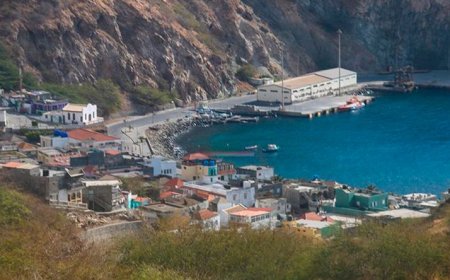
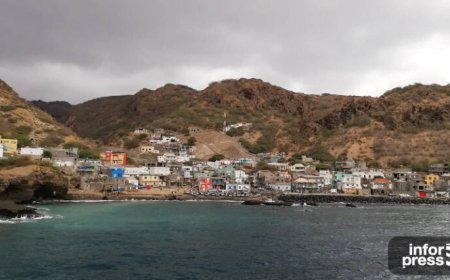
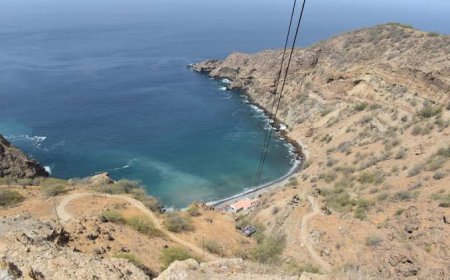
(...) Brava is a small island in terms of land area, but vast in terms of the size of its community scattered across the globe. There are people from Brava in different countries and continents, living very different lives, yet maintaining, in one way or another, an emotional, familial, cultural, and economic connection to the land where they were born or from which their parents and grandparents came. This community constitutes one of Brava’s greatest human assets and deserves to be regarded as a true part of the island’s heritage. (...)
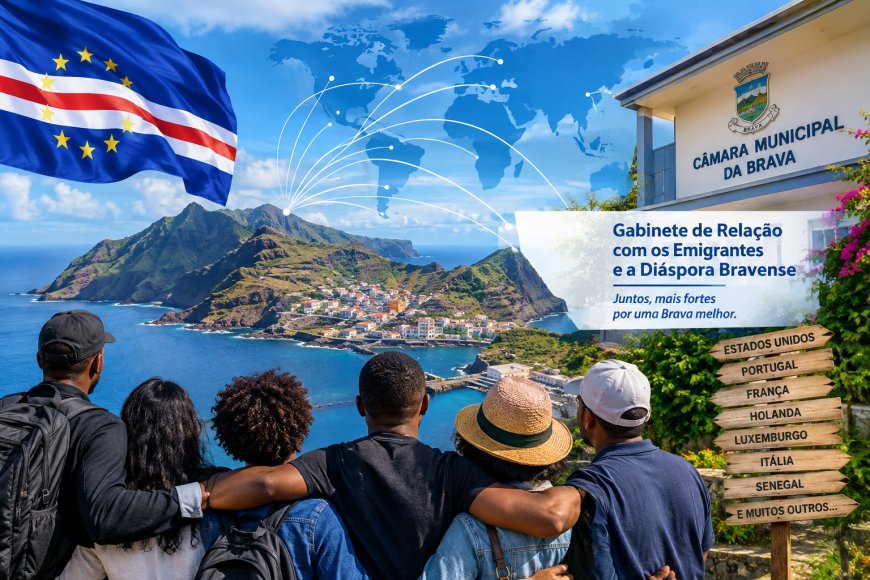
For decades, emigration from Brava played a key role in the island’s economic and social life. Emigrants sent money to their families, built homes, supported relatives, financed education, helped institutions, participated in cultural activities, and maintained—often from afar—a constant concern for the development of their homeland. However, it is legitimate to ask whether Brava is currently making full use of the potential within its emigrant community and whether the community is understanding the new challenges facing Brava in today’s world.
The issue goes far beyond financial remittances. An emigrant should not be viewed merely as someone who sends money to their family or returns to the island during vacations. Among the people from Brava scattered across the globe are entrepreneurs, doctors, teachers, engineers, technicians, researchers, farmers, fishermen, technology professionals, skilled workers, and people with decades of accumulated experience in various fields. There is, therefore, a vast amount of knowledge and expertise that could contribute to Brava’s development.
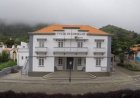
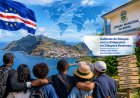
That is why it is becoming increasingly important to discuss the creation, by the Brava City Council, of an Office for Relations with Brava Emigrants and the Diaspora. This would not simply involve creating yet another bureaucratic structure or an office intended to receive immigrants during the summer. The idea should be much more ambitious: to create a true, permanent bridge between the City Council, the island, and the people of Brava scattered across the world, making it possible to understand, organize, and mobilize the community around development goals.
The first step should be to gain a better understanding of who the people from Brava living off the island are. How many live in the United States, Portugal, the Netherlands, France, Luxembourg, Italy, Senegal, and other countries? In which cities are they concentrated? What professions do they pursue? How many own businesses? How many have a college degree? How many would be willing to collaborate on projects in Brava? How many are interested in investing? Without answers to these questions, we are merely talking about a community we know only superficially.
It would therefore be important to create an organized database of the Brava community abroad, naturally respecting people’s wishes and data protection rules. This database could gather information such as place of origin in Brava, country and city of residence, professional field, business activities, skills, interests, and willingness to collaborate. It would not simply be a list of names, but a true human map of Brava around the world, capable of showing where people are and what they can offer their homeland.
An initiative of this nature would make it possible to create a true Skills Exchange for the Brava Diaspora. Imagine a situation in which the City Council, a school, an association, or another institution on the island needs specialized knowledge in a particular area. Instead of immediately looking outside the community, it could consult this network of professionals from Brava scattered around the world. There might be an engineer in Boston, an architect in Lisbon, a technology specialist in Paris, or a healthcare professional in another city willing to guide, advise, or collaborate on a specific project.
The office could also play an important role in connecting emigrants with investment opportunities on Brava. Many emigrants are eager to invest in the land of their parents and ancestors, but they encounter difficulties related to information, bureaucracy, identifying opportunities, and a lack of support. A specialized municipal office could provide clear information on investment opportunities, legislation, land, projects, incentives, economic sectors, and institutional contacts, serving as a first point of contact for those seeking to turn an idea into a concrete project.
Brava could even create an Investment Opportunities Portfolio, identifying areas with development potential, such as tourism, agriculture, fishing, processing of local products, renewable energy, the digital economy, services, and culture. The goal would not be for the City Council to select private investments, but rather to facilitate access to information and bring together those who have capital, knowledge, or a willingness to invest in the opportunities available on the island. Often, the problem is not a lack of interest on the part of emigrants, but the absence of a structure that bridges that interest with the local reality.
Another key aspect is the involvement of younger generations. There are children and grandchildren of Brava natives who were born and raised abroad and who, although they often maintain an emotional connection to Brava, may be increasingly out of touch with the island’s reality. If nothing is done, this connection may weaken as generations pass. The City Council, in partnership with associations and emigrant communities, could develop exchange programs, visits, volunteer opportunities, cultural initiatives, and youth gatherings, creating new ways to bring these generations closer to the land of their parents and grandparents.
It would also be important to create a permanent space for dialogue between Brava and its communities abroad. A World Forum of the Brava Diaspora could bring together—in person or via new technologies—community representatives, businesspeople, professionals, young people, and institutions. This forum should discuss concrete topics, such as the economy, tourism, education, health, culture, youth, technology, agriculture, fishing, and the environment, seeking to transform these discussions into projects, partnerships, and concrete commitments.
Naturally, the municipality does not need to do everything on its own. The office’s role should primarily be to bring people and institutions together. Emigrant associations, community organizations, businesspeople, schools, universities, public institutions, and civil society organizations could be part of this network. Its strength would lie precisely in the ability to bring together different people and entities around common goals, preventing each initiative from operating in isolation and without connection to others.
It is also necessary to change the way the island itself views its emigrants. Emigrants should not be remembered only when they arrive in Brava, when there is a celebration, when financial support is needed, or when a specific need arises. The relationship must be ongoing. Throughout the year, there must be an open door for dialogue, participation, and the sharing of ideas. A modern policy for the diaspora should ask not only how much emigrants can contribute financially, but also what knowledge they possess, what experience they can share, and how they would like to participate in the future of their homeland.
An organization of this nature could also help strengthen the Brava identity around the world. The community scattered across different countries comprises associations, cultural groups, churches, businesses, families, and social networks that often operate independently. If these different structures were connected into a broader network, it would be possible to create a much stronger community capable of sharing information, opportunities, and initiatives. Brava would no longer view its diaspora as isolated communities but would come to see it as a large global network.
It is important, however, that this proposal not be turned into a partisan issue or an initiative dependent on a particular municipal administration. The relationship with the diaspora should be a long-term public policy, regardless of who is at the helm of the City Council. Municipal governments come and go, but the connection between Brava and its emigrants endures. Therefore, any such structure should have clear objectives, operating rules, transparency, and evaluation mechanisms that would allow for measuring the results achieved over the years.
The creation of this office could also help build a new image of Brava in the eyes of the world. An island that is aware of its diaspora, knows where its citizens are, understands their skills, and maintains permanent channels of communication conveys an image of organization and modernity. More than that, it conveys a message of recognition to emigrants: you are still part of Brava, even though you live thousands of kilometers away.
Brava faces challenges that cannot be ignored: the small size of its market, its remoteness, transportation difficulties, the need to create opportunities for young people, and the need to diversify its economy. No single government agency will be able to solve these problems on its own. But an organized community can help address them in a different way, because part of the solution may lie precisely in the human network that the island has built over decades through emigration.
We must not, however, fall into the trap of thinking that organizing the diaspora means organizing a community to ask for money. A healthy and modern relationship must be based on partnership. The emigrant should be viewed as a citizen, professional, entrepreneur, student, investor, volunteer, mentor, and partner. Brava must also offer opportunities for participation and not merely present needs. Only then will it be possible to build a relationship based on trust and mutual interest.
Perhaps, therefore, we need to change the very definition of what we mean by Brava. Brava does not end at its geographical borders. Brava also exists in Boston, Providence, Lisbon, Rotterdam, Paris, Luxembourg, Dakar, and in so many other cities where families from Brava live. It exists in associations, homes, businesses, churches, universities, festivals, the memories of the elderly, and the dreams of the young. It exists in a human network that far exceeds the physical size of the island.
The challenge lies in transforming this dispersion into an organized force. The Brava émigré community already exists; it is alive and possesses resources, knowledge, experience, and determination. What is largely missing is a structure capable of connecting these points and creating opportunities for cooperation. The City Council can play an important role in this process—not by replacing the associations or the emigrants themselves, but by serving as a coordinating hub among all parties.
Therefore, the discussion regarding the creation of an Office for Relations with Emigrants must be taken seriously. Not as just another promise, nor as a symbolic structure, but as part of a long-term strategy to understand, organize, and bring together the Brava community scattered across the globe. The creation of a Global Network of Brava Natives, a Skills Exchange, a communication platform, a portfolio of opportunities, and permanent mechanisms for participation could be concrete steps toward turning this vision into reality.
Brava may be small in size, but it doesn’t have to think small. An island may cover just a few square kilometers, yet at the same time have a community spread across dozens of countries. The real challenge lies in transforming this human dimension into an organized, participatory force capable of contributing to the island’s future. Perhaps it is time for Brava to stop viewing its emigrants merely as people who live far away and start treating them as an extension of the Brava community itself—scattered across the world, yet connected to the same land and to a future that can be built together.
Moises Santiago
Bravanews