

















A Brava beyond electoral promises and the portrait of a country at nine speeds - the agricultural sector
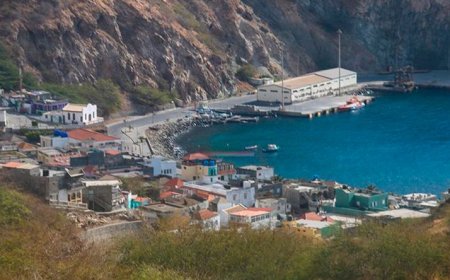
Cidade de Nova Sintra, April 6, 2026 (Bravanews) - To talk about the island of Brava is often to talk about promises. Promises of development, promises of investment, promises of opportunities that almost always appear at election campaign time and disappear soon after the elections. But there is a real, silent, forgotten Brava that lives far away from political speeches and electoral stages. This Brava is called agriculture.
Agriculture on the island of Brava is not just an economic activity. It is survival, it is tradition, it is identity, it is the livelihood of many families. However, the agricultural sector continues to be treated as a secondary sector, almost invisible in public policies, despite all the talk of food security and rural development.
If we want to look at Cape Verde as a country, we have to admit a harsh reality: we are a multi-speed country. And Brava, in the agricultural sector, seems to be at the last of these speeds.
The biggest problem for agriculture on the Brava is still water. This is not a new problem, it's not a surprise, it's not something that appeared yesterday. It's a structural problem, an old one, known by all the governments, all the town councils, all the political parties.
Farmers depend on rainfall, small springs, makeshift reservoirs and often water transported from far away. There are agricultural areas where water arrives irregularly, others where it simply doesn't.
There's a lot of talk of dams on other islands, there's talk of boreholes, desalination, water mobilization, but the Brava remains practically outside of these major structural solutions. There has been a major investment in desalination, but so far it hasn't produced a single drop of water due to technical issues. Without water, there is no agriculture. And without agriculture, many families are left without an income.
Another serious problem is the lack of manpower. Brava has lost population over the years, especially young people. Many have emigrated, others have moved to other islands in search of work and better living conditions.
Agriculture has been left in the hands of the elderly. Today, in many agricultural areas of the island, the people who work the land are over 50, 60 or even 70 years old. Young people don't want to work in agriculture because it's hard, unprofitable work with no guarantees.
With no generational renewal, agriculture in Brava is in danger of slowly disappearing. Land that used to be cultivated is now abandoned. Fields that once produced corn, beans, sweet potatoes and vegetables are now covered in scrub.
Another major problem is the lack of specialized technical support. Many farmers work on the basis of experience and tradition, but today farming requires modern techniques, water management, choice of seeds, pest control, production planning and access to the market.
On the Brava, agricultural technical support is insufficient. Farmers complain of a lack of support, a lack of training, a lack of technical visits and a lack of structured agricultural projects.
It's not enough to hand out a few seeds or tools from time to time. Modern agriculture needs permanent technical assistance, training, irrigation projects, greenhouses, cooperatives and access to finance.
In every election, and this one will be no different, agriculture appears in political programs. There is talk of supporting farmers, improving irrigation, creating cooperatives, facilitating access to credit, investing in the rural world. But after the elections, agriculture disappears from the priorities again.
The truth is that agriculture on the Brava continues to survive thanks to the efforts of farmers and not thanks to public policies. It's the farmers who work miracles with little water, few means and almost no support.
When you look at Cape Verde, you realize that development doesn't happen in the same way on all the islands and in all sectors. There are islands with big investments, major construction work, tourism, airports, hotels and rapid economic growth.
Then there are other islands where development is happening very slowly. And within these islands, there are still sectors that are completely forgotten, such as agriculture on Brava.
Therefore, we can say that Cape Verde is not a two-speed country, but a many-speed country. And agriculture in Brava is at one of the slowest speeds.
If we want to take agriculture seriously in Brava, some measures are essential: serious investment in water mobilization, construction of reservoirs and irrigation systems, permanent agricultural technical support, training for farmers, incentives for young people to enter agriculture, creation of agricultural cooperatives, easier access to agricultural financing and support in marketing products.
Without these measures, agriculture will continue to be just survival agriculture and not a real engine of local development.
Brava needs more than election promises. It needs serious policies, structural investments and long-term vision. Agriculture can be one of the foundations of the island's development, but for that it needs water, technical support, labor and consistent public policies.
As long as this doesn't happen, we'll continue to have pretty speeches at campaign time and forgotten farmers the rest of the time.
The real Brava doesn't appear at rallies or on election posters. The real Brava is in the fields, in the streams, in the farmers who continue to work the land every day, despite all the difficulties. And it is this Brava that needs to be heard.
Moises Santiago