





























Comprehensive analysis and structured synthesis of the Government Program of the XI Legislature of Cape Verde (2026–2031): "Cape Verde For All"
The Government Programme of the XI Legislature (2026-2031), entitled "Cape Verde For All", constitutes the macro-strategic framework guiding public policies and structural reforms for the next five years. The document emerges at a historical moment of complex global transitions, characterized by dynamics of demographic change, severe pressures resulting from climate change, and a new wave of digital technological transition. As a Small Island Developing State, the archipelago faces a set of well-known structural vulnerabilities, among which are the scarcity of natural resources, territorial fragmentation, and strong dependence on exogenous shocks. However, this Programme adopts a transformative perspective that aims to reverse these contingencies into vectors of opportunity through the full exploitation of its central geostrategic location and the country's institutional stability.

The development vision contained in the Program revolves around the centrality of the Cape Verdean citizen, establishing social well-being and territorial equity as the main pillars legitimizing government action. The agenda embodies this commitment through a multidimensional approach that integrates institutional reform, the revitalization of the business sector, advanced human capital development, and the rigorous protection of the archipelago's natural heritage. This framework does not merely state abstract objectives, but links executive activity to measurable goals through operational performance indicators, ensuring constant oversight of the effectiveness of implemented public policies. Fundamentally, the aim is to build a modern nation integrated into the global knowledge economy, without neglecting its identity and internal social cohesion.
The structural reform of the State is advocated in the Program as an urgent and unavoidable measure for budgetary sustainability and for strengthening the quality of democracy in Cape Verde. The initial diagnosis points to a disproportionate growth in the institutional and financial weight of the public sector over the last few years, resulting in overlapping competencies and unnecessary contextual costs. To correct this trajectory, the Government commits to a strict rationalization policy, based on the organic reduction of ministries, state secretariats, and senior management positions. Simultaneously, the merger of public agencies and national institutes whose scope of action presents redundancies is foreseen, eliminating administrative fragmentation and guaranteeing unified budgetary management under the direct scrutiny of the Ministry of Finance.
The integrity of the public system is considered the indispensable corollary of legitimate governance. The Program acknowledges with concern the signs of institutional opacity observed in the last decade, identifying the excessive use of direct award procedures and recruitment without due public competition as factors of economic distortion. The government strategy for the uncompromising fight against corruption will be structured through the extension of the mandatory declaration of income and assets to all holders of high-level management positions in the public administration. Additionally, a national electronic platform will be implemented for the real-time cross-referencing of data between the Constitutional Court and the Tax Authority, facilitating the expeditious detection of unjustified increases in assets.
Digital transformation is established as the main driver for building a modern, streamlined, and accessible Public Administration. The Program aims to eradicate the traditional model of bureaucratic centralization, which historically forces citizens of peripheral islands to travel to large urban centers for basic registration procedures. The operationalization of the technological paradigm will be based on the development of an integrated infrastructure that guarantees the total interoperability of all ministerial databases, establishing the principle of single data entry. The creation of a Single Digital Identity will unify tax, civil, and social security identification numbers, reducing state operational costs and accelerating responses to requests from the economic sector.
The territorial cohesion of an archipelagic country requires the effective decentralization of political and administrative power, otherwise serious regional asymmetries will persist. The Program undertakes to promote a broad national consensus with a view to institutionalizing the Administrative Regions, providing them with elected representative bodies and their own powers for managing local development. The transfer of powers from the Central Administration to the regional and municipal levels will be accompanied by the corresponding allocation of autonomous tax revenue, granting greater autonomy in land use planning, maintenance of secondary infrastructure and promotion of regionalized youth employment.
A slow justice system is one of the main obstacles to economic development and social peace. The Program places judicial reform at the center of the priorities of the 11th Legislature, stipulating profound measures to combat procedural delays and the backlog accumulated in the courts. Judicial modernization will be achieved through the implementation of mandatory electronic processing in all judicial, administrative, and tax courts, reducing document processing times. In parallel, there will be a substantial reinforcement of the judiciary and the Public Prosecutor's Office in terms of expert resources, along with the expansion of alternative dispute resolution mechanisms, such as mediation and community arbitration.
The security of people and property and the preservation of national sovereignty are fundamental prerequisites for economic growth. Faced with the emergence of new transnational threats in the Mid-Atlantic, such as drug trafficking and maritime piracy, the Program outlines an integrated strategy for internal security and national defense. In the area of internal security, priorities focus on strengthening the operational capacity and technological modernization of police forces, expanding the urban video surveillance system. In terms of National Defense, the strategic reconfiguration will prioritize strengthening the Coast Guard to ensure rigorous surveillance of the vast Exclusive Economic Zone, protecting maritime borders against illegal fishing.
Cape Verde's foreign policy is guided by a sense of strategic realism and economic patriotism, aiming to project sovereignty and attract essential resources for development financing. Economic diplomacy is the priority vector, directing the embassy network towards attracting foreign direct investment, capturing tourist flows, and negotiating innovative green financing mechanisms, such as the conversion of external public debt. The Cape Verdean Diaspora is recognized as a vital and qualified extension of the Nation, with plans to create a Diaspora Investor Statute with specific tax incentives to facilitate its full economic integration.
The existence of a pluralistic media is an undeniable indicator of democratic maturity. The Program demonstrates the executive's commitment to guaranteeing the complete independence of public media outlets from political power and to creating an environment conducive to the development of the private press. For the private sector, whose financial vulnerabilities have been exacerbated by recent crises, the creation of a Media Development Fund is proposed to co-finance investigative journalism projects. Additionally, there will be a profound reform of the model for distributing institutional state advertising, establishing objective criteria to prevent its use as an instrument of editorial pressure.
Cape Verdean youth are defined in the Program as the main driving force behind economic development and social innovation. Recognizing the high rates of youth unemployment, the executive branch places youth policies at the heart of its cross-cutting agenda. The strategy is based on the articulation between the education system and the business ecosystem, strengthening the Youth Entrepreneurship Support Fund to provide subsidized credit lines during the startup incubation phase. Sport is valued as a cross-cutting instrument for social inclusion and public health, with plans to upgrade local sports infrastructure in all municipalities.
Gender equality is addressed in the Program not only as a human rights aspect, but as an indispensable economic imperative for the country's comprehensive development. The executive proposes an integrated approach to women's empowerment, ensuring that a gender perspective is considered across all phases of state budget planning. Subsidized microcredit lines will be created specifically for female heads of household in rural areas, fostering entrepreneurship. There will also be a firm fight against gender-based violence through strengthening the operational capacity of support networks and providing social housing for survivors.
As a Small Island Developing State, the archipelago's natural capital and ecological integrity constitute the country's most valuable assets. The Program establishes environmental sustainability as a structuring pillar of economic competitiveness, conditioning sectoral policies to respect for ecological balance. Government action will focus on the conservation of terrestrial and marine ecosystems, including the consolidation of the National Network of Protected Areas. Reforestation plans will be detailed in the most sensitive river basins to mitigate torrential erosion and enhance the natural recharge of underground aquifers.
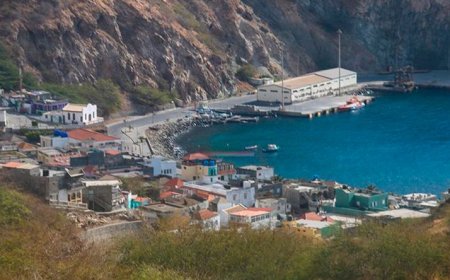
Climate change represents an existential threat to Cape Verde, manifesting itself through prolonged droughts and rising sea levels. The Government Program assumes climate action as a future imperative integrated into the national security macro-strategy. The adaptation aspect will prioritize the resilient infrastructure of the territory, with investments in the protection of maritime fronts and port infrastructure. To finance these interventions, the Program focuses on active climate diplomacy, concentrating on negotiations with bilateral partners for the conversion of external public debt into green investments.
The near-total dependence on imported fossil fuels is one of the main weaknesses of the Cape Verdean economy, exposing the country to the volatility of international prices. The energy transition is therefore a national economic priority enshrined in the Program. The central objective is to accelerate the decarbonization of the national energy matrix, aiming to achieve ambitious targets for the penetration of renewable energies in the public electricity grid by 2031. The strategy will be based on attracting structured private investment for the construction of large wind and solar photovoltaic farms on islands with high potential.
Water security is a fundamental prerequisite for human survival and the viability of any economic activity in Cape Verde. The Program proposes an integrated management model that guarantees universal access to drinking water and optimizes its availability for productive purposes. The strategy is based on decoupling water production from rainfall, strongly focusing on expanding seawater desalination through the use of renewable energies, thus reducing production costs. Massive investments are also foreseen in the modernization of Wastewater Treatment Plants for reuse in agriculture.
The Program outlines a New Economic Agenda that breaks with the growth model based predominantly on public spending, choosing the private sector as the true engine of productive development and the creation of skilled jobs. The aim is to create a competitive market economy, based on continuous innovation and endowed with macroeconomic stability. The business environment will be thoroughly revised, with the Program committing to a taxpayer-friendly tax framework. Structural tax reforms will be introduced, notably the simplification and modernization of the Special Regime for Micro and Small Enterprises.
Physical and logistical connectivity is essential for the economic survival of an archipelagic state. The Program assumes that weaknesses in inter-island air and sea transport systems have acted as internal customs barriers, fragmenting the national market. In the maritime transport sector, the Program prioritizes reforming the concession model for public cabotage services, requiring fleet modernization and guaranteed frequency regularity. Inter-island air connectivity will be stabilized through strengthened sector regulation and the attraction of new private operators, eliminating monopoly situations.
Tourism continues to be the main driver of the national economy, but the Program recognizes the urgency of overcoming the current monoculture model concentrated on a few islands. The tourism diversification strategy focuses on the development of alternative high value-added products, such as nature and cultural tourism, distributing visitor flows across the remaining islands. The Blue Economy constitutes the major frontier of economic expansion enshrined in the government's motto. The Program outlines an agenda focused on the modernization and industrialization of the fisheries sector, providing funding for the renewal and safety of the artisanal fleet.
Modernizing traditional production sectors is fundamental to reducing extreme external food dependence, retaining rural populations, and diversifying the export base. The Program proposes transforming agriculture into a profitable economic activity through the universalization of efficient irrigation technologies, such as automated drip irrigation. Culture is enshrined as a structuring dimension of national identity and an economic sector with high potential. The executive branch commits to investing in the protection of historical heritage and in financing creative industries, transforming cultural dynamism into a projecting asset.
The sustainable development of Cape Verde intrinsically depends on the quality of its human capital. The Program places the reform of the education system as one of its highest strategic priorities, aiming to transition to a paradigm centered on pedagogical excellence and technological inclusion. In Basic and Secondary Education, a profound curricular revision is foreseen, focusing on strengthening skills in mathematics, science, and fluency in foreign languages. In Higher Education, the Government commits to establishing a policy of tuition waivers in public universities for students from families in the lowest income brackets.
Public health is advocated in the Government Program as a crucial strategic investment for social well-being, and not merely as a current budgetary expense. The executive branch is committed to consolidating a universal, efficient, and geographically decentralized National Health System. Reforms will be implemented by guaranteeing universal access to high-quality primary care, reducing existing regional asymmetries in the distribution of specialist doctors. An investment plan will be implemented to equip regional hospitals with technology, minimizing the chronic need for inter-island medical evacuations.
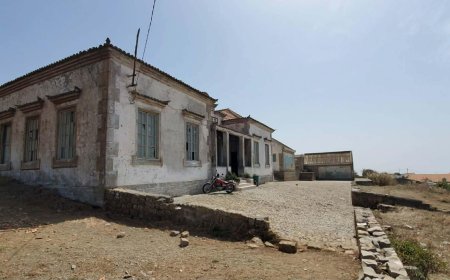
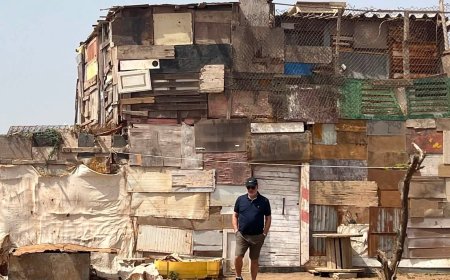
Access to decent housing and living in a healthy urban environment are fundamental rights that structure the social cohesion of families. The Program identifies significant housing deficits in major urban centers, characterized by precarious housing. To mitigate these problems, the government is designing a national integrated housing policy that includes urban redevelopment programs and the rehabilitation of dilapidated housing in vulnerable neighborhoods. To meet the demand of lower-income classes, the Program stipulates the promotion of the construction of affordable social housing in partnership with municipalities.
Combating extreme poverty and reducing social inequalities are the heart and measure of the success of the Government Agenda. The Program rejects the notion that macroeconomic growth alone is sufficient, mandating proactive state intervention through effective social protection policies. The strategy for eradicating extreme poverty will focus on expanding coverage of the Social Inclusion Income, targeting it strictly to households in situations of extreme material deprivation. The executive branch will also unify and modernize the Single Social Registry to ensure complete transparency of support.
The inclusion of people with disabilities assumes a structuring priority in the conclusion of the Program's goals, with a profound legislative change foreseen through the revision of the Framework Law on Prevention, Rehabilitation and Integration of People with Disabilities. Rigorous measures will be implemented to guarantee physical and digital accessibility in all public buildings and transport systems. Additionally, a national program of tax incentives will be launched for private companies that hire workers with disabilities, along with the establishment of a direct financial benefit for inclusion intended to co-finance the increased expenses for assistive technology products, consolidating a safe Cape Verde for all generations.