





Economist Gunter Pauli, author of the Blue Economy concept, reveals that Cape Verde has the potential to produce 100,000 tons of hydrogen annually.
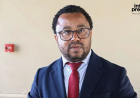
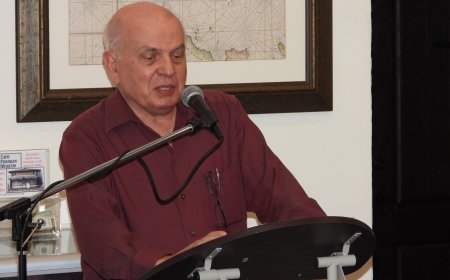
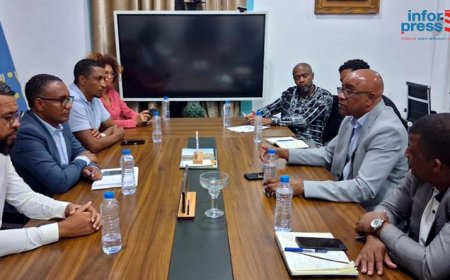
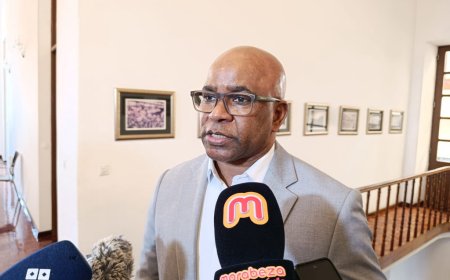
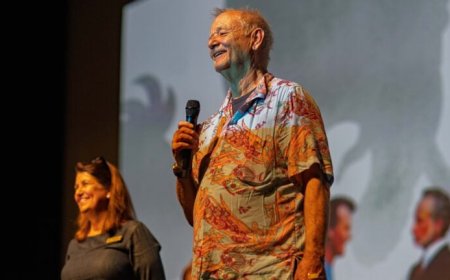
Gunter Pauli, author of the Blue Economy concept, stated today in the city of Mindelo that Cape Verde has the conditions to produce 100,000 tons of hydrogen annually from wind and wave energy. According to the economist, who met this morning with the administration of Enapor, this is an enormous potential that no one had previously realized and which was detected after a first visit to the islands about a month ago. "This means that Cape Verde can be a hub in the Atlantic to supply and sell hydrogen to ships coming from Europe and the United States," emphasizes the expert, who is in the archipelago based on an agreement between Enapor and his company Blue Innovation.
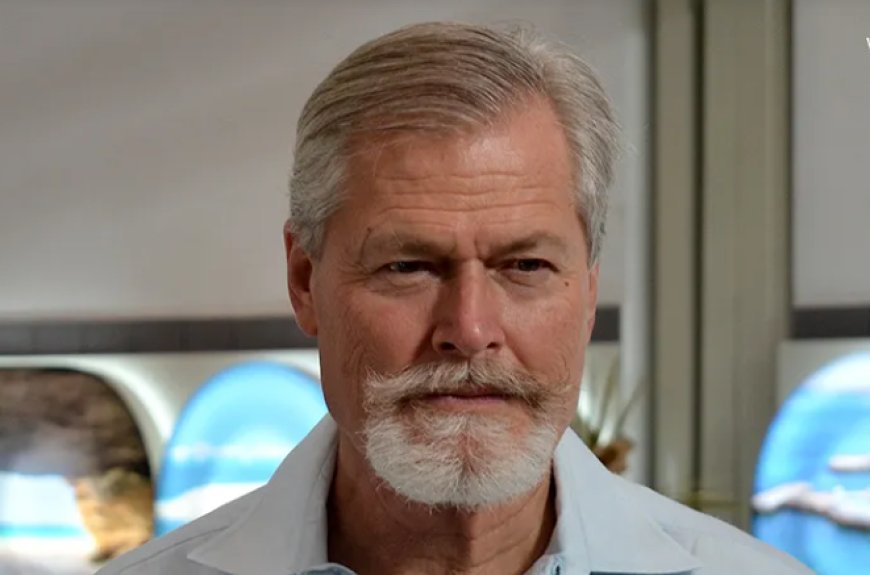
Gunter Pauli also highlights the extraordinary potential for wind and solar energy present in this Atlantic archipelago, more precisely in São Vicente, Santo Antão and Sal. He says that the island of Santo Antão is one of the best places for kitesurfing, while São Vicente has the capacity to produce 17 megawatts of energy per year through wind power at heights ranging from 200 to 400 meters. “This energy potential may indicate that Cape Verde, with only the three islands studied so far, could achieve energy self-sufficiency. Not 50% self-sufficiency, but 100%,” He states, adding that the country, in addition to being able to guarantee its domestic supply, can also export energy .
In a second round of visits, the economist continues, the energy potential of waste and black water was analyzed, as the latter possesses many nutrients for biogas production. And whoever has biogas, he emphasizes, also has important fertilizers for agriculture. Regarding this sector, Gunter Pauli adds that Cape Verde could reinforce its raw material with organic waste from cruise ships in the process of producing this type of energy.
The economist states that yesterday he visited Sal Island and identified 65 hectares suitable for fish and shrimp production. In his view, this is an ideal area that could host the largest production center for these products in the entire African sub-region.
Still in Sal, he continues, a 100-hectare plot of land suitable for food production and with the potential to generate 1,200 jobs has been identified in the northern zone. "This project could replace the importation of fruits and vegetables." This source predicts , For whom do hotels need to start managing their waste with the aim of creating biogas?
When questioned about the level of investment these "proposals" might entail, the economist responds that every undertaking requires cash flow. If there's money, the project goes ahead. He emphasizes, however, that the important thing is to have a well-defined business model. In the case of biogas, he explains that cruise ships can pay to deposit their waste and thereby generate investment capital.
According to this source, the biggest consumers of biogas will be the island population itself. Hydrogen, on the other hand, can be used by transport companies and vessels seeking access to Cape Verde's ports. According to Pauli, everyone talks about blue and green hydrogen, but there's no availability. Therefore, there is a market, there is demand, which needs to be met.
Today, Gunter Pauli will visit Fogo and then Boa Vista, on a tour that includes other islands with the aim of identifying opportunities related to the blue economy. His visit is part of the project entitled "Portfolio of Opportunities for the Islands of Cape Verde", developed within the framework of the agreement signed with Enapor on November 4th of this year. The strategic objective of the initiative is to involve all the islands in creating a cooperation structure that allows the identification and development of a portfolio of sustainable opportunities, promoting innovation, economic growth and environmental balance, in line with the principles of the Blue Economy.
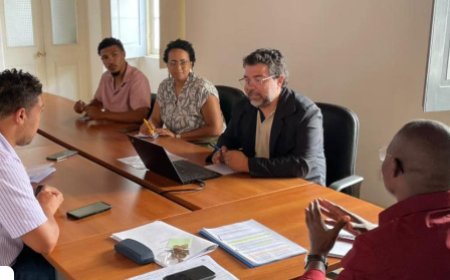
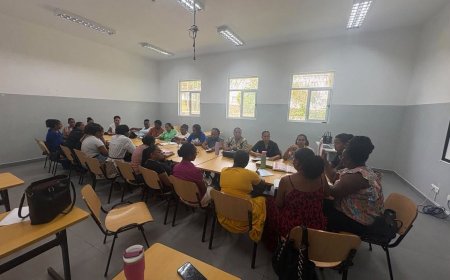
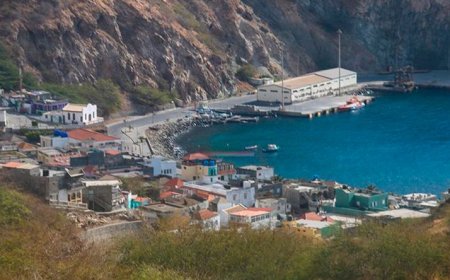
The agenda in São Vicente includes, in addition to a visit to the Mindelo Cruise Port, institutional meetings, notably with the Minister of the Sea, as well as technical meetings on environmental innovation projects such as the Mindelo Wastewater Treatment Plant/Landfill and the Shrimp Farm in Calhau.
Mindelinsite