

































Cape Verde Stands Out as a Democratic Exception on a Continent in Institutional Crisis
Cape Verde is pointed out as one of the few exceptions in Africa where there are real bases for the rule of law and democratic governance, in a continent marked by political systems inherited from colonialism that maintain authoritarian practices under formal multiparty models.
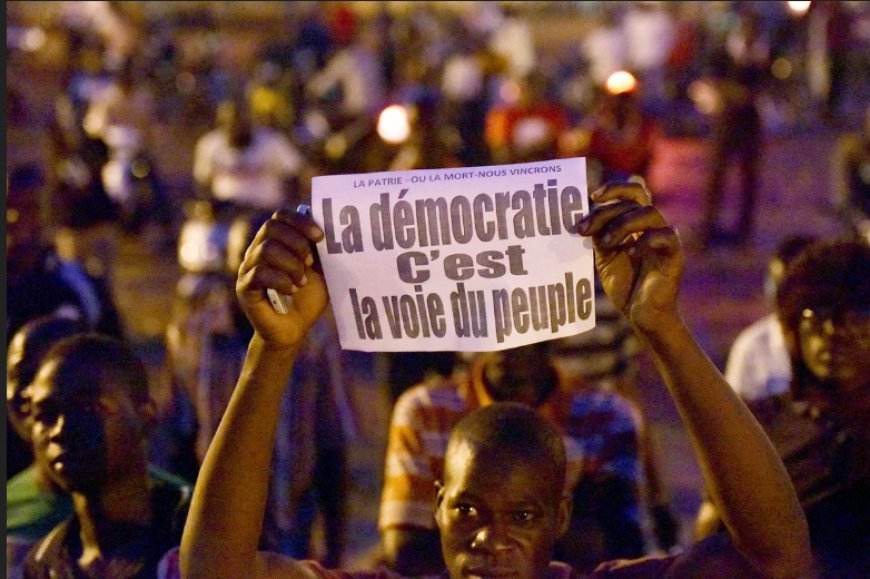
In a context in which several analysts reject the idea that Africa is experiencing a simple "crisis of democracy", arguing instead that substantive democracy has never existed in the majority of the continent's countries, Cape Verde has once again emerged as one of the most consistent exceptions in terms of the rule of law and democratic governance.
According to the analysis, only a very small number of African countries have the minimum characteristics of a political system based on legality, separation of powers and accountability.
According to the analysis, only a very small number of African countries have the minimum characteristics of a political system based on legality, separation of powers and accountability of rulers. Among these, Cape Verde is cited alongside South Africa, Botswana and the Seychelles, ranking among the regimes that come closest to a functioning democracy on the continent, and far outstripping the African average.
The text stresses that Africa's central problem does not lie in a supposed failure of democracy, but in the persistence of institutional structures inherited from the colonial period, which in the 1990s underwent only superficial reforms. Many countries have adopted formal multiparty systems, but without breaking with authoritarian practices, resulting in what is described as "administrative multipartyism" - a model that maintains control of power without real accountability.
In this scenario, Cape Verde stands out for having managed to break with this logic to a large extent, building more stable institutions, a credible electoral system and relatively peaceful political alternation, factors that have contributed to greater trust between citizens and the state. Even so, the continental framework itself serves as a warning: even the most consolidated democracies in Africa are not immune to economic, social and geopolitical pressures.
The analysis points out that many African regimes continue to govern their people as "subjects" and not as citizens, blocking the strengthening of civil society and independent institutions. In contrast, the Cape Verdean experience is often associated with a more active civil society, greater freedom of expression and less recourse to political repression, even though it faces structural challenges such as external economic dependence and limitations in the production of wealth.
At a time when the continent is facing deep crises - in production, wealth redistribution and political representation - the case of Cape Verde is presented as a relevant counterpoint to the dominant trend, demonstrating that alternative models are possible, even in African contexts marked by heavy colonial legacies.
The debate concludes that the future of democracy in Africa will depend on strengthening new social coalitions, involving young people, women, intellectuals and activists. For countries like Cape Verde, the challenge is to preserve and deepen democratic gains, avoiding the institutional erosion that today threatens much of the continent and the global democratic system itself.