


































Trump’s Foreign Policy: A Mix of Imperial Ideals, Naked Interests and Might Makes Right, by Henrique Silva
Trump’s recent speech at the World Economic Forum in Davos, Switzerland betrayed his desire to develop Iceland with the same ardor the newly arrived Pilgrims and their immediate descendants envisioned taming what they viewed as the American wilderness, much before an American journalist had an epiphany to suddenly realize that his people had been ordained by divine providence to spread democratic capitalism from sea to shining sea in the North American continent.
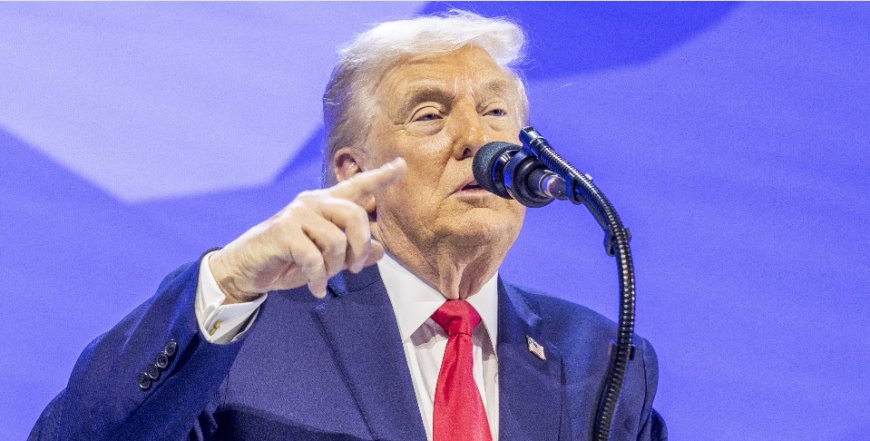
The American journalist, John O Sullivan, articulated his revelation in 1845 into what since became known as the Manifest Destiny, most likely without predicting that the United States would use it to overstep its continental boundaries and spread its version of civilization at the world level; and, of course, in the process further American interests, which turned out to be similar in both nature and scope to those of the British empire from which the United States had liberated itself only seven decades earlier. At the Davos summit, Donald Trump repeatedly and derisively called Greenland a “piece of ice,” as if it were a god forsaken place that divine providence has now called upon him to refashion into a territory useful for maintaining world security. The fact that he only referred geographically to this “giant piece of ice” - which he finds “hard to call a land”- when talking about Greenland, totally ignoring its ancient indigenous population and its modern status as a semiautonomous part of the Kingdom of Denmark should sound the alarm that he probably views Greenland as an ideal space for the civilizing enterprise of his version of Manifest Destiny. The historical reality that Trump’s epiphany is separated from that of John O Sullivan by almost two hundred years doesn’t seem to influence Trump’s ideological zeal. The only essential difference between the civilizational project of the early Americans and that of Trump lies perhaps in the former’s interest in developing agriculture and the latter’s interest -though unconfessed- in extracting rare earth minerals from Greenland’s giant deposits, which would grant the US comparative advantage against current Chinese dominance over such resources that are so crucial to new technologies and renewable energy.
By the time John O’Sullivan penned an essay complaining about European interference in thwarting US western expansion and arguing for the need of annexing Texas, which had recently become independent from Mexico, the United States had already expanded far beyond the geographical area of the original thirteen colonies and was on the verge of expanding west of the Mississippi River. The US had also implemented the infamous Indian Removal Act that forced the relocation of Native Americans from their fertile ancestral lands in the Southeast so that they might be used to develop agriculture for the European descendants. So, John O’Sullivan wasn’t the original mastermind behind western expansion. With his essay, which did not prevent him from dying years later in obscurity, he was merely articulating and justifying a historical process already underway at full speed. The Pilgrims already believed God guided their journey and sanctioned their settlement in the new world, viewing the new land as a chosen place to establish a holy, righteous, and self-governing community. O’Sullivan was, thus, not postulating totally out of the blues, and he is not alone in articulating the reasons for and justifying human endeavors that historically preceded them. A few months ago, I had my own epiphany of sorts to suddenly realize that time and again historical figures find themselves articulating ideas that actually reflect past human actions. Take for example the concept of genocide, only coined in 1944 to describe the wartime Turkish attempt at the extermination of Armenians. That happened, however, much later than an even greater genocide had been already carried out to effectively exterminate some twenty million American Indians. And it doesn’t matter at all if this historical record isn’t officially declared a genocide. Another compelling case is the definition of terrorism. People who use the modern definition of terrorism often ignore or are simply unaware that actions whose nature sadly qualify them as terrorism have been practiced throughout human history since ancient times, not only by fanatical individuals or fringe groups but, most surprisingly, by state actors. Much before Nicolo Machiavelli wrote The Prince, international relations and often internal politics had been at times characterized by ruthless behaviors by which political leaders and states clearly demonstrated their underlying belief that the ends justify the means; and when we today analyze such behaviors we cannot help calling them Machiavellian.
When John O’Sullivan complained in his essay about European interference with American continental expansion, he echoed the preoccupations of another American political doctrine: the Monroe Doctrine. Announced by President James Monroe in 1823, “it asserted that the Western Hemisphere was off-limits to further European colonization and that any intervention would be viewed as a hostile act against the U.S.”, according to Wikipedia. By keeping Europe away from the western hemisphere, the Monroe Doctrine created the elbow room for the expansionist maneuvers dictated by the Manifest Destiny. These two American doctrines are, thus, complementary and closely intertwined. To be fair, Trump hasn’t declared himself a Manifest Destiny agent, but has publicly adopted the Monroe Doctrine, having even unapologetically named his own version of it the “Donroe Doctrine.” And he has tried to normalize its application in today’s world with the Venezuela raid to capture a sitting president of a Latin American country and with threatening military actions inside Mexico and Colombia to fight drug cartels. If one doubted, however, that his foreign policy is also inspired by the Manifest Destiny, his Davos speech may have dispelled those doubts. It is gradually becoming clear that his administration utilizes this ideology to promote territorial acquisition and carry out an assertive, nationalistic foreign policy. He has expressed interest in acquiring Greenland, has suggested making Canada the "51st state," and has mentioned "taking back" the Panama Canal. He recently posted online maps of Canada, Greenland and Venezuela covered by the American Flag, apparently in a demonstration of his strategy at normalizing his imperialistic agenda in public opinion.
In order to carry out this agenda, Trump has also adopted a foreign policy tool that was believed to be consigned to the dustbin of history: the gunboat diplomacy. Gunboat diplomacy is a foreign policy strategy employed in the past by the British Empire and, later, by the United States that uses conspicuous displays of naval power to intimidate, influence, or coerce another nation into granting specific concessions. It resorts to the threat of military force rather than its immediate use, which has allowed some political theorists to hail it as an alternative to war. The Monroe Doctrine and gunboat diplomacy are intrinsically linked. The Monroe Doctrine was the ideological foundation for American control of and expansion into the western hemisphere, while gunboat diplomacy provided the practical enforcement mechanism for U.S. hegemony. While the Monroe Doctrine declared the Americas off-limits to European colonization, gunboat diplomacy provided the naval coercion used to enforce this policy, often by protecting U.S. economic interests and preventing European interference by pointing guns at potential interventionists.
As it turns out, gunboat diplomacy has also been restored by the Trump administration, in one specific case even switching gears from the threat of war to actual military action. We’re talking of course of the Venezuelan raid, with Nicolas Maduro having lived to regret his defiance of Trump’s order to step down allegedly in return for a comfortable exile in Turkey. The evident threat of American warships deployed to the Caribbean is said to be a manifestation of gunboat diplomacy that has often turned lethal with the blowing up of vessels suspected of carrying drugs. Such brazen acts of aggression are said to be by design a warning to some Latin American neighboring countries about the intentions of the United States, once again behaving as an international police force. The recent naval armada assembled in the Persian Gulf by the United States is also perceived by international observers as an instance of gunboat diplomacy attempting to get concessions from Iran, and even to force regime change in the Middle Eastern country. Here, so far away from the US sphere of influence, gunboat diplomacy could be viewed as the practical enforcement mechanism of Manifest Destiny.
Manifest Destiny has in the past clothed naked imperialist endeavors with high idealism. It was used as a cover for the Spanish-American War of 1898. The two declared reasons for the United States to go to war against Spain fail, however, the scrutiny of accurate historical analysis. Let’s look at the first reason, which could be justified by the ideals of the Manifest Destiny: humanitarian concerns regarding Spanish appalling colonial mistreatment of the Cuban people. Such fine sentiment is contradicted, nevertheless, by the ruthless inhumanity of both the genocide of Native Americans and arguably the most degrading form of slavery -based on racism- known to humanity, against African Americans. Both mass atrocities were being carried out by the US at the same time that it took issue with Spanish colonial policies in Cuba. As a result of the Spanish-American war, Cuba became a protectorate of the US instead of gaining true independence. In the war’s aftermath, the US also took possession of the rest of the dwindling Spanish empire. As for the second reason -Spanish sabotage of the battleship Maine, causing an explosion in Havana Harbor, Cuba, that sent 266 US crew members to their deaths- there was not a shred of evidence of the ship’s explosion being caused by any act of sabotage. In 1976, American forensic analysts would determine that the explosion was most likely caused by an initial accidental fire that ignited the great amount of ammunition the ship carried. They effectively ruled out sabotage. Imagine, however, the difficulty in trying to dissuade the American people, outraged as they were under the effect of their government’s propaganda, from their support for military action against Spain. This is the kind of mass hysteria that psychologically powerful ideas like Manifest Destiny can arouse.
Another problem that may arise with psychologically powerful cultural beliefs like Manifest Destiny is its susceptibility to promote the aggrandizement of the leader who conducts the policies inspired by those beliefs. If a leader seriously believes in God’s mandate for his people to spread its version of civilization over other peoples, what prevents him from starting to see himself as the anointed leader to carry out the divine mandate? For how could he happen to be at the leadership position of such a transcendental, predestined historical process if not by divine providence in the first place? Such an idea may be especially tempting to a leader who is already primed by self idolatry, such as in Trump’s case. Perhaps Trump already felt like the anointed leader when he solemnly announced that he doesn’t abide by international law in foreign policy, abiding solely by his own morality. This astounding declaration could be less frightening only if one believed in his supremely sound moral judgment as the most powerful man in the entire world, with a finger on the nuclear button. However, his past public behaviors are not the best assurances of such a fine tuned moral compass that would be required if he is to solely rely on his own morality to conduct world affairs.
One of the most unsettling aspects of Trump’s foreign policy and his foreign policy team is that they seem to readily default to naked national interests and the might makes right belief whenever lofty ideals fail to provide the adequate rationale for a particular instance of foreign policy. To the great surprise of many a political observer, in the aftermath of Maduro’s capture, the Trump administration announced that they were throwing their support to lifelong Chavista Delcy Rodriguez, former vice-president under Maduro, leaving opposition leader Maria Corina Machado and Edmundo Gonzalez, the widely regarded winner of last Venezuela’s presidential election, hanging. Soon the surprise started dissipating as Trump officials explained the transactional nature of such power arrangement, which would secure an orderly change of guard to allow for the American taking over of Venezuela’s vast oil resources. And when that proposition looked like a colonial policy, the White House deputy chief of staff for policy had the nerves to go on live TV to dispel all doubts that his administration was effectively running Venezuela. Without any qualms, he justified Venezuela’s blockade by a formidable US armada as the guarantor of total control over the country’s oil, including its commercialization in the world market. In a shocking declaration of US unrestrained hegemonic rights by virtue of its awesome military power, he advocated the right of the victorious United States to rule Venezuela in a world he views as governed by strength, by force, and by power. According to him, these are the “iron laws of history” since the beginning of time.
This is a circular view of historical development (not even progress, for circularity of time precludes progress) which renders all civilizational progress impossible, including the birth and development of the liberal-democratic world order, or the emergence of international values such as respect for national sovereignty and individual human rights. I used to think that circularity of time was manifest only in magical realism novels. Miller also -and perhaps inadvertently- seems to justify with his historical iron laws recent history regimes that glorified strength, force and power above all else: Nazi Germany and Stalinist Soviet Union. For all its arrogance and arbitrariness, this argument is demonstrably idiotic, which doesn’t prevent it, nevertheless, from being utterly dangerous.
In fact, there are some disquieting logical implications to Stephen Miller’s “iron laws” of history:
-
Humanity is condemned to historical determinism when it comes to the behavior of nations, precluding human agency to navigate the routes of historical development and work towards building a better and more peaceful world. Such a deterministic argument has been proved wrong by the very liberal-democratic world order his administration is trying to undermine and that, despite its limitations, inconsistencies and failures may well have spared us world war 3 and a nuclear conflagration.
-
The age of empires is not over yet, and national sovereignty is quite a relative concept vis-à-vis the primacy of rule by force as a legitimate principle of international relations.
-
The rules based system of international relations is a foolish and contemptible historical anomaly that must be corrected and does not reflect the fact that we have demonstrated our ability to learn from history, which is what led us to establish a system aimed at preventing a repetition of the catastrophes of the “century of warfare,” as the 20th century has been aptly described. There must be a reason after all, one might argue, why legal frameworks like the United Nations Charter did not exist in the Stone Age.
We are, thus, assisting from first row seats to the Trumpian spectacle of the dismantling of the prevailing world order and his attempts at remaking history to fit into the perspective of old imperial ideals or at reconfiguring international order according to the national interests of the United States, using its awesome military power to guarantee the smooth operation of an emerging new world order that remains to be clearly defined. In a world of increasing tendency towards multipolar integration and middle power alliances, and still troubled by the memories of the twenty century catastrophes that led to the establishment of the liberal-democratic world order, such endeavors are sure to cause general dissent, resistance, tension and, ultimately, potential dangerous clashes. Then, President Trump and his foreign policy team will learn how difficult it is to turn back the heavy wheel of history.