
























Government recognizes challenges in tourism and transport, but praises results achieved since 2016
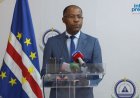
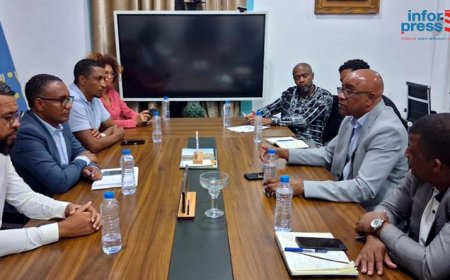
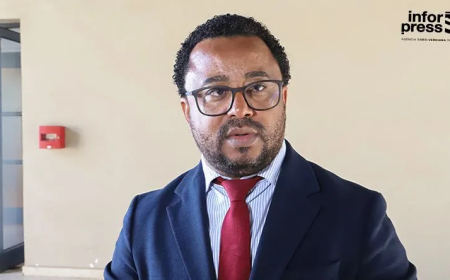
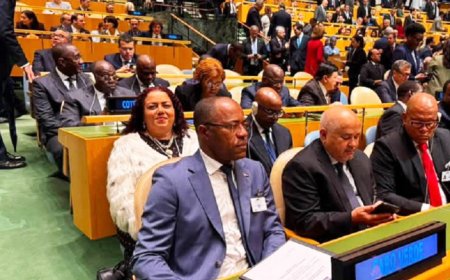
The Minister for Tourism and Transport acknowledged in Parliament today that the two sectors continue to face various challenges, but stressed the results achieved in recent years and the strategic role of these areas for the country's development.
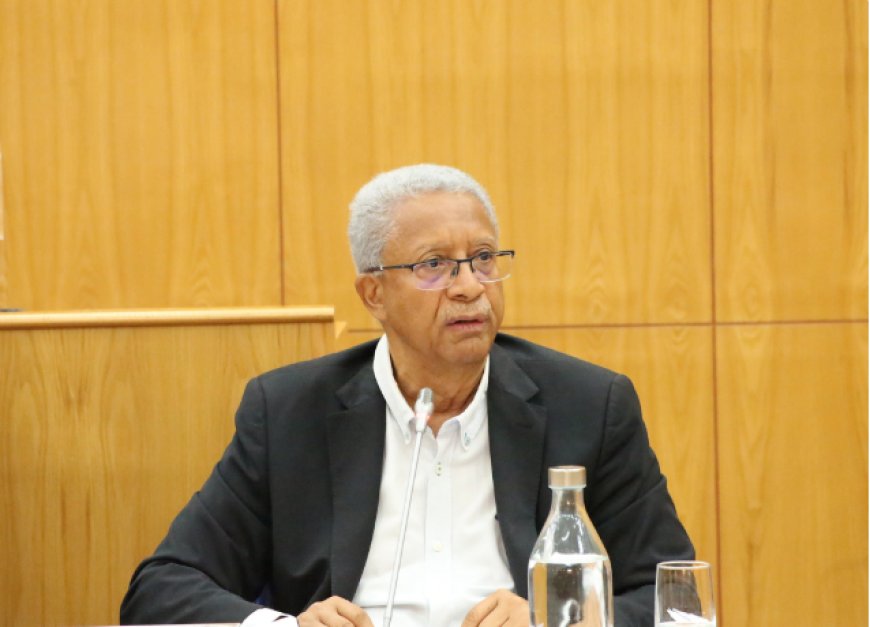
Intervening during the parliamentary debate, José Luís Sá Nogueira said that the growth of tourism and its impact on the Cape Verdean economy are undeniable, but admitted that constraints persist.
We are fully aware that we still have many challenges ahead of us, as is normal because development is a process.
"We are fully aware that we still have many challenges ahead of us, as is normal, because development is a process," he said.
According to the president, the Executive sees tourism and transport as interdependent, structuring and decisive sectors for economic growth, job creation, territorial cohesion and the international affirmation of Cape Verde, an archipelagic state with a small economy, a limited market and a strong dependence on tourism.
In this sense, he continued, the government has taken on these sectors as catalysts for development, betting on a reform process that will consolidate the mobility of people and cargo within a framework of predictability and sustainability.
José Luís Sá Nogueira listed the results which, he said, reflect the work carried out since 2016 by the government led by Prime Minister Ulisses Correia e Silva.
"Since 2016, the Government of Cape Verde has been working hard and with a great spirit of responsibility, with a strong commitment to the country's growth and sustainable development," he said.
In the tourism sector, the minister recalled that the activity practically didn't exist in the 1980s and that only since the 1990s, with the advent of democracy, has its development begun to be structured, through the creation of a favorable environment for direct foreign investment.
Currently, he explained, the government's strategy is defined in the Strategic Plan for the Sustainable Development of Tourism 2018-2030, in the Tourism Master Plans for each island and in the Tourism Operational Program 2022-2026.
According to the data presented, the number of tourists will rise from 569,000 in 2015 to more than 1.2 million in 2024, which represents a growth of more than 107%. In 2024 alone, the increase was 16.5% compared to 2023, with growth on practically all the islands, namely Santo Antão, São Vicente, Fogo and Brava.
The minister also said that, between 2022 and 2024, the Tourism Fund raised more than three million escudos, an amount applied to urban requalification projects, infrastructures, accessibility, tourism promotion, the enhancement of rural villages, culture, sport, vocational training and social sustainability in all the country's municipalities.
José Luís Sá Nogueira also said that tourism continues to be the lever for the development of the Cape Verdean economy, boosting international and domestic air connectivity and contributing to the diversification of the economy, due to its transversality and capacity to generate value for other sectors.
With regard to air transport, the minister recalled that the government had faced two particularly difficult contexts such as the situation of operational breakdown and financial collapse inherited in 2016 and, later, the impact of the Covid-19 pandemic, which interrupted the improvement of domestic air connectivity and the dynamics of the air hub that began in 2019.
Still, he pointed out that the measures adopted had made it possible to reduce the state's fiscal exposure, ensure greater stability in the domestic market and recover the airline operation.
Among the results achieved, he pointed to the movement of more than three million passengers in 2024, surpassing 2019 levels, the attraction of new airlines, the concession of airport management, the investment of more than 70 million euros in the first phase and the start-up of new planned investments.
The minister also stressed that the government has taken on inter-island air transport as a matter of sovereignty, taking into account the archipelagic nature of the country, through a transparent framework of public service obligations.