































"Give me a coffee" the Epstein case in Cape Verde
If it is common knowledge that there are minors being exploited under the silent gaze of many, then the question is no longer a factual one, but a moral one. What kind of society do we want to be when we know and yet choose not to see? No economic growth compensates for ethical bankruptcy and no international image is worth more than the integrity of a child. As long as we continue to treat these stories as coffee talk, as urban chronicles, as "things that have always happened", we will be perpetuating exactly the same mechanism that the world condemned in the Epstein case.Silence, at any latitude, is also complicit.

There are names that the world has learned to pronounce with belated indignation, and Jeffrey Epstein is one of them. What his case revealed was not just the perversity of one man, but the architecture of the silence that surrounded him, the network of complicities, the ease with which power creates moral immunity and turns vulnerable minors into available territory.
It would be comfortable to think that this mechanism belongs only to foreign elites, to private islands, to closed circles where money buys everything. But the pattern has no passport. It is repeated wherever there is inequality, vulnerability and a society that prefers the discomfort of silence to the discomfort of denunciation.
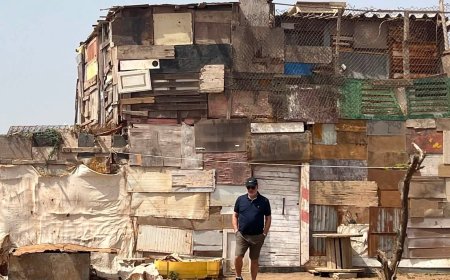
In Cape Verde there are no private jets ferrying teenagers to secret mansions, but there are neighborhoods where poverty weighs heavy, there are dreams of a quick rise, there are older men and women who know exactly how to use this fragility to their advantage. And we all know it. We know about the girls who move around with much older adults, we know about the cell phones offered, the new clothes, the "help", the university fees, the discreet encounters, the rooms rented away from direct eyes. We know about the intermediaries, we know about the parents who pretend not to notice, we know about the neighbors who comment quietly but never report it.
The most disturbing thing isn't ignorance, it's collective knowledge that never turns into responsibility.
Roca Vera Cruz's chronicles, so raw and so close to the reality of São Vicente, are almost ethnographic portraits of this normalization. In the chronicle "Café de Primeira", for example, there is an almost banal description of young people who enter a circuit of favours and dependencies at an early age, where the body becomes currency and where sponsorship is presented as a survival strategy. In "Tia Ma Titio", on the other hand, the colloquial and disarming language reveals something even more disturbing: everyday life where encounters with older men are recounted naturally, where there is talk of gifts, pensions, discreet hotels, where the boundary between exploitation and "living arrangements" seems to dissolve in a conversation on the terrace.
These are not distant fictions. They are social mirrors.
International reports on human trafficking have already referred to the vulnerability of minors in Cape Verde, including commercial sexual exploitation in contexts associated with poverty and tourism. This doesn't mean demonizing tourism, it means recognizing that when there is deep economic asymmetry, someone turns desire into power and need into submission. And when survival comes into the equation, morality begins to negotiate with itself.
I still remember the controversy involving an artist and a teenage girl from the island of Fogo. The public debate focused more on the age of the minor, repeating to the point of exhaustion that she was 16 at the time of the events, as if that number worked as an ethical absolution. The speed with which part of society accepted or justified the behavior revealed a collective moral fragility that cannot be ignored.
In a small society, impunity doesn't need millions or international networks; all it needs is proximity, family ties, strategic friendships, positions and status that act as an invisible shield. When the suspect is known, the discourse changes: we no longer talk about a crime, we talk about a "delicate matter"; we no longer talk about a victim, we talk about "unnecessary exposure"; we no longer talk about an investigation, we talk about "not destroying the country's image". The language is softened and, in this softening, the urgency of protecting those who really matter is diluted.
The parallel with Jeffrey Epstein is not a comparison of scale, but of mechanism. Where there is power without scrutiny, vulnerability without a safety net and society without courage, abuse finds fertile ground. It doesn't need luxury, it needs complacency. It doesn't need absolute secrecy, all it needs is the complicit silence that relativizes and normalizes it.
Cape Verde has laws, it has institutions, it has dedicated professionals who face these cases with few resources and a lot of social resistance.
But no law is enough if culturally we accept grey areas, if we continue to romanticize "having a coffee", and continue to pretend that certain relationships are just free choices when inequality is brutal and maturity is unequal.
Childhood is not negotiable, nor is it an economic strategy or a social shortcut.
If it is common knowledge that there are minors being exploited under the silent gaze of many, then the issue is no longer a factual one but a moral one.
What kind of society do we want to be when we know and yet choose not to see?
No economic growth compensates for ethical bankruptcy and no international image is worth more than the integrity of a child.
As long as we continue to treat these stories as coffee talk, as urban chronicles, as "things that have always happened", we will be perpetuating exactly the same mechanism that the world condemned in the Epstein case.
Silence, any kind of silence, any kind of morality.
Silence, at any latitude, is also complicit.
Any Delgado, article published in Santiagomagazine