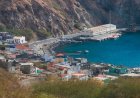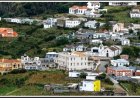














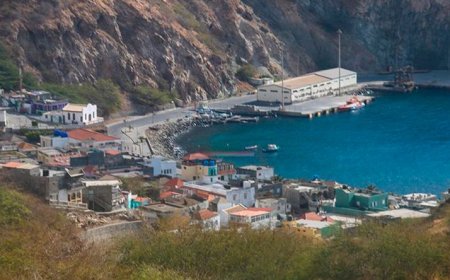



Brava: from a begging island to mistress of its own destiny, a desire, a possibility, and a dream.
For decades, Brava Island has been trapped in a vicious cycle of dependency, political promises, and delayed solutions. With each crisis—be it maritime transport, the supply of essential goods, healthcare, or even something as basic as eggs—the same script repeats itself: popular outrage, press releases, occasional visits from government officials, fiery speeches… and, after some time, everything returns to the same. The central problem lies not only in the lack of resources, but above all in the way the island has historically positioned itself in relation to the central government.
Brava has become accustomed, often due to historical marginalization, to waiting for "someone from outside" to solve its problems. The central state, political parties, and governments in power have come to be seen as the only source of solutions. This attitude has transformed the island, in the eyes of the system itself, into a begging island, always waiting for budgetary crumbs, exceptions, or political favors.
However, this dependence comes at a high cost: it removes decision-making capacity, reduces negotiating power, and perpetuates backwardness . Those who ask accept what they are given; those who build choose what they want.
It is undeniable that Brava's weak political weight in the national political landscape has been a serious obstacle. A small electoral district, few votes, little representation and, consequently, little capacity to impose strategic agendas. The island is remembered during election periods, in symbolic visits, but rarely integrated into a national vision of development.
However, continuing to blame only the central political power is insufficient. National politics plays with interests and numbers , and as long as Brava does not create its own mechanisms of strength—economic, social, and organizational—it will remain vulnerable to this game.
There is a glaring paradox: Brava was, in the past, an island of ingenuity, innovation, and courage. It was a benchmark in artisanal shipbuilding, maritime trade, organized emigration, and the entrepreneurship of its people. People from Brava went out into the world, created businesses, supported families, and contributed to local development through remittances and investments.
How, then, can it be explained that an island with such a history today has difficulty even guaranteeing basic local production, such as eggs, vegetables, or small supply chains? The problem is not incapacity; it is strategic disorganization and mental dependence.
If there is a true “natural resource” of Brava, it is its people . Within the island, there is practical knowledge, a willingness to work, and a deep sense of belonging. Outside the island, there is a strong, organized diaspora with financial, technical, and influential capabilities.
The historical mistake has been failing to transform this dispersed force into a structured collective project . Individual goodwill is not enough; what is needed is a shared vision, community investment platforms, cooperatives, local funds, and economic and social development associations with clear and measurable goals.
To argue that Brava should be more self-reliant does not mean turning its back on the state or the country. It means reducing vulnerabilities . Producing locally what is possible, creating small industries adapted to the island's scale, investing in organized family farming, the sea, niche tourism, and the community economy.
Every locally produced egg is one less problem when the boat doesn't arrive. Every small producer supported means one less family dependent on subsidies. Every successful community initiative translates into more real political power.
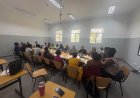
No transformation will happen without strong local leadership, but also without citizen pressure. The population needs to make it clear that it no longer accepts patchwork policies or empty rhetoric. It is necessary to demand planning, transparency, and results, but also to assume responsibilities as a community .
Brava cannot continue to shift all the blame outwards. There are decisions that only the island itself can make: to organize, to unite, to define priorities and to act.
Real change begins when Brava stops asking “what will the Government do for us?” and starts asking “what will we, as an island, do for ourselves?”. Political power will continue to be an important factor, but it cannot be the only pillar.
Brava needs to reclaim the pride of being the architect of its own destiny. It needs to transform indignation into action, criticism into projects, and dependence into autonomy. Only then will it cease to be seen as a forgotten island and begin to be recognized as an island that has decided to rise up on its own .