















From naval vanguard to food dependency, a contradiction that exposes the structural fragility of the island of Brava
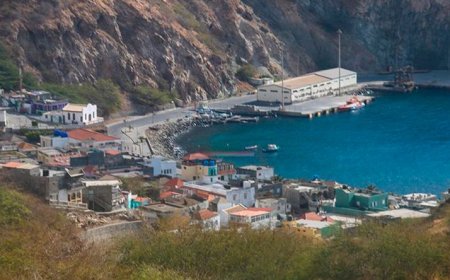
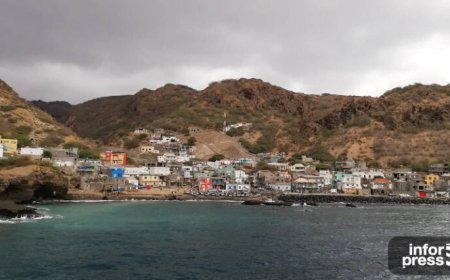
Cidade de Nova Sintra, December 20, 2025 (Bravanews) - Brava Island's current difficulty in guaranteeing something as basic as locally produced eggs is not just a cyclical problem. It is, above all, a profound sign of structural regression and loss of productive capacity that, ironically, contrasts with the history of the island itself. The Brava that today depends almost exclusively on maritime connections to survive is the same Brava that, in the not too distant past, was at the forefront of boat building in Cape Verde.
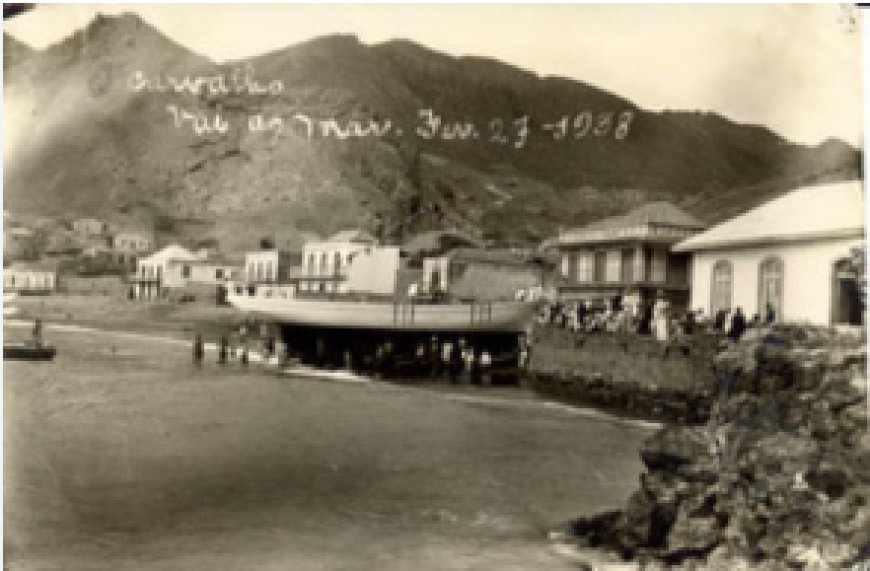
This contradiction cannot be ignored.
For decades, Brava has been a national benchmark in naval carpentry. Brava's master builders produced robust vessels that were respected and sought after on several islands. Boats left Brava to serve fishing, inter-island transportation and even clandestine emigration at certain times in history. There was technical knowledge, community organization, intergenerational transmission of knowledge and, above all, a culture of making do with what you have.
That same island, capable of turning wood into boats that faced the Atlantic, is today incapable of structuring basic egg production.
The issue, therefore, is not a lack of capacity. It's a loss of priority.
Brava has silently gone from being a producer to a dependent consumer. The progressive abandonment of family farming, domestic animal husbandry and small local economies coincided with the increasing centralization of supplies on the larger islands, especially Santiago. A false sense of security was created: the ships brought everything.
When transportation works, dependency goes unnoticed. When it fails, the fragility becomes brutally visible.
The shortage of eggs is only the most obvious symptom. The same goes for vegetables, bread, fruit, animal feed and even building materials. A logistical failure quickly turns into a social crisis.
Producing eggs doesn't require huge infrastructures. It requires hens, feed, water, some technical knowledge and collective will. All of this has existed - and partly still exists - in Brava. What's missing is a framework that turns scattered initiatives into a functioning system.
Hen farming was pushed into informality and then into oblivion. Without veterinary support, without regular access to feed at controlled prices and without a minimally organized market, small producers gave up. The result is paradoxical: a rural island, with space and tradition, dependent on eggs transported by sea.
This situation reveals a clear flaw in local development policies. There is often talk of resilience, the blue economy, food security and sustainable development. However, in practice, little or nothing has been done to guarantee a minimum of productive autonomy for outlying islands like Brava.
The City Council, the Ministry of Agriculture and the central government itself seem to have accepted the idea that Brava is just a consumer. There are no structured programs to encourage family poultry farming, no pilot projects for local production, no supported cooperatives and no credit lines adapted to the island's reality.
When an island that has already built boats can't organize chicken coops, the problem isn't technical. It's political and strategic.
Another determining factor is emigration and the ageing of the population. Many of those who had practical knowledge - whether in agriculture, animal husbandry or shipbuilding - left or grew old without generational renewal. Knowledge was neither systematized nor valued.
At the same time, a culture of dependency was created, where everything was expected to come from outside, mediated by the state, ships or merchants. This mentality is perhaps the heaviest legacy.
The egg, in this context, is more than a food. It is a symbol. It represents the breakdown of minimum autonomy, the inability to guarantee the essentials. If we're short of eggs today, what will we be short of tomorrow?
The history of Bravense shipbuilding shows that the island has always been able to respond when there was vision, leadership and a clear need. The current crisis should be seen as a call to rebuild this logic of autonomy, adapted to modern times.
Before grandiose speeches about development, Brava needs to get back to basics: producing part of what it consumes. Family poultry farming, community gardens, local cooperatives and short distribution chains are not new ideas, they are tried and tested solutions.
An island that has already braved the sea by building its own boats cannot accept, as normal, depending on a ship to get eggs.
The problem isn't the lack of chickens.
It's the absence of a collective project for the future.