
























History of democracy and the separation of powers: lessons in political philosophy
Democracy requires compromise. Groups with different interests and opinions must be willing to sit down with each other and negotiate. Everyone who is willing to participate peacefully and respect the rights of others must have some say in the way the country is governed, and it's worse when the government is despotic and thinks it's never wrong. In a democracy, a political opponent is not an enemy. The possibility of political alternation is the salt of democracy. Dissent in democracy should be seen as something normal and healthy in modern democracies.

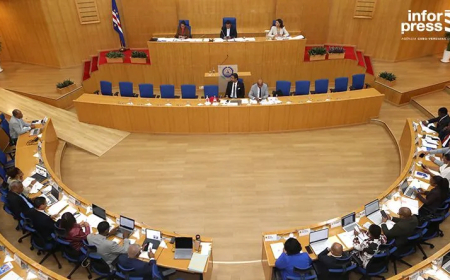
Democracy (from the Greek demos, "people", and kratos, "authority") is a form of political organization that recognizes the right of each member of the community to participate in the direction and management of public affairs. In modern societies, the possibilities for direct participation are reduced, given the number and complexity of public affairs. Democracy can only be exercised directly in some traditional institutions - municipal administration or popular assemblies, for example. Thus, in democratic countries, it is common for democracy to be exercised through an indirect or representative system, as is the case in Cape Verde.
Today, democracy is consensual.
Today, it is common knowledge that this system is regulated by a fundamental law or constitution. Citizens elect representatives, whose participation in the various government institutions guarantees the defense of their interests. In general, these representatives are part of various political parties, which identify with the interests of a class or social group and hold different opinions on how to solve the community's problems. The candidates who receive the most votes in the elections then become members or elected members in the case of the President of the Republic, members of parliament, mayors and municipal assemblies, etc. - in which, for a certain period (mandate), they must defend the views of the party for which they were elected, supporting, criticizing, reworking and voting on the bills that are submitted for discussion.
In the parliamentary system, the candidates who receive the most votes then become members or elected members in the case of the president of the republic, deputies, mayors and municipal assemblies, etc.
In the parliamentary system, the government of the nation is exercised by the party or coalition of parties holding the parliamentary majority, and normally the head of government is the leader of the majority party. The presidential system is distinguished from the parliamentary one by the fact that the citizens elect both a president of the republic, who exercises executive power with the support of a government appointed by him.
Following the historical-philosophical analysis, Democracy originated in classical Greece. Athens and other city-states set up a system of government whereby all free citizens could elect their rulers and be elected to that position. This democratic exercise - from which slaves, women and foreigners were excluded - was possible because the citizens formed a numerically small and privileged group.
While the system of democracy was not the only one, it was not the only one.
Although the system received theoretical and doctrinal support from thinkers of the stature of Aristotle, there were often situations in which democratic normality was interrupted through mechanisms that have also been repeated frequently throughout history. When there was a conflict with a neighboring region or city, some generals were given absolute powers for the duration of the war. Sometimes, at the end of the war, taking advantage of the popular prestige gained, the generals would seize power as dictators. Such a situation ended the "democracy of notables" of Rome's early days. The democratic system lasted much less time in Rome than in Greece and, even during the republican period, power usually remained in the hands of the aristocratic class.
It wasn't until the 17th century that the first theoretical formulations on modern democracy began to be drawn up. The British philosopher John Locke was the first to affirm that the power of governments arises from a free and reciprocal agreement and to advocate the separation of the legislative and judicial powers.
In the middle of the 17th century, it was not until the 17th century that the first theoretical formulations of modern democracy were made.
In the middle of the 18th century, Montesquieu's The Spirit of the Laws (1748; Of the Spirit of the Laws) was published as a key work in modern political theory.
In this book, the French philosopher and moralist distinguished between three different types of government: despotism, republic and monarchy - based on fear, virtue and honor, respectively - and proposed constitutional monarchy as the most prudent and wise option.
Political freedom would be guaranteed by the rule of law.
Political freedom would be guaranteed by the separation and independence of the three fundamental powers of the state: legislative, executive and judiciary. In this way, Montesquieu formulated the principles that would become the foundation of modern democracy.
The United States of America was the most prudent and wise option.
The United States of America was the first nation to create a modern democratic system, which was definitively consolidated as a result of its victory in the war of independence against the British monarchy.
The United States of America was the first nation to create a modern democratic system.
Democracy today: Although they are remarkably widespread in today's world and it is difficult to find doctrinal arguments against them that deserve consensus, in many areas of the world democratic ideas are not put into practice by political systems.
Legal organization of Democracy: The essence of Democracy as a political system lies in the separation and independence of the fundamental powers of the state - legislative, executive and judiciary - as well as in their exercise, on behalf of the people, through the institutions that emanate from it.
In political philosophy lessons, we often debate what has conventionally been called The Limits and Requirements of Democracy, and I would add: the case of Cape Verde:
If democracy is to work, citizens must not only participate and exercise their rights. They must also observe certain principles and rules of democratic conduct.
People must respect the law and reject violence. Nothing justifies the use of violence against your political opponents just because you don't agree with them, let alone trying to win or win at any cost.
Citizens must respect certain principles and rules of democratic conduct.
Every citizen must respect the rights of their fellow citizens, and their dignity as human beings.
No one should denounce a political opponent as evil and illegitimate, just because they have different points of view. What if the fashion catches on here?
No one should denounce a political opponent as evil and illegitimate, just because they have different views.
Each group has the right to practice its culture and to have some control over its own affairs, but each group must accept that it is a part of a democratic state.
When we express our views, we must accept that we are a part of a democratic state.
When we express our opinions, we should also listen to the opinions of other people, even people who disagree with us. Everyone has the right to be heard!
We shouldn't be so convinced of the rightness of our views that we refuse to see any merit in another position. Consider the different interests and points of view.
Democracy requires compromise.
Democracy requires compromise. Groups with different interests and opinions must be willing to sit down with each other and negotiate.
Everyone who is willing to participate peacefully and respect the rights of others should have some say in how the country is governed, worse is when the government is despotic and thinks it is never wrong.
In a democracy the adversary is the opponent.
In a democracy, a political opponent is not an enemy. The possibility of political alternation is the salt of democracy. Dissent in democracy should be seen as something normal and healthy in modern democracies.
And Cape Verde?
And Cape Verde? How are we doing?
Article taken from Santiagomagazine